January 30, 2025, 03:21:00 GMT
permalink Post: 11816809
TCAS
ATC
ADS-B
See and Avoid
Filing a flight plan
Not operating in controlled airspace without a transponder
Not operating at a landing altitude for aircraft on final for a well used runway
Announcing an intention to cross a well used approach
Position lights/strobes
Landing lights
Just spitballing, but there's a non-zero chance NVGs were in use in the helicopter.
It sucks that the best part of this is the airplane was a CRJ, not a larger airliner. Most all those passengers would have survived the initial collision and been aware during the fall to the river.
I feel rage.
Subjects
ADSB (All)
ATC
CRJ
Night Vision Goggles (NVG)
See and Avoid
TCAS (All)
Links are to this post in the relevant subject page so that this post can be seen in context.
Reply to this quoting this original post. You need to be logged in. Not available on closed threads.
January 30, 2025, 05:30:00 GMT
permalink Post: 11816894
TCAS however can operate off Mode-S signals alone, but as others have pointed out, during the late approach phase of a flight, TCAS RA is inhibited (but the target would have caused a TRAFFIC alert still and shown yellow/red on the TCAS display). The helicopter crew assuring the frequency they have identified them would have led them to believe they were cutting it close but will avoid.
It would have been a luck of the draw situation for the CRJ crew to see and avoid the helicopter. It's very hard to see a couple of light points moving against a sea of ground point lights at night. Assuming the CRJ had its logo light on, their only chance would have been for the helicopter crew to spot them (which they claimed they did?)
Subjects
ADSB (All)
ADSB Out
CRJ
See and Avoid
TCAS (All)
TCAS RA
Links are to this post in the relevant subject page so that this post can be seen in context.
Reply to this quoting this original post. You need to be logged in. Not available on closed threads.
January 30, 2025, 07:02:00 GMT
permalink Post: 11816927
TCAS
ATC
ADS-B
See and Avoid
Filing a flight plan
Not operating in controlled airspace without a transponder
Not operating at a landing altitude for aircraft on final for a well used runway
Announcing an intention to cross a well used approach
Position lights/strobes
Landing lights
Just spitballing, but there's a non-zero chance NVGs were in use in the helicopter.
It sucks that the best part of this is the airplane was a CRJ, not a larger airliner. Most all those passengers would have survived the initial collision and been aware during the fall to the river.
I feel rage.
Subjects
ADSB (All)
ATC
CRJ
Night Vision Goggles (NVG)
See and Avoid
TCAS (All)
Links are to this post in the relevant subject page so that this post can be seen in context.
Reply to this quoting this original post. You need to be logged in. Not available on closed threads.
January 30, 2025, 07:59:00 GMT
permalink Post: 11816973
Final hole, see and avoid- target invisibe, sighted AAL3130 on Rwy1 straight in, not enough dissonance in all that to realize you cannot be following that next plane...
Subjects
ADSB (All)
ADSB In
ATC
Close Calls
See and Avoid
TCAS (All)
Links are to this post in the relevant subject page so that this post can be seen in context.
Reply to this quoting this original post. You need to be logged in. Not available on closed threads.
January 31, 2025, 21:10:00 GMT
permalink Post: 11818537
If that\x92s the case it was only a matter of time before this occurred.
From here on it will be interesting to see how the causality factors align. In less polite terms; who\x92s at fault\x85
If you are put in an impossible position by a system\x85. how can the system then expect an impossible recovery? Oh right; it\x92s the system.
Sad BD
Subjects
ADSB (All)
ADSB Out
DCA
Links are to this post in the relevant subject page so that this post can be seen in context.
Reply to this quoting this original post. You need to be logged in. Not available on closed threads.
February 01, 2025, 20:50:00 GMT
permalink Post: 11819292
- Thanks to Henra for reminding us that the ATC radar displays altitudes to the nearest 100 \xb150'
- The nytimes.com images of heli positions outside the depicted corridors posted by fdr in #578 is massive evidence of normalisation of deviance
- I am beginning to suspect that the CAs noted by the controller are a commonplace occurrence. It would be interesting to learn the frequency of DCA CAs between the helicopters and traffic on approach and departure. How much and how long has deviance been normalized?
- The CRJ crew was left out of the information loop. I have a dedicated traffic display on the top of my glider panel which shows ADS-B and Flarm traffic. A similar display would have enabled the CRJ crew to monitor traffic and get the hell out of the way when necessary.
Subjects
ADSB (All)
ATC
CRJ
DCA
Normalization of Deviance
Radar
Links are to this post in the relevant subject page so that this post can be seen in context.
Reply to this quoting this original post. You need to be logged in. Not available on closed threads.
February 01, 2025, 21:00:00 GMT
permalink Post: 11819297
- The CRJ crew was left out of the information loop. I have a dedicated traffic display on the top of my glider panel which shows ADS-B and Flarm traffic. A similar display would have enabled the CRJ crew to monitor traffic and get the hell out of the way when necessary.
Subjects
ADSB (All)
CRJ
Links are to this post in the relevant subject page so that this post can be seen in context.
Reply to this quoting this original post. You need to be logged in. Not available on closed threads.
February 01, 2025, 21:17:00 GMT
permalink Post: 11819306
I have received warnings and an alarm for Flarm traffic. When I have seen ADS-B traffic I have been able to stay far enough away that I haven't been able to verify whether warnings and alarms are provided for ADS-B traffic if it becomes a threat.
Subjects
ADSB (All)
CRJ
NTSB
Links are to this post in the relevant subject page so that this post can be seen in context.
Reply to this quoting this original post. You need to be logged in. Not available on closed threads.
February 01, 2025, 21:23:00 GMT
permalink Post: 11819308
I have received warnings and an alarm for Flarm traffic. When I have seen ADS-B traffic I have been able to stay far enough away that I haven't been able to verify whether warnings and alarms are provided for ADS-B traffic if it becomes a threat.
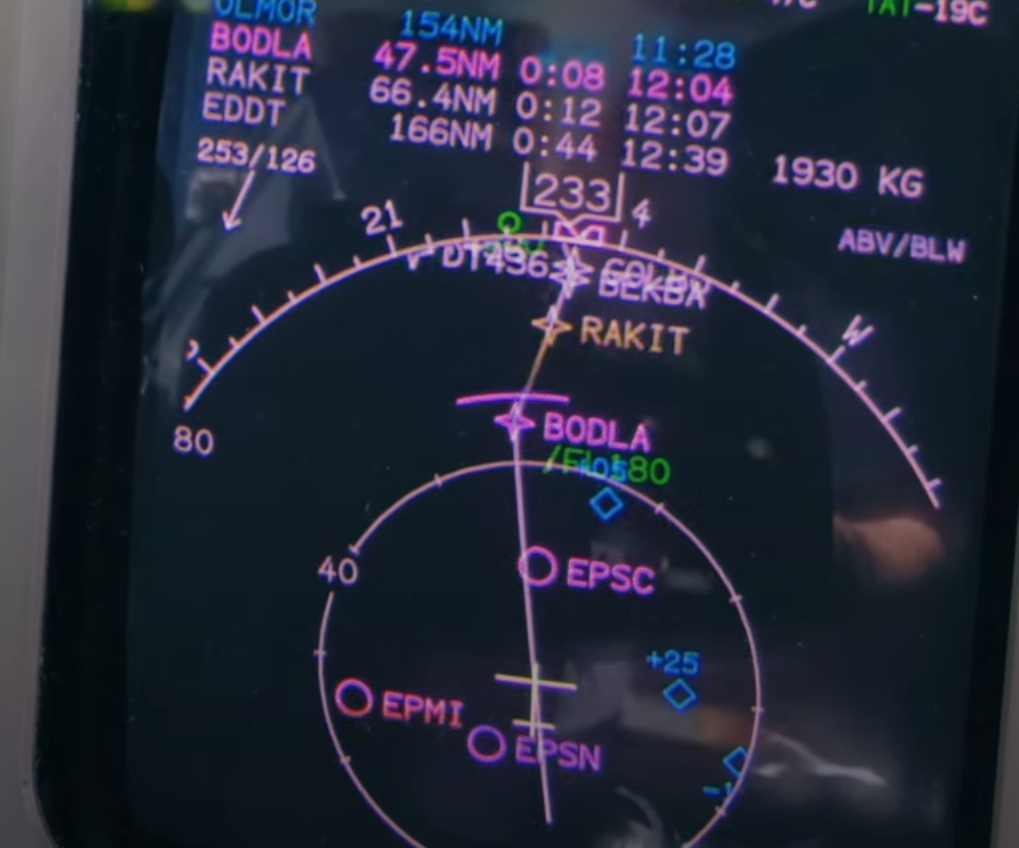
Also depending on the range selected on the TCAS or ND display you might get a load of garbled nonesense.
Subjects
ADSB (All)
CRJ
NTSB
TCAS (All)
Links are to this post in the relevant subject page so that this post can be seen in context.
Reply to this quoting this original post. You need to be logged in. Not available on closed threads.
February 01, 2025, 21:52:00 GMT
permalink Post: 11819330
From the 'Mil' thread:
Subjects
ADSB (All)
CRJ
TCAS (All)
TCAS RA
Links are to this post in the relevant subject page so that this post can be seen in context.
Reply to this quoting this original post. You need to be logged in. Not available on closed threads.
February 02, 2025, 03:33:00 GMT
permalink Post: 11819493
All that said, the plan for DCA, particularly the helicopter ops, were hazardous in the extreme. The Route 4/33 operations is just plain dangerous, nothing less. The politics of DCA are going to drive a band-aid fix is my prediction. Visual separation won’t go away. FAA will get crucified over manning. DCA may lose some significant service, if we closed 33 permanently. If I read the NOTAM correctly, closing 4 and 33, the pain will become known, interestingly, I read elsewhere that the helicopter altitudes were raised to 200’ in 2023 due to noise complaints.
And yes, trying to do EU IFR for everything all the time would create some epic traffic jams.
* IMHO they need the dedicated helicopter controller on at ALL times the helicopters are flying and they need to be held for crossing traffic. They also all need ADS-B, no private pilot that wasn't totally skint would be running around with the lack of situational awareness the helos seem to have in an area like that.
Subjects
ADSB (All)
ATC
DCA
FAA
IFR
Separation (ALL)
Situational Awareness
Visual Separation
Links are to this post in the relevant subject page so that this post can be seen in context.
Reply to this quoting this original post. You need to be logged in. Not available on closed threads.
February 02, 2025, 04:02:00 GMT
permalink Post: 11819500
And yes, trying to do EU IFR for everything all the time would create some epic traffic jams.
* IMHO they need the dedicated helicopter controller on at ALL times the helicopters are flying and they need to be held for crossing traffic. They also all need ADS-B, no private pilot that wasn't totally skint would be running around with the lack of situational awareness the helos seem to have in an area like that.
Subjects
ADSB (All)
ATC
DCA
IFR
Situational Awareness
Links are to this post in the relevant subject page so that this post can be seen in context.
Reply to this quoting this original post. You need to be logged in. Not available on closed threads.
February 02, 2025, 17:57:00 GMT
permalink Post: 11819965
The reporting made public to date leaves the impression that ATC in this instance is the tower controller and only the tower controller.
Is it possible that radar guidance ( to either party ) has not surfaced because the single tower controller was not ( possibly could not? ) monitoring the tower radar display ( assuming that there was such ).
And, if there was such a display, was there software in place that incorporated a triggered warning when two aircraft tracks predicted an intersection?
NTSB will certainly be looking into these aspects.
( An aside re the barometric altitude accuracy fed to the radar system in the case of the non ADSB helicopter-assume this will be part of the after accident homework? )
Subjects
ADSB (All)
ATC
NTSB
Radar
Links are to this post in the relevant subject page so that this post can be seen in context.
Reply to this quoting this original post. You need to be logged in. Not available on closed threads.
February 02, 2025, 18:46:00 GMT
permalink Post: 11819999
In relation to your earlier response to my previous comment, how can the system tell someone to 'remain level' when that aircraft doesn't have TCAS? I am not sure of the Blackhawk fit, but I would be pretty surprised if it has TCAS fitted.
One of the main reasons that TCAS alerts are inhibited at low altitude is to avoid distraction during the landing phase, in an area that has a high traffic density and a high probably of nuisance alerts. The system would constantly be giving RAs and people would be going around and deviating all over the place. Even if just TAs were left active then it would be going off all the time, and we would be having the same conversation about becoming blase to the warnings as we are about the repetitive conflict alerts that were being given to the LC.
Getting TCAS to give RAs on final is not the solution in my opinion.
Subjects
ADSB (All)
Blackhawk (H-60)
TCAS (All)
TCAS RA
Links are to this post in the relevant subject page so that this post can be seen in context.
Reply to this quoting this original post. You need to be logged in. Not available on closed threads.
February 02, 2025, 19:02:00 GMT
permalink Post: 11820013
In relation to your earlier response to my previous comment, how can the system tell someone to 'remain level' when that aircraft doesn't have TCAS? I am not sure of the Blackhawk fit, but I would be pretty surprised if it has TCAS fitted.
One of the main reasons that TCAS alerts are inhibited at low altitude is to avoid distraction during the landing phase, in an area that has a high traffic density and a high probably of nuisance alerts. The system would constantly be giving RAs and people would be going around and deviating all over the place. Even if just TAs were left active then it would be going off all the time, and we would be having the same conversation about becoming blase to the warnings as we are about the repetitive conflict alerts that were being given to the LC. a
Getting TCAS to give RAs on final is not the solution in my opinion.
Nuisance go-arounds caused by RAs don't seem like a high price to pay to avoid this kind of catastrophic event. And perhaps nuisance go-arounds might cause some re-considerations of poor airspace design, such as this appears to be.
Subjects
ADSB (All)
Blackhawk (H-60)
TCAS (All)
TCAS RA
Links are to this post in the relevant subject page so that this post can be seen in context.
Reply to this quoting this original post. You need to be logged in. Not available on closed threads.
February 02, 2025, 19:25:00 GMT
permalink Post: 11820027
Nuisance go-arounds caused by RAs don't seem like a high price to pay to avoid this kind of catastrophic event. And perhaps nuisance go-arounds might cause some re-considerations of poor airspace design, such as this appears to be.
Going from TCAS II Change 7.0 to 7.1/7.1a was a simple matter of handing over enough cash to buy a couple of Porsches, for the new computer to effect a simple software change. What is irritating is the change was not an enhancement of the system it had all the hallmarks of incorporating the standard for TCAS at the time. An iPad with Foreflight or Garmin pilot an ADSB-in input is frankly more value when operating in the weeds, While we are at it, it is remarkable that Garmin Pilot and Foreflight provide better obstacle alerting than the certified EGPWS system does.
Subjects
ADSB (All)
ADSB In
TCAS (All)
TCAS RA
Links are to this post in the relevant subject page so that this post can be seen in context.
Reply to this quoting this original post. You need to be logged in. Not available on closed threads.
February 02, 2025, 19:26:00 GMT
permalink Post: 11820029
In relation to your earlier response to my previous comment, how can the system tell someone to 'remain level' when that aircraft doesn't have TCAS? I am not sure of the Blackhawk fit, but I would be pretty surprised if it has TCAS fitted.
One of the main reasons that TCAS alerts are inhibited at low altitude is to avoid distraction during the landing phase, in an area that has a high traffic density and a high probably of nuisance alerts. The system would constantly be giving RAs and people would be going around and deviating all over the place. Even if just TAs were left active then it would be going off all the time, and we would be having the same conversation about becoming blase to the warnings as we are about the repetitive conflict alerts that were being given to the LC.
Getting TCAS to give RAs on final is not the solution in my opinion.
Fairly confident (and reported earlier) that the Blackhawk only has Mode S, so no ADS-B. Mode S may report less than ADS-B which means that position updates can be (but not always) significantly slower than ADS-B out. I also believe that for RA to work both aircraft would need to have both ADS-B In and ADS-B Out so that 2 way data communication can take place.
Subjects
ADSB (All)
ADSB In
ADSB Out
Blackhawk (H-60)
TCAS (All)
TCAS RA
Links are to this post in the relevant subject page so that this post can be seen in context.
Reply to this quoting this original post. You need to be logged in. Not available on closed threads.
February 02, 2025, 20:31:00 GMT
permalink Post: 11820089
Subjects
ADSB (All)
ADSB In
ADSB Out
Blackhawk (H-60)
TCAS (All)
TCAS RA
Links are to this post in the relevant subject page so that this post can be seen in context.
Reply to this quoting this original post. You need to be logged in. Not available on closed threads.
February 02, 2025, 21:47:00 GMT
permalink Post: 11820137
Subjects
ADSB (All)
CRJ
Links are to this post in the relevant subject page so that this post can be seen in context.
Reply to this quoting this original post. You need to be logged in. Not available on closed threads.
February 03, 2025, 16:25:00 GMT
permalink Post: 11820679
1) There seems to be a big push, especially in the US, to get traffic to go visual and do visual approaches, in order to squeeze in more traffic. I know of several European carriers that prohibit visual approaches at night. Is this really a sensible trend?
2) The design of the helicopter routes along the Potomac seem far from optimum. Noise or security concerns? I have seen many airports that prefer to hold helicopter traffic and then have it mid-field.
3) Hour and recency concerns. I know many insurance companies consider those with 500-1000 hours command to be in the highest risk category, as they have enough experience to get themselves in trouble, but not enough to get themselves back out of it. Also there are reports of the pilot flying being on an extended break away from flying, so what about recency?
4) Cockpit CRM gradient? I am not sure how things are in the military, but is there a CRM issue if the pilot being checked has the rank of Captain, and the pilot doing the checking is only a warrant officer?
5) Lots of talk about TCAS, but trying to fix low-level RA inhibits will create more problems then it will solve. I am sure they could come up with predictive, turning, variable climb rate RA\x92s, but these would then invariably be based on ADS-B data, which would then be subject to spoofing an create a whole host of new problems. Better not break something that is working well within it\x92s limitations.
Subjects
ADSB (All)
TCAS (All)
Links are to this post in the relevant subject page so that this post can be seen in context.
Reply to this quoting this original post. You need to be logged in. Not available on closed threads.