February 05, 2025, 19:26:00 GMT
permalink Post: 11822473
Subjects
CRJ
NTSB
Radio Altimeter
Separation (ALL)
Vertical Separation
Links are to this post in the relevant subject page so that this post can be seen in context.
Reply to this quoting this original post. You need to be logged in. Not available on closed threads.
February 05, 2025, 20:20:00 GMT
permalink Post: 11822517
Just thinking: they are coming up on the extended centerline of 33, and keep going? Were there any tower or CRJ transmits that indicated the CRJ was on short final?
Subjects
ATC
CRJ
PAT25
Separation (ALL)
Traffic in Sight
Visual Separation
Links are to this post in the relevant subject page so that this post can be seen in context.
Reply to this quoting this original post. You need to be logged in. Not available on closed threads.
February 05, 2025, 23:51:00 GMT
permalink Post: 11822641
Questions:
Why was PAT 25 search light in the stowed position and not motored to a more forward position?
Why are PAT helicopters not M models with FD's so PAT 25 could have been coupled on route 4 while at 200' giving the PF more time to look for traffic?
Was there pressure to use NVG along route 4 to meet the hourly requirements for currency?
Why did PAT 25 not slow down or hold at Hains in order to pass behind the CRJ as per their clearance?
Why was it ops normal after a near miss the previous day and then only one crew chief instead of two for PAT 25?
Why was the controller task saturated?
Why over the years, as the airport got busier, someone didn't suggest, for night operations, only one aircraft on route 4 or only one aircraft on the approach to 33 at a time and prohibit simultaneous operations?
IMO while the CRJ was turning final to rwy 33 PAT 25 may have experienced the CRJ landing lights in the cockpit and may have chosen up and right rather than left and down. Note worthy, PAT 25 RAD ALT gauge scale changes dramatically at 200'.
Maybe an upgrade to Dulles with a high speed train connection...
Subjects
ATC
CRJ
Close Calls
Night Vision Goggles (NVG)
Pass Behind
Pass Behind (All)
Route 4
Links are to this post in the relevant subject page so that this post can be seen in context.
Reply to this quoting this original post. You need to be logged in. Not available on closed threads.
February 06, 2025, 01:54:00 GMT
permalink Post: 11822687
Questions:
Why was PAT 25 search light in the stowed position and not motored to a more forward position?
Why are PAT helicopters not M models with FD's so PAT 25 could have been coupled on route 4 while at 200' giving the PF more time to look for traffic?
Was there pressure to use NVG along route 4 to meet the hourly requirements for currency?
Why did PAT 25 not slow down or hold at Hains in order to pass behind the CRJ as per their clearance?
Why was it ops normal after a near miss the previous day and then only one crew chief instead of two for PAT 25?
Why was the controller task saturated?
Why over the years, as the airport got busier, someone didn't suggest, for night operations, only one aircraft on route 4 or only one aircraft on the approach to 33 at a time and prohibit simultaneous operations?
IMO while the CRJ was turning final to rwy 33 PAT 25 may have experienced the CRJ landing lights in the cockpit and may have chosen up and right rather than left and down. Note worthy, PAT 25 RAD ALT gauge scale changes dramatically at 200'.
Maybe an upgrade to Dulles with a high speed train connection...
Not the latest model? Guess what, combat units get the latest models. These missions are transport, not combat roles. Budgets and priorities rule. There are VH-60s in the battalion, they\x92re probably not scheduled for check rides or training flights.
One RA does not rewrite the schedule, likely not even unusual in DCA. The previous crew may not have passed the event on. I\x92ve had numerous RAs, never a report. The NTSB has stopped asking for reports for events involving VFR traffic.
While nice to have, there\x92s no place for a second crew chief to have a forward view. And the CC may or may not be \x93in the loop\x94. They\x92re crew chiefs, not pilots. We had them on C-5 and they mostly slept in flight as they too much to do on the ground.
Subjects
ATC
CRJ
Close Calls
DCA
NTSB
Night Vision Goggles (NVG)
Pass Behind
Pass Behind (All)
Route 4
TCAS RA
VFR
Links are to this post in the relevant subject page so that this post can be seen in context.
Reply to this quoting this original post. You need to be logged in. Not available on closed threads.
February 06, 2025, 03:55:00 GMT
permalink Post: 11822721
I wouldn't be surprised if the same applied to helos flying above the 200' ceiling, but that's more of an incidental factor. It would still have been unacceptably close had they been at the correct altitude, and could have been a collision if the CRJ was a little low on approach.
Subjects
CRJ
Close Calls
Normalization of Deviance
Links are to this post in the relevant subject page so that this post can be seen in context.
Reply to this quoting this original post. You need to be logged in. Not available on closed threads.
February 06, 2025, 10:57:00 GMT
permalink Post: 11822897
Controller instructed very firmly: "PAT25, pass behind the CRJ"
There was no such readback, instead:
PAT25: "PAT25 has CRJ in sight, request visual separation"
Controller: "vis sep approved"
Does the "request visual separation" undo the "pass behind"?
(just trying to refresh my phraseology understanding, its long time passed, my PPL is not current a long time since)
Subjects
ATC
CRJ
PAT25
Pass Behind
Pass Behind (All)
Pass Behind (PAT25)
Phraseology (ATC)
Separation (ALL)
Traffic in Sight
Visual Separation
Links are to this post in the relevant subject page so that this post can be seen in context.
Reply to this quoting this original post. You need to be logged in. Not available on closed threads.
February 06, 2025, 11:28:00 GMT
permalink Post: 11822911
Subjects
ATC
CRJ
PAT25
Separation (ALL)
Traffic in Sight
Visual Separation
Links are to this post in the relevant subject page so that this post can be seen in context.
Reply to this quoting this original post. You need to be logged in. Not available on closed threads.
February 06, 2025, 11:35:00 GMT
permalink Post: 11822919
PAT25: "PAT25 has the traffic in sight, request visual separation"
Tower: "Visual separation approved"
0:26 here:
Subjects
CRJ
PAT25
Separation (ALL)
Traffic in Sight
Visual Separation
Links are to this post in the relevant subject page so that this post can be seen in context.
Reply to this quoting this original post. You need to be logged in. Not available on closed threads.
February 06, 2025, 11:55:00 GMT
permalink Post: 11822926
PAT25: "PAT25 has the traffic in sight, request visual separation"
Tower: "Visual separation approved"
0:26 here:
https://youtu.be/r90Xw3tQC0I?feature=shared
Perhaps, and this is big perhaps, it's a pavlovian response to whenever PAT is advised of other traffic. I listened to the TCAS RA missed approach from the previous day, and once again the response from PAT is "request visual separation". It's highly likely that the pilot requests for visual separation is the only way that this Class B airspace can operate with the mix of IFR vs VFR, and aerodrome traffic vs transits.
I fail to understand why PAT is using UHF, surely this is another slice of cheese.
The use of RWY 33 for arrival makes it easier for the ATC and the aircrew with one less runway crossing after they have landed. To emphasis the point, the following PSA actually requests RWY 33.
Subjects
ATC
CRJ
IFR
PAT25
Separation (ALL)
TCAS (All)
TCAS RA
Traffic in Sight
VFR
Visual Separation
Links are to this post in the relevant subject page so that this post can be seen in context.
Reply to this quoting this original post. You need to be logged in. Not available on closed threads.
February 06, 2025, 14:28:00 GMT
permalink Post: 11823014
The accident aircraft was making a sidestep curving manoeuvre, a late change from a straight in to 01. The only message passed about this was it was landing on 33. No comment that it was going to break off the 01 approach. No questioning that the heli crew even understood how an aircraft now approached 33, making this unusual and last-minute change, nor that it would compromise them routing along the river.
.
Subjects
CRJ
Circle to Land (Deviate to RWY 33)
PAT25
Separation (ALL)
Traffic in Sight
Visual Separation
Links are to this post in the relevant subject page so that this post can be seen in context.
Reply to this quoting this original post. You need to be logged in. Not available on closed threads.
February 06, 2025, 14:35:00 GMT
permalink Post: 11823020
The accident aircraft was making a sidestep curving manoeuvre, a late change from a straight in to 01. The only message passed about this was it was landing on 33. No comment that it was going to break off the 01 approach. No questioning that the heli crew even understood how an aircraft now approached 33, making this unusual and last-minute change, nor that it would compromise them routing along the river.
.
Subjects
CRJ
Circle to Land (Deviate to RWY 33)
DCA
Separation (ALL)
Visual Separation
Links are to this post in the relevant subject page so that this post can be seen in context.
Reply to this quoting this original post. You need to be logged in. Not available on closed threads.
February 06, 2025, 14:36:00 GMT
permalink Post: 11823021
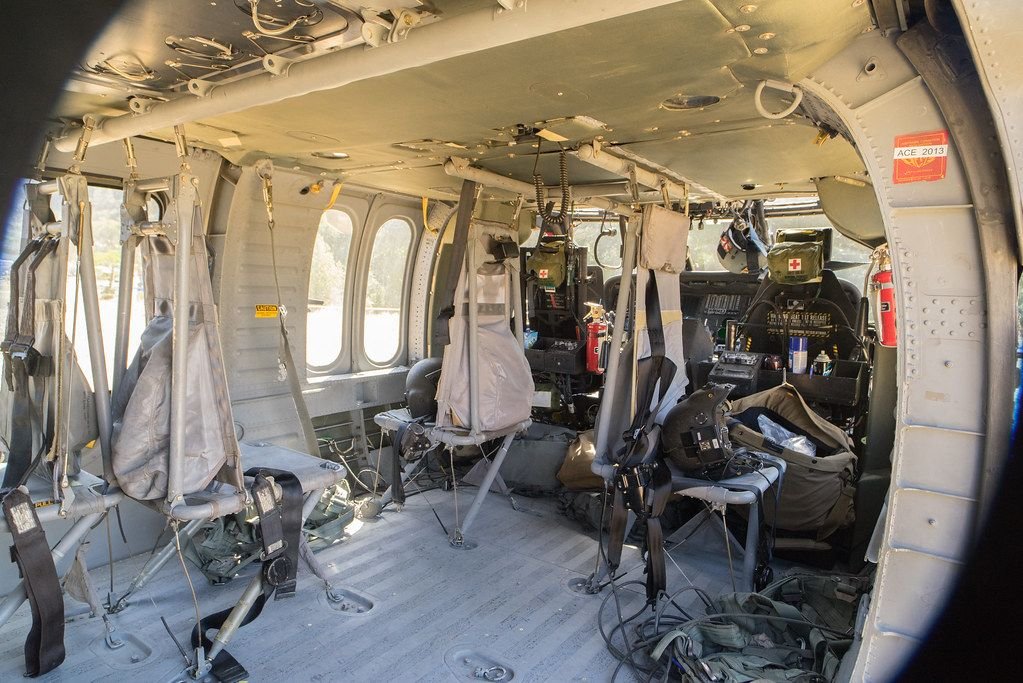
Owing to the vision limitations caused by use of NVG's it is not out of the realm of consideration Army policy would require for two crew members in the rear of the aircraft to enhance conflict resolution.
We routinely flew Chinooks with three crew in the rear with two designated to watch for traffic on either side of the aircraft. The third crew member was the Flight Engineer who controlled activities in the rear and performed safety checks. That simple concept saved my Bacon more than a few times.
Subjects
Blackhawk (H-60)
CRJ
Night Vision Goggles (NVG)
Links are to this post in the relevant subject page so that this post can be seen in context.
Reply to this quoting this original post. You need to be logged in. Not available on closed threads.
February 06, 2025, 20:50:00 GMT
permalink Post: 11823205
They could only later identify the correct light spot by following its trajectory according to their mental image of the approach to 33.

Subjects
Blackhawk (H-60)
CRJ
New York Times
Links are to this post in the relevant subject page so that this post can be seen in context.
Reply to this quoting this original post. You need to be logged in. Not available on closed threads.
February 07, 2025, 03:43:00 GMT
permalink Post: 11823374

The CRJ was given the right of way by ATC, who did not control the conflict. All lateral issues, because the vertical does not matter until more than 500' separation can be maintained. Even at 200', the helo was in the CRJ's airspace in all 4 dimensions.
Subjects
ATC
CRJ
Separation (ALL)
Vertical Separation
Links are to this post in the relevant subject page so that this post can be seen in context.
Reply to this quoting this original post. You need to be logged in. Not available on closed threads.
February 07, 2025, 04:52:00 GMT
permalink Post: 11823390
Seems to me that the collision altitude is reasonably well established.
Further, seems to me that the helicopter was reporting 200 feet via the IFF (transponder), probably from the AAU-32 Baro altimeter instrument in the cockpit.
I now understand that the H-60 had an ADS-B capable black box upgrade in place of the original basic IFF (APX-100?), and that the extended (ADS-) squitter message was turned off on the subject flight.
I think it is worth a close review of the static line plumbing to the AAU-32 which is the source of the 29.92 altitude report.
If, for example, the static line became disconnected, then cockpit ambient pressure might influence (bias) the AAU-32's reading.
I'd check the records to see if a pitot-static leak set had been performed in the recent past, and I'd inspect the remnants of cockpit plumbing if practical
Second... I'd check the upgraded ADS-B capable IFF/Transponder to see if it used aircraft static altitude sensed values as it reported "altitude" , and not (ever) use any other value such as altitude above geoid.
Long-shot thoughts, but perhaps worth considering.
There is graphic evidence that the fuselage of the 60 went under the nose of the CRJ700, and they hit is probably established beyond reasonable doubt on this forum, if not in the evidence of the wreckage in the Potomac. The flight path of the CRJ is well established, up until the moment that the aircraft struck. That should itself have put to bed the matter of height in the analysis.
It is highly probable that the 60 was on altitude on their instruments, and the causal factor being misidentification of a visual target beyond 5nm at night, landing on RWY01, while the CRJ is not pointing at the helicopter, it is presenting the red navlight on the port wingtip to the helicopter drivers, along with occasional strobes against a night sky. The vector of the CRJ across the visual sector of the helo crews was a slow translation to the right, and then from off around 10 o'clock the CRJ intersects the RWY33 finals and becomes a stationary target well off the main scan of the helicopter crew. When asked to confirm they are passing behind the CRJ traffic, they have the RWY01 traffic off to their right, and they are reasonably expecting that to be their traffic. If they don't have a breadcrumb trace of the traffic on their ND of tac display, while the outcome is unfortunate, I would argue that misidentification of a target in a condition where misidentification is a high probability is not the primary causal factor, it is a consequence of the practice of mixing crossing LL traffic with landing and TO traffic.
My concerns are not future risk from this condition occurring, failure to place spak filler over the cracks in this practice would be naughty. My concern is the system scapegoating a US Army flight crew doing a task that is arguably unreasonable. The fact that some may consider it just normal practice done badly does not answer the fact that physiological limitations and the kinetics of this situation make a mid air a near certainty, the obvious evidence being they did hit, the day before there was a near-miss/loss of separation.
It is time for command to assume responsibilities that go with their post, and not blame those beneath them that travel in harms way on the implicit faith that command is competent and cares for the crews safety, and the national resource that they represent. To do otherwise is conduct unbecoming.
The CRJ crew were having a normal day, until they were killed. The passengers on board could also reasonably expect that our industry cares enough to actually do what we say we are doing, and to MANAGE SAFETY , if that is not too much to ask for. Managing safety does not equate to box ticking, it is the very fact we have devolved into considering safety in a stochastic system to be assured by compliance that we get to this sorry saga.
Last edited by fdr; 7th February 2025 at 20:23 .
Subjects
ADSB (All)
Altimeter (All)
CRJ
Separation (ALL)
Links are to this post in the relevant subject page so that this post can be seen in context.
Reply to this quoting this original post. You need to be logged in. Not available on closed threads.
February 07, 2025, 10:27:00 GMT
permalink Post: 11823522
They could only later identify the correct light spot by following its trajectory according to their mental image of the approach to 33.
Subjects
Blackhawk (H-60)
CRJ
New York Times
Links are to this post in the relevant subject page so that this post can be seen in context.
Reply to this quoting this original post. You need to be logged in. Not available on closed threads.
February 07, 2025, 11:01:00 GMT
permalink Post: 11823555
Quite extraordinary for a supposed 'recertification' flight.
In another midair collision report, that happened in July 2022 at NorthLas Vegas airport, NTSB put out this:
Interviews with personnel at the air traffic control tower indicated that staffing was deficient, and most staff were required to work mandatory overtime shifts, reaching an annual average of 400 to 500 hours of overtime per controller. According to the air traffic manager (ATM), the inadequate staffing had resulted in reduced training discissions, and the management team was unable to appropriately monitor employee performance. The ATM stated that everyone on the team was exhausted, and that work/life balance was non-existent. It is likely that the cumulative effects of continued deficient staffing, excessive overtime, reduced training, and inadequate recovery time between shifts took a considerable toll on the control tower workforce.
I wonder, how this situation is with DCA ATC service.
I am not trying to blame ATC either. He issued clearance to PAT25 to cross behind and asked (and got) confirmation for CRJ in sight twice. It seems quite clear that helicopter crew did not look at the same airplane that ATC was asking about.
What baffles me here is, that it was obvious a routine procedure to let helicopters cross active runway heading less than 2 miles from runway treshold, leaving practically zero margin for error. Backups, designed to catch pilots or ATC errors (TCAS and ATC alarms) cannot catch up in short time left if someone makes a mistake, so this arrangement as based on "see and avoid" concept, in the night, with many lights in the background and a fact, that other aircraft on collision course does not move relatively on the screen, but just grows bigger. Unfortunatelly, that dot on the screen that will kill you starts growing bigger only in the last few seconds.
If I would ask ATC to cross runway heading DAY VFR so close to runway treshold at my airport with incoming commercial traffic, I would be denied 100 times out of 100 attempts. (and probably called nuts).
My guess on this tragedy is, that thru the years, the system was trying to pack more and more aircraft in the same space and same infrastructure, by gradually squeezing margins and safegueards, until one day, Jenga tower collapsed.
Subjects
AA5342
ADSB (All)
ATC
Blackhawk (H-60)
CRJ
DCA
NTSB
PAT25
See and Avoid
Situational Awareness
TCAS (All)
VFR
Links are to this post in the relevant subject page so that this post can be seen in context.
Reply to this quoting this original post. You need to be logged in. Not available on closed threads.
February 07, 2025, 11:52:00 GMT
permalink Post: 11823587
Subjects
AA5342
ADSB (All)
CRJ
NTSB
PAT25
TCAS (All)
Links are to this post in the relevant subject page so that this post can be seen in context.
Reply to this quoting this original post. You need to be logged in. Not available on closed threads.
February 07, 2025, 11:55:00 GMT
permalink Post: 11823592
Regarding to the Pavlovian - if PAL25 wouldnt have requested 'visual separation', what "punishment" would they expect from the Tower? Orbit(s)? Vectors? Or somethin wild, considering 200/300' altitude limits along the river and buildings/infrastructure left and right (what diameter would an orbit cost with a Blackhawk, is it feasible over black water at 200')? Therefore I am asking - would a non-request of a 'visual separation' mean major complications to such a helicopter at night? That as well would then be a significant flaw in the design.
Subjects
AA5342
Blackhawk (H-60)
CRJ
New York Times
Separation (ALL)
Visual Separation
Links are to this post in the relevant subject page so that this post can be seen in context.
Reply to this quoting this original post. You need to be logged in. Not available on closed threads.
February 07, 2025, 12:05:00 GMT
permalink Post: 11823605
Regarding to the Pavlovian - if PAL25 wouldnt have requested 'visual separation', what "punishment" would they expect from the Tower? Orbit(s)? Vectors? Or somethin wild, considering 200/300' altitude limits along the river and buildings/infrastructure left and right (what diameter would an orbit cost with a Blackhawk, is it feasible over black water at 200')? Therefore I am asking - would a non-request of a 'visual separation' mean major complications to such a helicopter at night? That as well would then be a significant flaw in the design.
Waiting for the tower to have no aircraft below ~700ft in the approach area, if we're assuming a 1.5Nm separation, could be quite a while.
Subjects
AA5342
Blackhawk (H-60)
CRJ
Separation (ALL)
VFR
Visual Separation
Links are to this post in the relevant subject page so that this post can be seen in context.
Reply to this quoting this original post. You need to be logged in. Not available on closed threads.