January 30, 2025, 09:18:00 GMT
permalink Post: 11817034
The human visual system is good at picking up movement across the visual field. As other have pointed out, if the two aircraft were on intersecting vectors, there would be no relative movement to be picked up. Bright(er) lights don't help: if anything, they make it harder to make out the source from the background, as the bright light makes the local background look like a uniform dark field.
From a 'human factors' point of view, if you have an incorrect situational awareness model in your consciousness, it is difficult to remain flexible enough to recognise you might be wrong - misidentifying the next in sequence, AAL3130, landing runway 1, as the CRJ (IF that is what happened) is hard to recover from.
We should not blame the flight-crews. We should not engineer them into situations where incorrect interpretation of what were likely inputs that were easy to interpret in more than one way become catastrophic. The problem is not restricted to air-navigation. One of the many reasons Norway lost the frigate Helge Ingstad in a collision was misidentification of a moving object (a brightly lit oil tanker) as a stationary object (an oil terminal), and incorrectly ascribing radio transmissions as coming from other moving ships in the vicinity,
Subjects
CRJ
Situational Awareness
Links are to this post in the relevant subject page so that this post can be seen in context.
Reply to this quoting this original post. You need to be logged in. Not available on closed threads.
January 30, 2025, 22:30:00 GMT
permalink Post: 11817712
https://en.wikipedia.org/wiki/Metrop...orts_Authority
Last edited by OldnGrounded; 30th January 2025 at 22:53 . Reason: Typo
Subjects
DCA
President Donald Trump
Links are to this post in the relevant subject page so that this post can be seen in context.
Reply to this quoting this original post. You need to be logged in. Not available on closed threads.
February 16, 2025, 09:42:00 GMT
permalink Post: 11829100
Last edited by Easy Street; 16th February 2025 at 10:32 .
Subjects
ATC
Night Vision Goggles (NVG)
Separation (ALL)
Visual Separation
Links are to this post in the relevant subject page so that this post can be seen in context.
Reply to this quoting this original post. You need to be logged in. Not available on closed threads.
February 17, 2025, 15:07:00 GMT
permalink Post: 11829956
Last edited by Wide Mouth Frog; 17th February 2025 at 15:28 .
Subjects
ATC
FAA
Links are to this post in the relevant subject page so that this post can be seen in context.
Reply to this quoting this original post. You need to be logged in. Not available on closed threads.
February 18, 2025, 08:00:00 GMT
permalink Post: 11830516
I wouldn't put it past the FAA to pull a stunt like that, read Mary Schiavo's (ex IG of the Dept. of Transportation) book if you want to know how wily they can be. And Jennifer gave them the perfect lay up in the last briefing.
It's way to easy to blame the pilots, over the years there have been incidents due to incorrect QNH settings, were both pilots and ATC have failed to catch the error, in a busy airspace with overworked ATC, late change of runway for airlines, and military helicopters using Night Vision Goggles, altimeter equipment failure/error.
Even the Max 200 ft altitude under the approach to a major US airport is an accident waiting to happen, and whoever approved this to be used during normal operations should be investigated. The CRJ was at around 325 ft on a visual/circling approach when it crashed, does anyone really think it's great airmanship to have a Black Hawk helicopter at 200 ft passing under you?
That's what made the Swiss Cheese model line up perfectly, a planned approved separation of 125 ft was the "best case" scenario.
Subjects
ATC
Accident Waiting to Happen
Altimeter (All)
Blackhawk (H-60)
CRJ
FAA
QNH
Separation (ALL)
Links are to this post in the relevant subject page so that this post can be seen in context.
Reply to this quoting this original post. You need to be logged in. Not available on closed threads.
February 22, 2025, 17:10:00 GMT
permalink Post: 11833774
… well having searched the usual places and the NTSB, you will have to help with directions and text for reference.
There is a NTSB Charter for data, but nothing which explains the link between ICAO and the USA, and thence to the NTSB and investigation, or the required statement of any USA deviation from the ICAO guidance (Annex 13).
Notwithstanding https://www.ntsb.gov/about/organizat...office_as.aspx
" fulfill U.S. obligations under International Civil Aviation Organization agreements"
"to examine specific aviation safety problems from a broader perspective. "
But back to the thread. Are there any reasons why NTSB might not comment on the wider organisational aspects as indicated in the discussion. Also noting that the NTSB have no powers of enforcement, relying on the FAA; thus if the FAA process were to be identified as deficient, who mandates change.
,,
Subjects
FAA
ICAO
NTSB
Links are to this post in the relevant subject page so that this post can be seen in context.
Reply to this quoting this original post. You need to be logged in. Not available on closed threads.
March 18, 2025, 00:23:00 GMT
permalink Post: 11849335
"\x85 to everyone in safety: look at the DCA midair collision given info in urgent action letter from NTSB. Widespread systems issues, total breakdown of proactive safety; repeats history from Herald of Free Enterprise to Challenger, Columbia etc. see my chapters on (Columbia testimony to Congress, RE book 2006 & 2005 Organization at the Limit book). Highlights real issues of multiple sometimes conflicting goals over multiple jurisdictions/perspectives, signals discounted in the face of ongoing production pressures, etc. Also note the reactions to failure. All well understood in 3 books capturing the new look work of the 80's -- 1990 (Reason) / 1994 (Woods etal) /1997 (Reason)."
Yet here we are all over again. All over again.
https://www.linkedin.com/posts/davidwoods3_to-everyone-in-safety-look-at-the-dca-midair-activity-7307401640821563392-I5Ez/?utm_source=share&utm_medium=member_ios&rcm=ACoAAAizWBQBjDn2 SfSP5os0fcB7hU2U_S8Iv3k
..
https://en.wikipedia.org/wiki/Clayton_Tunnel_rail_crash
One other aspect of this accident was that Signalman Killick was working a continuous 24-hour shift that day, rather than the regulation 18 hours to gain a complete day off duty. In his report on the accident Captain Tyler stated that "it was disgraceful that a man in so responsible a position as Signalman Killick should be compelled to work for twenty-four hours at a stretch in order to earn one day of rest a week."
Subjects
DCA
NTSB
Links are to this post in the relevant subject page so that this post can be seen in context.
Reply to this quoting this original post. You need to be logged in. Not available on closed threads.
March 26, 2025, 02:26:00 GMT
permalink Post: 11854317
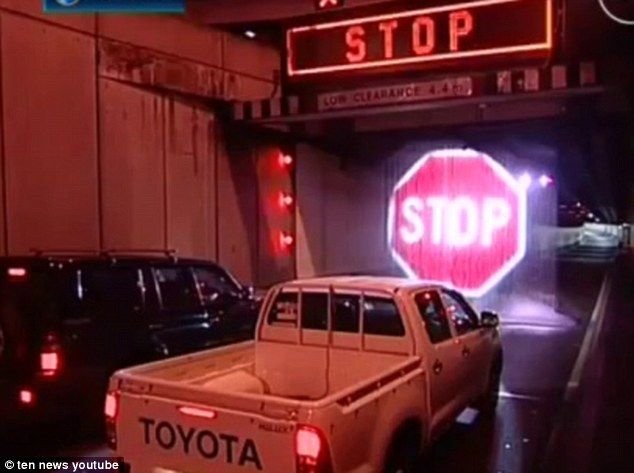
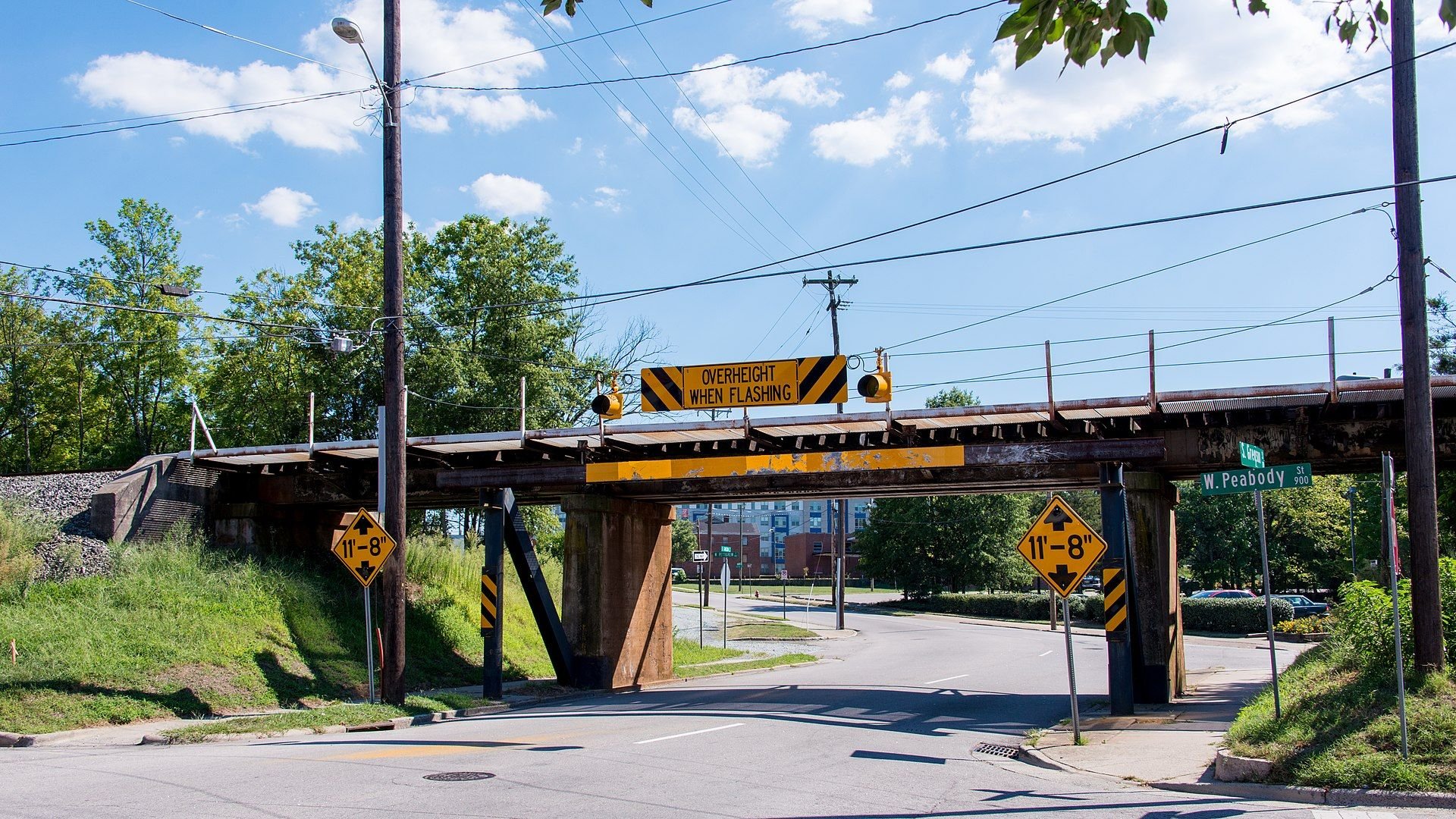
The classic 11'8" bridge of youtube fame has overheight lights. The bridge has since been slightly raised and the warning systems improved but still gets people driving straight through them.
Even the London Underground has frangible fittings to detect taller surface stock trains incorrectly approaching a deep-level tube tunnel, throwing signals to danger and thus raising trainstops, which if passed apply the emergency brakes. The latter is important, because SPADs (Signal Passed At Danger) are still not uncommon.
They're not everywhere. It's a risk analysis based mainly on the inconvenience and cost of the cleanup and closure for the bridge/tunnel, and how many overheight vehicles are actually impacting the obstacle. They also don't work especially well because people assume the overheight warning couldn't possibly apply to them .
There's probably some degree of tolerance involved; e.g. bridge marked at 4.4m, sensors at 4.6m, bridge is actually 4.8m. I'm not sure what the actual standards are.
Subjects: None
No recorded likes for this post (could be before pprune supported 'likes').Reply to this quoting this original post. You need to be logged in. Not available on closed threads.
September 30, 2025, 18:35:00 GMT
permalink Post: 11962172
https://en.wikipedia.org/wiki/Air_Fr..._investigation
Subjects
Accountability/Liability
Links are to this post in the relevant subject page so that this post can be seen in context.
Reply to this quoting this original post. You need to be logged in. Not available on closed threads.
February 14, 2026, 12:58:00 GMT
permalink Post: 12037163
https://en.wikipedia.org/wiki/Britis...ays_Flight_548
Last edited by Bergerie1; 14th February 2026 at 13:26 .
Subjects
Grief
Links are to this post in the relevant subject page so that this post can be seen in context.
Reply to this quoting this original post. You need to be logged in. Not available on closed threads.