March 20, 2025, 20:45:00 GMT
permalink Post: 11850879
1) The starting point for any of my thought process about the midair collision is that this accident should never have happened and would not have happened without some parts of "the system" failing to fulfill their assigned responsibilities. Midair collisions in U.S. airspace are an aberation, aren't they? I sense that many aviators and other aviation professionals don't want to say it out loud - their sense of disbelief that this actually occurred.
A few years ago, in response to a question after a guest lecture he had delivered at an ICAO event in Montreal, then-Chair of the NTSB Robert Zumwalt said, "we've already had that accident" . . . the question was about whether an accident caused by certain factors which were, in fact, present in the Colgan Air accident needed to happen, in order for certain rules to be changed. (I don't want to misstate the q&a, although my best recollection was that the question was about fatigue and rest, and commuting time before line service.) In other words, the DCA midair is not an accident the primary causes of which were factors the overall aviation system had not quite learned to do correctly. In comparison, at the time I first began "reading aviation", wind shear accidents were occuring not infrequently (that beginning was December 1974).
I have not represented anyone or anything in air crash litigation and my posting here is not intended as what most lawyers call "client development and prospecting." Despite that, I think the opening statement on behalf of the families of the victims of this accident will be quite a courtroom moment. It's against this backdrop that I've been trying to think through the federal entities' most likely defense. There is some sense, maybe only vague, that how the anticipated lawsuits play out will have some impact or bearing on how the overall aviation system responds to this tragic occurrence.
2) Not for the first time my choice of phrasing was too emphatic and also imprecise. I didn't mean to point to ASIAS as a foundational or ultimate component of decisions about safety of DCA airspace management and usage. Instead, the content of some of the incident reports pointed out by Juan Browne struck me as glaring. They struck me as strong evidence of two things; one - as noted above, this accident was the kind of occurrence caused by some part of the system not fulfilling its responsibilities, and the other, that there were pretty clear statements by "bottom-up" reporters about such responsibilities appearing to be unfulfilled at particular times and in particular situations.
So, from these two foundations, I'm trying to figure out whether the discretionary function exception applies or does not apply. If it applies, the federal court will not have jurisdiction over the claims and the federal defendants will enjoy immunity (irony intended). I apologize in advance for what follows next (it is quoted in full from Congressional Research Service Report (R45732.8, April 17, 2023) "The Federal Tort Claims Act (FTCA): A Legal Overview". I would not clutter up this respected forum with legal material were it not arguably necessary for meaningful discussion of what is likely to happen next in the aftermath of the night of January 29.
CRS:
"[T]to determine whether the discretionary function exception bars a particular plaintiff's suit under the FTCA, courts examine whether the federal employee was engaged in conduct that was (1) discretionary and (2) policy-driven. "If the challenged conduct is both discretionary and policy-driven," then the FTCA does not waive the government's sovereign immunity with respect to that conduct, and the plaintiff's FTCA claim must therefore fail. If, by contrast, an official's action either (1) "does not involve any discretion" or (2) "involves discretion," but "does not involve the kind of discretion\x97consideration of public policy\x97that the exception was designed to protect," then the discretionary function exception does not bar the plaintiff's claim.
Whether the Challenged Conduct Is Discretionary
When first evaluating whether "the conduct that is alleged to have caused the harm" to the plaintiff "can fairly be described as discretionary," a court must assess "whether the conduct at issue involves 'an element of judgment or choice' by the employee." "The conduct of federal employees is generally held to be discretionary unless 'a federal statute, regulation, or policy specifically prescribes a course of action for an employee to follow.'" If "the employee has no rightful option but to adhere to the directive" established by a federal statute, regulation, or policy, "then there is no discretion in the conduct for the discretionary function exception to protect." Put another way, the discretionary function exception does not insulate the United States from liability when its employees "act in violation of a statute or policy that specifically directs them to act otherwise."
Even where a federal statute, regulation, or policy pertaining to the challenged action exists, the action may nonetheless qualify as discretionary if the law in question "predominately uses permissive rather than mandatory language." In other words, where "a government agent's performance of an obligation requires that agent to make judgment calls, the discretionary function exception" may bar the plaintiff's claim under the FTCA. Notably, "[t]he presence of a few, isolated provisions cast in mandatory language" in a federal statute, regulation, or policy "does not transform an otherwise suggestive set of guidelines into binding" law that will defeat the discretionary function exception. "Even when some provisions of a policy are mandatory, governmental action remains discretionary if all of the challenged decisions involved 'an element of judgment or choice'".
[End CRS, all quotations in the excerpt as in original, and all footnotes omitted]
3) Which leads to this essential inquiry: which one - and the answer cannot be "both are involved" - is closer to what happened: the federal entity individuals involved at all levels acted in violation of a statute or policy that specifically directs them to act otherwise", or, the federal entity individuals' "performance of an obligation require[d] that agent to make judgment calls", and "all of the challenged decisions involved an 'element of judgment or choice.'"
On one hand, the imperative of separation of aircraft in controlled airspace is pretty absolute, as far as I have been given to understand. There isn't any discretion or choice to risk a collision at an "intolerable" level of likelihood in order to keep traffic moving, both airline and the military and other helicopter operations in question. And that was the query I was attempted to point out: the midair collision at DCA on Janaury 29 looks like the proverbial death of a thousand small cuts, such that there never was any "judgment" or "choice" as those (admittedly ambigous) terms are employed in the statute and its interpretation. I should have been clearer about only imagining that one of many hypothetical situations where - arguing for the defense - someone was looking at ASIAS and proceeded with the calculating or reasoning which presumably would qualify as "judgment" or "choice." The larger point is that taking account of all the safety information in all the system elements which have been noted and others which might not have been noted here, mark me down as quite skeptical that there ever occurred a time, at a particular place, where anyone acting on behalf of the federal government exercised judgment or discretion that - contrary to the assessment of the NTSB Chair - the risk at DCA was tolerable.
Two caveats to wrap: I don't envy the advocates for the victims' families, as it will be terribly challenging to argue the facts of this case without appearing to cast aspersions on some or all of the pilots and controllers. Nobody wants that, and I certainly don't.
The other is that I do not think that the discretionary function issue will play out in the context of the actions by the pilots of either aircraft or the controllers. Rather it will be litigated with regard to the way FAA (and its parent Cabinet department, DoT) structured, managed, and operated DCA airspace. And this could include staffing policies and procedures (but again, not individuals' actions or inactions on the night of the accident). There may be some involvemenmt of civil-military coordination also at the agency level.
On a somewhat personal note, just a few years ago I traveled by air to a major European capital where a quite substantial and important aviation industry organization has its headquarters; the purpose was to attend a conference hosted by that organization. When the flight ended, because I had not previously traveled on a 787 aircraft, I asked the cabin crew if I could please get an invitation to visit the flight deck to see it, if doing so would not unduly delay the pilots from deplaning. When I got admitted to the flight deck, the captain invited me to sit in the LHS, and then gave me his hat and offered to take my photograph (yes, really). In the snapshots this SLF/attorney looks pretty ridiculous, and I wonder, "what am I, ten years old?" I hope neither this post nor any others look like they were written by that kid.
Subjects
Accountability/Liability
DCA
FAA
ICAO
NTSB
Separation (ALL)
Links are to this post in the relevant subject page so that this post can be seen in context.
Reply to this quoting this original post. You need to be logged in. Not available on closed threads.
March 21, 2025, 06:04:00 GMT
permalink Post: 11851077
Subjects
FAA
Links are to this post in the relevant subject page so that this post can be seen in context.
Reply to this quoting this original post. You need to be logged in. Not available on closed threads.
March 21, 2025, 11:20:00 GMT
permalink Post: 11851281
 I always read you input as, while the detailed legal nitty-gritty is generally way beyond me, you always provide a refreshing viewpoint which is good to read! The aim of my Post, based on my interpretation of the above quote, was just to emphasise the existence of ASIAS is just as a tool or, rather, a set of tools but which has no real "proactive function" in itself. Yes, it represents a very small part of the Flight Safety chain - but as a resource in the main. As you say, there were loads of examples of what happened at DCA and my post was an explanation as to who, I believe, should have been looking at it. Maybe they did - and just ignored it? No idea!
In the UK, the airport operator is totally responsible for the safety of operations on or above their field out to 4000 ft on approach and departure - about 12 miles. The CAA who regulates aviation here, along with the Dept of Transport, but in conjunction with other stakeholders such as NATS (our en-route ATC organsiation), airlines and airfield operators etc, designs the airspace and sets the generic rules for it's use. As you said, the main rule is "Don't crash anything into anything else!". However, at the airfield, it is the airport operator who needs to ensure that the generic rules work in their environment. If a particular rule is legal but, if applied in their location, is unsafe, they can't apply that rule! That's what the Safety Case should say.
A relevant example? I used to regularly (for work) transit London S > N and N > S along the red dotted line below - at 2400ft as it kept me just out of the London TMA but as high as possible so, if it had all gone quiet on the engine front, I'd have the best chance to get the plane onto the ground with me alive and no-one else hurt. As part of the transit, I had to cross the final approach into London City (green line). So, say heading N, I'd chat to Thames Radar while over South London and would ask for a London City crossing. They'd chat to City ATC to co-ordinate and take me to the Thames before handing me to City Tower. My route over the Approach has aircraft at 1200 ft descending on the ILS and so I would have crossed anything landing at 1200 ft above that. So, while on first glance, it was fine I never, ever got that clearance with an aircraft landing - and for very good reasons. If the aircraft on the ILS had had to do a go-around, life could have become interesting very quickly. I was always held until the landing aircraft was well clear (ie ATC could see it was almost at the airfield) before they cleared me across. Indeed, legally, they could have given me a "You see the landing? Pass behind that"! But, no - always positive clearances. Got my vote ....... + gave me chance to enjoy the views of Greenwich and the City of London and "delayed" me a couple of minutes. OK, a bit unfair as LCY is "sleepy hollow" compared to DCA but, despite that, they were very friendly ..... but very strict!!!!!
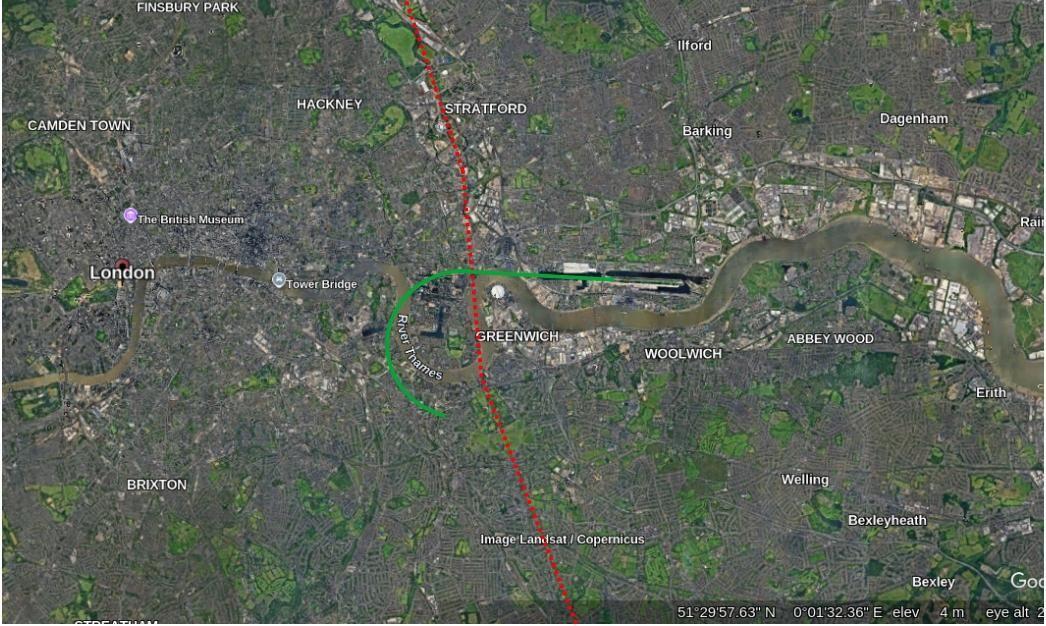
So, when you are discussing (I think!!!) whether ATC elected to give PAT25 a "You visual? Pass behind" or whether it was "ordered" from on-high as it was deemed safe to do, ultimately, it is the ATCOs call on the day. Now, before I get flamed, do I blame the ATCO ? No! Well, why not? After all, he gave PAT permission! And yes, it was a "legal" clearance. But was it a wise clearance? When unpacking that little lot you have to look at a raft of Human Factors which influenced that ATCO on that night. He was on his own so, probably, the only way he could cope with all he had on his plate was to try and shift some responsibility onto PAT25 - one less thing for him to juggle. But even then, he needed to be monitoring which he clearly was - but while very busy with other approaches and departures so he just picked up a concern too late as the audio shows - "Are you sure you see the jet?". Another factor - was the strategy to use Route 4 while 33 was active something ATCers at DCA, over time, started in an effort to cut down radio traffic and speed things up? If so, had it been assessed and then monitored for adverse safety? While anecdotally, it seemed people were aware of "close calls", had any analysis taken place looking at the Databases? In the UK certainly, all the Airport Operator responsibility.
To the final "accountability" part re payments to families, the thing we have here is (and, folks, correct me if I've got this wrong) the FAA set the rules and the operate the Rules. Here, the CAA sets the rules and the Airfield Operator operates the rules. That is important - for eg, huge argument here in the UK about just how independent the UK's Military Flight Safety organisation is ..... as it is part of the Military. IMHO, what we have here are valid generic rules, some of which were simply not suitable in this specific location - just like crossing London City with an aircraft on approach - legal ...... but very unwise. As to who carries the can, well, as you said WR 6-3 , the legal beagles will get to the bottom of that ..... but it will take some time. I'll leave that side to you!!! My main question out of all of this is, why were not these issues flagged up by airport management for further investigation given it was something of an open "secret"? And where else (around the world) is this happening?

And, on that cheerful note...........! H 'n' H
Subjects
ATC
ATCO
Accountability/Liability
Close Calls
DCA
FAA
PAT25
Pass Behind
Pass Behind (All)
Radar
Route 4
Links are to this post in the relevant subject page so that this post can be seen in context.
Reply to this quoting this original post. You need to be logged in. Not available on closed threads.
March 21, 2025, 13:06:00 GMT
permalink Post: 11851374
I generally do see the raw facts of the accident as pointing to the acts, omissions, decisions and so forth by the pilots of the Army helicopter. But their conduct must be seen - and this must be an absolute hard line - within the context of what acts, omissions, decisions and so forth were taken by the all identifiable elements of the parties involved - the FAA, the Dep't of Transportation, the Army, the DoD. This context includes the night of the accident and many time periods before. At this time as just an observer well outside any actual fact investigation I'm not expressing a view about the manufacturer of the NVGs.
If you would like an example of an overly complicated argument which - on the state of the public record at present - competent (if not also highly motivated and driven) trial counsel would be advised to leave on the cutting room floor . . . What about legal accountability for the Congressional actors who kept overloading the DCA airspace until it broke, or rather two aircraft broke apart upon impact midair and further upon hitting and sinking into the Potomac, along with the shattering of 67 lives and the lives of perhaps countless family members and other loved ones? What about the denizens of K Street and their collections of multiple colors of Gucci loafers, the better to match the liveries of their airline industry clients? I mean, it could get complicated, and not that interesting either. (Disclaimer: there isn't any likelihood, legally speaking, of holding Congress to account for its actions with regard to DCA airspace management and usage. . . . . . you know, other than "voting" and a word that rhymes with "shmolitics.")
Subjects
Accountability/Liability
DCA
FAA
Night Vision Goggles (NVG)
Links are to this post in the relevant subject page so that this post can be seen in context.
Reply to this quoting this original post. You need to be logged in. Not available on closed threads.
March 21, 2025, 15:19:00 GMT
permalink Post: 11851468
Subjects
FAA
Links are to this post in the relevant subject page so that this post can be seen in context.
Reply to this quoting this original post. You need to be logged in. Not available on closed threads.
March 22, 2025, 01:07:00 GMT
permalink Post: 11851803
". . . was the strategy to use Route 4 while 33 was active something ATCers at DCA, over time, started in an effort to cut down radio traffic and speed things up? If so, had it been assessed and then monitored for adverse safety? While anecdotally, it seemed people were aware of "close calls", had any analysis taken place looking at the Databases?"
To start, no apology whatsoever needed with regard to this dialogue. I try to respect the decorum required on this forum generally (meaning as SLF/attorney something has to be pretty severe or awful to warrant apologizing to me). And although I might not explain my sense of this with enough clarity - the FAA is conducting a review (according to Secretary Duffy) of airspace management and usage rules at other airports. The explanations in your posts, including very particularly the procedures when crossing approach corridors for London City, should be read and studied by the presumably well-informed professional ATO (Air Traffic Organization) staff assigned to conduct the review. (If it seems way presumptuous for an SLF/attorney to assert what resources ATO should be considering for the review noted by Sec. Duffy, I would suggest that ATO's reputation at the moment for upholding the much-touted "gold standard" set by FAA and United States aviation in general for the rest of the world ... well, like we used to say in trial practice, it takes the other side only about three minutes in court to stain the draperies, but it will take us all afternoon even to try to clean them. Reputation lost, same deal getting it back.)
On ASIAS, actually I entirely agree with your description of where it fits into the so-called "aviation safety ecosystem" (there simply has got to be a better term). The point I'm stuck on is one that (apologies, once more) comes from litigating in U.S. courts (especially federal District Courts around the country) employment law cases. Specifically, at the start, the main task for defense counsel is to construct the "chronology". Who did and said what to whom, when, and for what reason(s). I've asserted in an earlier post that in what I see as the inevitable litigation arising from this accident, there will be teams of significant lawyers constructing, or attempting to construct, such a chronology, although it won't be about an individual employee's hiring, performance reviews, promotion grants or denials and so on. It will be how it happened that the situation which obtained in the DCA airspace, in the cockpits of the Blackhawk helicopter and the CRJ, and ATC, came to exist.
(And I say "significant lawyers" because the attorneys who handle the big and significant aviation crash lawsuits for the families of victims are kind of the polar opposite of the stereotype ambulance chaser; to the contrary, their work is opposed by big-time big-law firm skyhigh hourly rate legally privileged sharks. The lawyers suing on behalf of these crash victims - if they are the same as the legal specialists I have met and discussed stuff with in various settings - are vindicating the need to bring the truth to light. "Aviation is the safest form of transportation": it is incanted over and over to the point of making anyone who utters it now sound quite seriously performative. Yet if it is so safe, how and why did those 67 people die over and in the Potomac? So with a kind of intense ruthlessness, the lawyers who will represent the families and other loved ones of the crash victims will unearth every little sequential act and omission which led to the situation which obtained on the fateful night of Wednesday, 29 January 2025. Exactly as the quoted language above from your post asks, what indeed was the strategy, if there even was one, as opposed to little incremental changes, accelerated of course by increasing airline flight lengths under the perimeter rule.)
On this basis, I would not concur with the idea that whether immunity is available for the defendants (both the Army and FAA/DoT) depends on whether the ATCO's specific conduct on Jan. 29 was "ordered" from on-high. The "on-high" is the development, over time, of the situation that obtained that night at DCA, despite safety imperatives in the NAS and aviation sector in general - and not a specific order or instruction given on that night.
The question behind the discretionary function exception is whether the act or omission by the defendant either (1) was negligent because it failed to follow a specific rule or statutory provision (if so, no immunity), or (2) was negligent in the usual sense of the word but will nevertheless still be protected by immunity because the act or omission was based on a decision about a policy matter or question. The decision on the policy matter or question is "discretionary" on the part of the government and hence the name of the exception protecting it. The courts are reluctant, and sometimes loath, to second-guess policy decisions made by the Executive Branch (I know, irony neither intended or not intended, given certain prominent flight- and aircraft-related matters in federal court at the moment). Under the first variety of negligence, there was no policy matter being decided, just failure to do something there was a legal duty to do (basic definition of negligence). Under the second variety, there would be a valid case to be made that there was negligence - but the immunity provided by the exception for discretionary functions prevents the case going forward.
So back to January 29, the assertion I've been making here is that no, there was not a specific rule or procedure that said to do things much like you describe the procedure - de facto (unwritten, informal) though it was - for transiting across the approach path. But there certainly were higher-order rules by which FAA and its ATC functions were required to observe in consistent performance, and not merely in repeated incantation that "aviation is the safest form of transportation." In fact, I wonder if clever lawyers might take that slogan and deploy it as a bludgeon. "You're at greater risk driving your car to the airport", they always say. Oh, really? Then let's talk about the equivalent scenario on the streets of Chicago with intersecting traffic lanes (obviously not at different altitudes), similarly difficult visibility conditions at night, compounded by NVGs. possibly compounded by a training or check ride in the vehicle, and then make the case that the Chicago PD cop directing traffic, and the motorist without the right-of-way, were acting on the basis of interpreting policies about driving on public roadways. No, there is no policy matter involved - there are strict rules of the road and over-riding principles for safe driving, and the failure to observe these is negligence.
It's simplistic but it might be sufficiently illustrative. Is "see and avoid" a procedure which involves making decisions on matters of policy? or is it a higher-order safety rule which must be observed at all times?
(Not meaning to slight the point about ANSP and regulatory functions needing to be separate - entirely agree, and yet, this will be an extraordinarily heavy lift to get done in the United States. That being said, I might know some lawyer-types who are fired up about efforts to make it happen this time around.)
WillowRun 6-3
Subjects
ATC
Blackhawk (H-60)
CRJ
Close Calls
DCA
FAA
Night Vision Goggles (NVG)
Route 4
See and Avoid
Links are to this post in the relevant subject page so that this post can be seen in context.
Reply to this quoting this original post. You need to be logged in. Not available on closed threads.
March 22, 2025, 05:51:00 GMT
permalink Post: 11851870
The local controller had an Assistant ATC and a Supervisor to coordinate, monitor and regulate the traffic.
Class B airspace "ATC Clearances and Separation. An ATC clearance is required to enter and operate within Class B airspace. VFR pilots are provided sequencing and separation from other aircraft while operating within Class B airspace." source FAA Class B
One way to determine how the application of sequencing and separation to VFR pilots in this airspace was being applied would be to listen to the audio and watch radar replays over the weeks and months prior.
Subjects
ATC
Close Calls
DCA
FAA
PAT25
Radar
Route 4
Separation (ALL)
VFR
Links are to this post in the relevant subject page so that this post can be seen in context.
Reply to this quoting this original post. You need to be logged in. Not available on closed threads.
March 22, 2025, 12:48:00 GMT
permalink Post: 11852019
Of course in this case the thing known to degrade safety is "see and avoid", the regulator is the FAA, and the relevant parts of the user community appear to be "near as damn all of it". Focusing on the Army pilots' failure to achieve it would be a neat distraction from the much more difficult question (for everyone) of whether it is an appropriately safe means of separating from airline traffic. The nice NTSB diagram of Route 4 and the 75 feet spacing dodges the issue that neither the controller nor the Army pilots assumed that procedural separation existed; visual separation was being applied.
The permanent closure of Route 4 could be seen as acceptance that this was an unsafe basis on which to permit operations. However it still misses the point. The route was capable of being operated safely, for instance by holding helicopter traffic or avoiding use of runway 33 when needed to prevent conflictions, but that would have been tacitly to accept that visual separation was unsafe. Closing the route also only fixes the issue on one runway at one airport. Where next?
Last edited by Easy Street; 22nd March 2025 at 13:08 .
Subjects
ATC
FAA
NTSB
Route 4
See and Avoid
Separation (ALL)
Visual Separation
Links are to this post in the relevant subject page so that this post can be seen in context.
Reply to this quoting this original post. You need to be logged in. Not available on closed threads.
March 23, 2025, 12:03:00 GMT
permalink Post: 11852643
1. On a pilots' forum, it is my view to take caution in one's tone before ever blaming pilots for mishaps or fatal accidents.
2. Especially with regard to military aviators.
3. Under all the airspace and traffic conditions which obtained on the night of the accident, you're certain, are you, that a case of negligence against the helicopter pilots can be framed, litigated, and won? If you are, you must know a boatload more about DCA airspace and operations than most folks on this forum do; it's plainly more than this SLF/attorney knows, I'll have to admit.
4. And speaking of trial strategy and tactics, you're envisioning a case where the FAA skates right out of it, because (presumably) the Army chopper-drivers so obviously t-boned the other vehicle . . . my view is that it is wise to recall an anecdote related by the famous trial lawyer, Gerry Spence.
(After what Attorney Spence thought was his brilliant courtroom performance, ripping witnesses apart and demanding justice for his injured client, the jury returned a verdict against him. At first he failed to understand how it could have found against his client, but then one of the jurors approached him and asked, "Mr. Spence, why did you make us hate you so?" You can find the anecdote in Brian Snow's essay for a NACUA Annual Conference in the mid-1990s, "Boomer's Banana Peels: Making Clients Happy - Is it Possible? - A Story for Children of All Ages" . . . which, by the way, teaches more about practicing law than you can imagine.)
5. I've refrained from including any reference, let alone citation, to the one FAA-related case about the discretionary function exception with which I'm familiar .....until now. See United States v. Varig Airlines , 467 U.S. 797 (1984) (parenthetical omitted because this is just an internet forum, correct?)
Subjects
DCA
FAA
Links are to this post in the relevant subject page so that this post can be seen in context.
Reply to this quoting this original post. You need to be logged in. Not available on closed threads.
March 23, 2025, 18:28:00 GMT
permalink Post: 11852866
3. Under all the airspace and traffic conditions which obtained on the night of the accident, you're certain, are you, that a case of negligence against the helicopter pilots can be framed, litigated, and won? If you are, you must know a boatload more about DCA airspace and operations than most folks on this forum do; it's plainly more than this SLF/attorney knows, I'll have to admit.
...
It seems clear the helicopter crew made mistakes that don't qualify as an exercise of discretion. Under the FTCA the crew is immune from lawsuits but the government is liable for the consequences of any such mistakes they made. As it was the governments responsibility not to assign them missions for which their training was inadequate.
I don't see such a case against the FAA. Perhaps if you find some specific regulation that was violated.
I think there is a reasonable chance the government will concede liability. The FTCA doesn't allow punitive damages and FTCA cases are not tried by juries. So if the government concedes liability I see no reason there will be any evidence presented about the cause, the remaining issues will be the amount of damages.
This all applies to the people on the jet. The helicopter crew can't claim against the military because of the Feres doctrine. Perhaps they have a claim against the FAA but I think their chances are distinctly weaker than those of the people on the jet.
Subjects
Accountability/Liability
DCA
FAA
Links are to this post in the relevant subject page so that this post can be seen in context.
Reply to this quoting this original post. You need to be logged in. Not available on closed threads.
March 23, 2025, 23:02:00 GMT
permalink Post: 11852983
It seems clear the helicopter crew made mistakes that don't qualify as an exercise of discretion. Under the FTCA the crew is immune from lawsuits but the government is liable for the consequences of any such mistakes they made. As it was the governments responsibility not to assign them missions for which their training was inadequate.
I don't see such a case against the FAA. Perhaps if you find some specific regulation that was violated.
I think there is a reasonable chance the government will concede liability. The FTCA doesn't allow punitive damages and FTCA cases are not tried by juries. So if the government concedes liability I see no reason there will be any evidence presented about the cause, the remaining issues will be the amount of damages.
This all applies to the people on the jet. The helicopter crew can't claim against the military because of the Feres doctrine. Perhaps they have a claim against the FAA but I think their chances are distinctly weaker than those of the people on the jet.
Where I continue to view the legal playing field differently is that essentially all the elements of the authorities responsible for construction and management of the airspace in question set it up so this accident could occur even if - in this case - the Army pilots followed every rule and procedure they had been trained to follow. To make the point with some absurdity, the way the Army crew was negligent was in refusing to fly the helicopter routes around DCA absent significant modifications in procedures and rules. What other meaning can reasonable minds give to the by-now cliche: it was an accident waiting to happen? Within the airspace as constructed and operated by both the Army and FAA (and any other users who, at an agency and/or interagency level, participated in management of DCA airspace), the helicopter crew could be said to have acted non-negligently - it was the airspace management system which was negligently designed and operated. As another poster noted, there was normalization of complacency.
As I've noted above, I've got no claim for expertise about the DCA airspace (or any airspace) but that does not stop me from asserting that it is hard to understand why you do not see deep liability exposure for FAA in this matter (prior to successful invocation of the discretionary function exception, of course).
I had to delve into Feres in some depth for my student law review article many years ago .... though that's not the only reason I hadn't noted its relevance and applicability. In any event, I recall it being pretty largely without exceptions.... probably you're correct about that aspect.
The trial lawyers I have met would not easily give up on devising a way to get this case in front of a jury and litigating all issues, including punitive damages. Perhaps a claim against the manufacturer and designer of the NVGs? . . . but then we'll see more posts about legal matters, especially the "government contractor defense" and the Boyle decision by the Supreme Court in 1988 (with some oversimplification, if the defense contractor follows reasonably precise specifications for the design of the military equipemt, it is protected against tort claims by, in effect, an extension of the government's immunity).
Conceding liability but without allowance for punitive damages or their equivalent will be tough sledding. Fatalities in this country in airline accidents had, thankfully, become rare. This lends brutal poignancy to descriptions of the lives and imminent futures of passengers on the CRJ. And despite the lingering in American law of the Feres Doctrine, of the Army crew too. Perhaps some fund would be established by the sages and scholars of the United States Congress and an eminence grise (such as the inimitable Mr. K. Feinberg) would hear claims and assign value.
Subjects
Accident Waiting to Happen
Accountability/Liability
CRJ
DCA
FAA
Night Vision Goggles (NVG)
Normalization of Deviance
Links are to this post in the relevant subject page so that this post can be seen in context.
Reply to this quoting this original post. You need to be logged in. Not available on closed threads.
March 28, 2025, 21:47:00 GMT
permalink Post: 11856277
How would the successful transmission of ADSB Out information by the Blackhawk have changed the outcome on January 29?
After watching the US Congress “grill” the military, FAA and NTSB how could they participate in a conspiracy of silence…
The NTSB will be seen as either very dumb or deceitful or both.
Now what was the number of the Q ANON Pizza shop, I feel like some truth tonight.
Send it to me via Signal. What a joke! The relatives of the crash victims were there to watch the farce.
The small elephant in the room…
Last edited by ATCDumbo; 29th March 2025 at 03:46 .
Subjects
ADSB (All)
ADSB Out
Blackhawk (H-60)
FAA
NTSB
Links are to this post in the relevant subject page so that this post can be seen in context.
Reply to this quoting this original post. You need to be logged in. Not available on closed threads.
March 29, 2025, 12:08:00 GMT
permalink Post: 11856609
How would the successful transmission of ADSB Out information by the Blackhawk have changed the outcome on January 29?
After watching the US Congress \x93grill\x94 the military, FAA and NTSB how could they participate in a conspiracy of silence\x85
The NTSB will be seen as either very dumb or deceitful or both.
Now what was the number of the Q ANON Pizza shop, I feel like some truth tonight.
Send it to me via Signal. What a joke! The relatives of the crash victims were there to watch the farce.
I'm all ears, excellent point. This focus on ADSB-OUT, and ADSB-IN is really a furphy in terms of this investigation to determine the facts, the whole facts and nothing but the facts.
If 5342 had ADSB-IN then PAT25 not having or not displaying ADSB-OUT could be relevant depending on 5342's cockpit display, the training of the pilots and their scanning.
5342 didn't have ADSB-IN so move along, move along, nothing to see, these aren't the droids you're looking for.
**Caveat. If the TWR display were using ADS-B for their updates and to generate Collision Alerts then the absence of PAT25 ADSB-OUT could be relevant.
But would the TWR ATC even know (or care) whether PAT-25 was ADSB-OUT capable. TWR ATC involves looking out the windows and judging the relative positions of aircraft.
Note: ATC display systems are not referenced in the NTSB Aviation Investigation Preliminary Report. This seems to be a glaring omission. So perhaps the NTSB are either very dumb or deceitful or both.
To further illustrate the focus on ADSB. Figure 1 Google Earth image with preliminary ADS-B data for flight 5342 and radar data for PAT25.
The ADS-B plots are 1 seconds intervals, the radar data are 4 second interval (as stated during US Congress Q&A).
So the focus is on the whizz bang ADS-B kit rather than what the ATC saw on their display.
There is reference to ATC radios, and 5342 was on frequency 119.1 MHZ and PAT25 was on frequency 134.35 MHZ. The ATC could've had them on the same frequency (changed PAT25 to 119.1 MHZ) but this would be abnormal. ATC Voice Switch systems like Frequentis, SITTI and Rohde & Schwarz typically have a frequency coupling, whereby controller broadcasts on multiple frequencies (2 or more) and voice communications on one frequency are heard on the other. In this case, ATC would broadcast on 119.1 MHZ and 134.55 MHZ and 5342 would hear instructions for aircraft on 134.55 MHZ, and PAT25 would hear instructions for aircraft on 119.1 MHZ.
Dumbo Question 3
As you are no doubt aware TWR Visual Separation is a very powerful tool / method in the eyes of the controller or in the eyes of a delegated pilot. (Literally and metaphorically speaking, i.e pun intended.)
It is the very basis of ATC Aerodrome Control. Sophisticated use requires experience and excellent situational awareness.
I just wonder how many (if any) of the \x93reported\x94 near collisions in the NTSB Preliminary report going back 4 and 14 years respectfully included perfectly safe visual separation?
I just wonder how many of the January Route 4 Helicopter plots crossing RWY 33 Approach (post 1346) were the result of ATC issuing a control instruction to change the track to closer to the shoreline or further over water.
Use of Route 4 during RWY 33 Approaches or RWY 15 Departures is possible providing a clearance limit is imposed prior to assigning relevant traffic, positive control instruction(s) and in the case of 5342, advising them of the relative position of PAT25 and that PAT25 would be maintaining separation from them.
Example for Route 4 southbound would be a clearance limit of Hains Point. Helicopter would be released past this point when there is no conflict (nil traffic) or assigned separation to avoid (pass behind). If there is a in-line stream of arriving traffic then Route 4 may not be available.
Sydney KSA has something similar for one of their helicopter routes - BONDI 5 (yep, named after the beach), delays may occur when RWY 07 is in use for DEP, or RWY 25 is in use for ARR. Further, the route is not available when RWY 16 PRM approaches are being conducted. Sydney KSA helicopter routes are in text form - TRACK TO..., TRACK VIA..., EAST OF..., and the INBOUND routes to Sydney KSA have a clearance limit in the clearance. A map display is very useful however it should be based on route descriptions. Perhaps the committee of 17 knows the history of the helicopter routes in and around DCA.
Subjects
ADSB (All)
ADSB Out
ATC
Blackhawk (H-60)
DCA
FAA
Frequency 119.1
Frequency 134.35
NTSB
PAT25
Pass Behind
Pass Behind (All)
Preliminary Report
Radar
Route 4
Separation (ALL)
Situational Awareness
Visual Separation
Links are to this post in the relevant subject page so that this post can be seen in context.
Reply to this quoting this original post. You need to be logged in. Not available on closed threads.
March 29, 2025, 18:17:00 GMT
permalink Post: 11856798
1) Regarding ADSB-Out being turned off, what is the reason there was such emphasis placed on this at the recent Congressional hearing (and just scoring media points per usual in Committee hearings doesn't qualify as a "reason" in this context). Is the reason that there are objections to running the kinds of tests in question (per the R&N thread) in or near DCA airspace? Is it valid to say there is no connection to the chain of causes-and-effects which led to the midair collision on Janaury 29 (but if there is, what is that connection, specifically)? Is the reason some connection with the occurence of TA's and RA's on TCAS as documented by NTSB? (although other posts on the R&N thread indicate that ADSB-out isn't connected to TCAS advisories . . . that is, if I understood those other posts). Or something else? I'm dismissing the mere fact that FR24 doesn't provide information to enthusiasts as the reason for such emphasis in the hearing.
2) If the Army operates certain "missions" with ADSB-Out turned off, and it conducts these operations based on national security concerns, my initial thought about this practice is, . . . . . . . hey, isn't there a discretionary function involved in deciding what avionics (or electronics system if this isn't within the technical definition and scope of "avionics") to operate based on national security concerns? So the Senator declaring that there is "no justification" seems to deliberately overlook the existence in the Federal Tort Claims Act of the exception. (I realize there has not been, to my knowledge at least, any lawsuits filed yet. But they're certainly going to happen.)
Of course, this all said, the indictment of the structure and operation of the portion of the NAS in which DCA is situated might (as suggested previosly) itself be adjudged inconsistent and non-compliant with basic standards of aviation safety. The only not-crazy-sounding justification for that state of affairs would seem to be "but we have to move traffic in volume." As a legal wrangle over whether that obvious judgment of a "policy" nature is or is not a proper basis for keeping federal immunity in place in a particular matter . . . I am quite skeptical such a legal wrangle would ever make it as far as an actual courtroom proceeding. But will Congress not try to manuever itself into the issue for all the usual reasons - some people want actually to address the problem constructively, some just want to please their donors, and some just follow the crowd, or so it always appears.
3) Something about discovery in civil litigation was underscored by the exchange in the video clip: there's an Army memo, dated Aug. 9, 2024 as referenced by Sen. Cruz, about operating in the NAS with ADSB-Out turned off. And the Army so far declines to turn it over to the Committee. (Applying the rough equivalent of a pre-snap read by a QB, the manner in which the Army witness replied to Sen. Cruz's questions gave the impression that the Army and DoD will strongly resist the memo in question becoming public.)
[Okay, I'll refrain from speculating how much fun it would be to decide which officer or officers would be presented as the Person(s) Most Knowledgeable about the matters discussed in this memo (on the Army side, receiving the Rule 30(b)(6) deposition notice), or similarly, how much fun would be had by counsel describing the "subject matter(s)" which must be specifically iterated in a Rule 30(b)(6) deposition notice (on the plaintiffs' side).]
4. I'm very determinedly hoping this won't be read or even misinterpreted as an offensive point. In the YT video produced by "Mover" in which he interviewed a former Army helicopter aviator (post 1228), it was possible to draw the impression that Army helicopter pilots operating in the airspace in which DCA is situated have a certain attitude toward FAA ATC. That is, the Army operates - one could get the impression - in its own "airspace system" and deals with FAA ATC only as much and only as quickly as necessary. Listening to the pertient Jan. 29 ATC R/T, and knowing the visual difficulties presented by the basic facts of nighttime in that specific area of the DCA airspace, plus NVGs, an observer could get the impression that the Army aviator handling the R/T was doing so in a perfunctory manner on Jan. 29.
To explain further, upthread (in post 1261) in the context of a Mover/Gonky YT video (post 1228) someone much more knowledgeable than myself observed that the way in which the Army pilot interviewed in the video described communications with FAA ATCOs in DCA airspace was as if Army chopper pilots view FAA ATCOs somewhat as a nuisance. Far be it from me to fault any pilot over any practice or custom in anything, including comms with ATCOs. But faulting any pilot is not the point. The point is that in that YT video, as related that other poster, --
"it was suggested that it\x92s perfectly OK to second guess what ATC might have said to you, reply to that, and then if no correction is forthcoming you can comply with your guess. As others have pointed out implicitly, that works if there\x92s only one error involved, but here there were three: an untrue statement, leading to a wrongly issued clearance, and a missing read back."
It is known that ADSB-Out is not active on the Army and other certain missions in the relevant airspace. Is there also a pattern or practice of operating with a mindset that FAA ATC is a necessary nuisance, to be indulged but not focused upon as closely as other airspace users? If any reader asserts this question accuses the Army pilots or any one of them in the helicopter on January 29 of negligence - that would be incorrect. The way in which the airspace had been designed, managed and operated handed those pilots a pre-determined normalization of complacency - so it appears, does it not?. They operated their flight within the system they had been given, which does not constitute negligence. The designers, managers, and operators of that system . . . well, it will be for the courts to sort out whether the exception to the removal of federal immunity to tort claims applies to those systemic level actions, or not. If it were not for the existence of the discretionary function exception, I personally believe the race to the courthouse would already have been a feeding frenzy worthy of the most biting negative stereotypes about lawyers.
Speaking of immunities, wasn't it generally believed that the airspace within the NAS, and especially airspace in which major airports in the United States are situated, was immune to midair collisions, in general and not only collisions sudden, without actionable warning, and with at most two or three seconds' knowledge of impending death and disaster? Mere SLF/attorney as I am, I had believed that. It follows, but only under that mindset, that what occurred was obviously negligence, and even gross negligence. The point is, expect the lawsuits to be, in a word, consistent with the ugliness one feels seeing the wreckage pulled from the Potomac, or reading about the backgrounds of 67 people. Or both.
Subjects
ADSB (All)
ATC
DCA
FAA
NTSB
Night Vision Goggles (NVG)
Normalization of Deviance
President Donald Trump
TCAS (All)
TCAS RA
Links are to this post in the relevant subject page so that this post can be seen in context.
Reply to this quoting this original post. You need to be logged in. Not available on closed threads.
March 30, 2025, 01:42:00 GMT
permalink Post: 11857026
<snip>
It is known that ADSB-Out is not active on the Army and other certain missions in the relevant airspace. Is there also a pattern or practice of operating with a mindset that FAA ATC is a necessary nuisance, to be indulged but not focused upon as closely as other airspace users? If any reader asserts this question accuses the Army pilots or any one of them in the helicopter on January 29 of negligence - that would be incorrect. The way in which the airspace had been designed, managed and operated handed those pilots a pre-determined normalization of complacency - so it appears, does it not?. They operated their flight within the system they had been given, which does not constitute negligence. The designers, managers, and operators of that system . . . well, it will be for the courts to sort out whether the exception to the removal of federal immunity to tort claims applies to those systemic level actions, or not. If it were not for the existence of the discretionary function exception, I personally believe the race to the courthouse would already have been a feeding frenzy worthy of the most biting negative stereotypes about lawyers.
<snip>
There were other holes in the cheese, so the pilot was working in a compromised environment.
I'm just an SLF, so no domain expertise at all.
Last edited by artee; 30th March 2025 at 04:00 . Reason: Typo
Subjects
ATC
DCA
FAA
Normalization of Deviance
Separation (ALL)
Visual Separation
Links are to this post in the relevant subject page so that this post can be seen in context.
Reply to this quoting this original post. You need to be logged in. Not available on closed threads.
March 30, 2025, 05:00:00 GMT
permalink Post: 11857059
In recent investigations ATSB (Australia) has been pushing the merits of ADSB-IN. NTSB's (and ATSB's) remit is rather broad and can be used to push a particular agenda.
FAA (and CASA) can mandate ADSB-IN in all powered aircraft, and the US (and AU) Governments could easily fund the fitment from the Government coffers. Every billionaire in the Forbes Top 200 Richest People in America could easily afford to fund ADSB fitment. Would certainly improve their Philanthropy scores.
Be interesting to see whether PSA Airlines tick the ADSB-IN option with their next fleet order, or retrofit their fleet with ADSB-IN.
Last edited by sunnySA; 30th March 2025 at 05:08 . Reason: typo
Subjects
ADSB (All)
CRJ
FAA
Links are to this post in the relevant subject page so that this post can be seen in context.
Reply to this quoting this original post. You need to be logged in. Not available on closed threads.
March 30, 2025, 05:44:00 GMT
permalink Post: 11857069
I agree with the rest and don't understand** the constant foot dragging by the FAA about ADS-B.
**Disclaimer: I do understand it because the FAA is under control of the Congress and the lobbyists for the aviation industry seem to have made it clear that a mandate for ADS-B will be resisted by a bunch of people who don't want to spend money on what they feel is unnecessary. Instead they go after the ones with a weak lobby, the hobby drones, to have useless short-range position transmitters that don't improve safety, but do increase cost. I also think there is some sort of cover-up in that ADS-B doesn't have enough bandwidth for the full integration such as placing transmitters on known fixed obstacles, like radio towers, and the predicted commercial drone traffic. So the FAA is stuck. Have it as a nice extra, but if they push too much and the flaws become obvious. To fix that likely requires some give from the FCC of spectrum, but the FCC has been selling prime spectrum to private industry and have lobbyists chewing on the FCC who would not give up a slice for the common good.
Subjects
ADSB (All)
FAA
Links are to this post in the relevant subject page so that this post can be seen in context.
Reply to this quoting this original post. You need to be logged in. Not available on closed threads.
March 30, 2025, 13:46:00 GMT
permalink Post: 11857344
In recent investigations ATSB (Australia) has been pushing the merits of ADSB-IN. NTSB's (and ATSB's) remit is rather broad and can be used to push a particular agenda.
FAA (and CASA) can mandate ADSB-IN in all powered aircraft, and the US (and AU) Governments could easily fund the fitment from the Government coffers. Every billionaire in the Forbes Top 200 Richest People in America could easily afford to fund ADSB fitment. Would certainly improve their Philanthropy scores.
Be interesting to see whether PSA Airlines tick the ADSB-IN option with their next fleet order, or retrofit their fleet with ADSB-IN.
Adding the mandated ADSB-OUT capability to the Proline 4 was a simpler exercise as it mainly required upgrading the TDR-94 transponders and making use of already-available ARINC-429 data from the Air Data Computers, AHRS/IRS and GPS
Subjects
ADSB (All)
CRJ
FAA
Links are to this post in the relevant subject page so that this post can be seen in context.
Reply to this quoting this original post. You need to be logged in. Not available on closed threads.
March 30, 2025, 21:17:00 GMT
permalink Post: 11857555
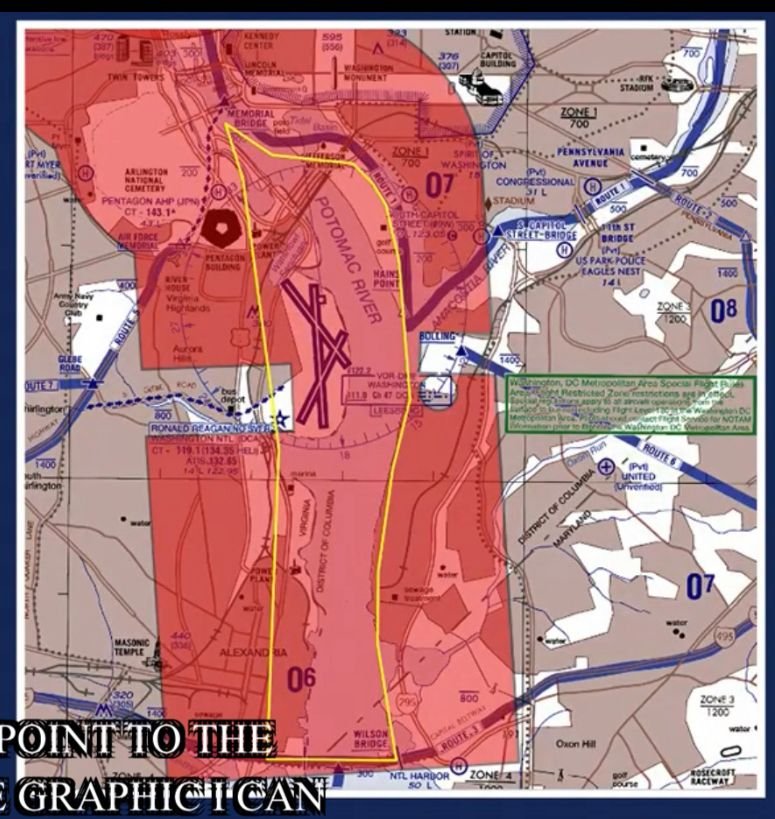
another item in the testimony was that generally 100% army helicopters flew there with ADSB set to OFF.
and that the accident heli might have put their ADSB to ON, but that the FAA had not received ADSB data from this heli in 730 days.
on ADSB there also was a difference between the Mike and Lima models,
NTSB chair indicated there was a lot more factual information. I wonder if the pull from Congress will lead to a change in the normal process, and release more factual information (with an appropriate disclaimer).
Subjects
ADSB (All)
FAA
NTSB
Links are to this post in the relevant subject page so that this post can be seen in context.
Reply to this quoting this original post. You need to be logged in. Not available on closed threads.
March 30, 2025, 21:50:00 GMT
permalink Post: 11857565
This is from 7 years ago:
Subjects
ADSB (All)
ADSB Out
FAA
Links are to this post in the relevant subject page so that this post can be seen in context.
Reply to this quoting this original post. You need to be logged in. Not available on closed threads.