May 24, 2025, 15:13:00 GMT
permalink Post: 11889642
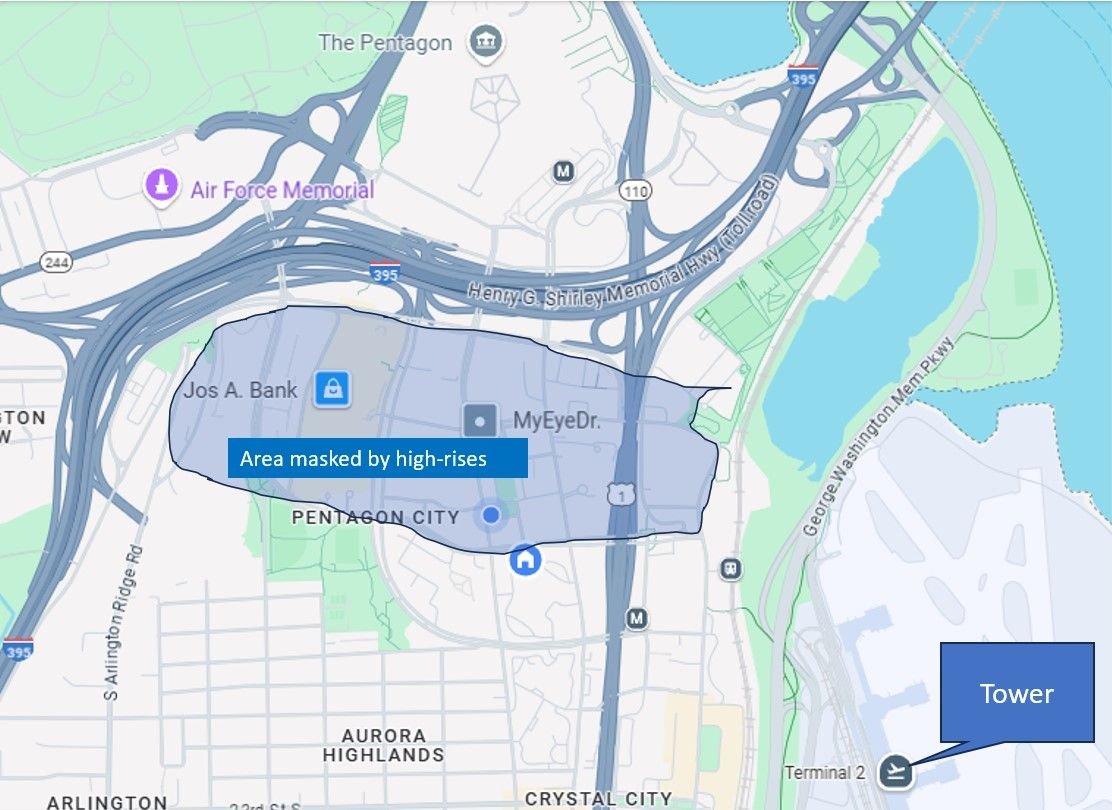
It would also be good to know who was on board that helicopter and why it was Pete Hairgelseth.
Subjects
DCA
Route 5
Links are to this post in the relevant subject page so that this post can be seen in context.
Reply to this quoting this original post. You need to be logged in. Not available on closed threads.
August 01, 2025, 22:40:00 GMT
permalink Post: 11932083
And they acknowledged it, although in a very short reply (understandable to keep R/T's as short as possible).
But replying with " traffic circling 33 in sight " just might have improved their own SA, helping to build the mental picture that mentioned traffic was going to move slightly to their left and was at some point going to cross their route from left to right. And if they didn't have that mental picture of what "circling 33" meant for their routing, then a lot was wrong long before the impact.
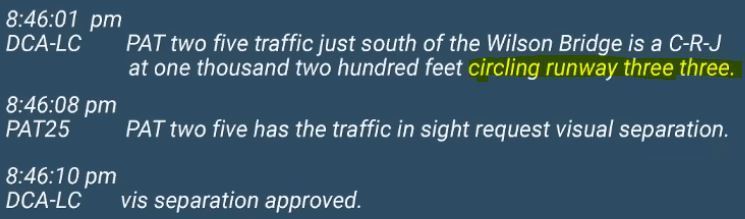
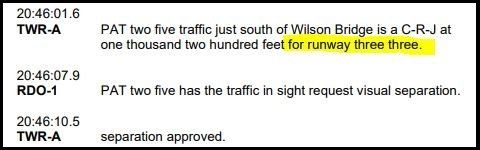
And what strikes me over and over again, is this mutual 'pavlovian' "request visual separation"-"approved" thing, as if proclaiming these words, absolves all involved from any rules/restriction that might hinder the smooth flow of things (which it does - kind of).
Even at the last chance of averting disaster by the controller (by clearly indicating the target), the pavlovian reaction was there again (totally meaningless as it was already requested and approved 96 second earlier)...
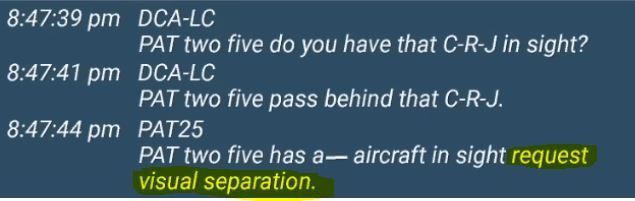
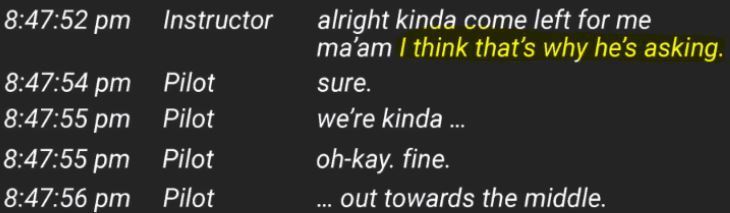
Last edited by DIBO; 2nd August 2025 at 22:03 . Reason: add extract from UH60 CVR transcript (not available/included in NTSB debrief animation)
Subjects
ATC
CVR
Night Vision Goggles (NVG)
Separation (ALL)
Situational Awareness
Visual Separation
Links are to this post in the relevant subject page so that this post can be seen in context.
Reply to this quoting this original post. You need to be logged in. Not available on closed threads.
August 08, 2025, 06:37:00 GMT
permalink Post: 11935035
If they would has kept wings level, maybe both wings would have narrowly escaped major damage, only MLG and belly at risk of the main rotor.
But it all doesn't matter, really. 'Fate is the hunter' and they got caught.
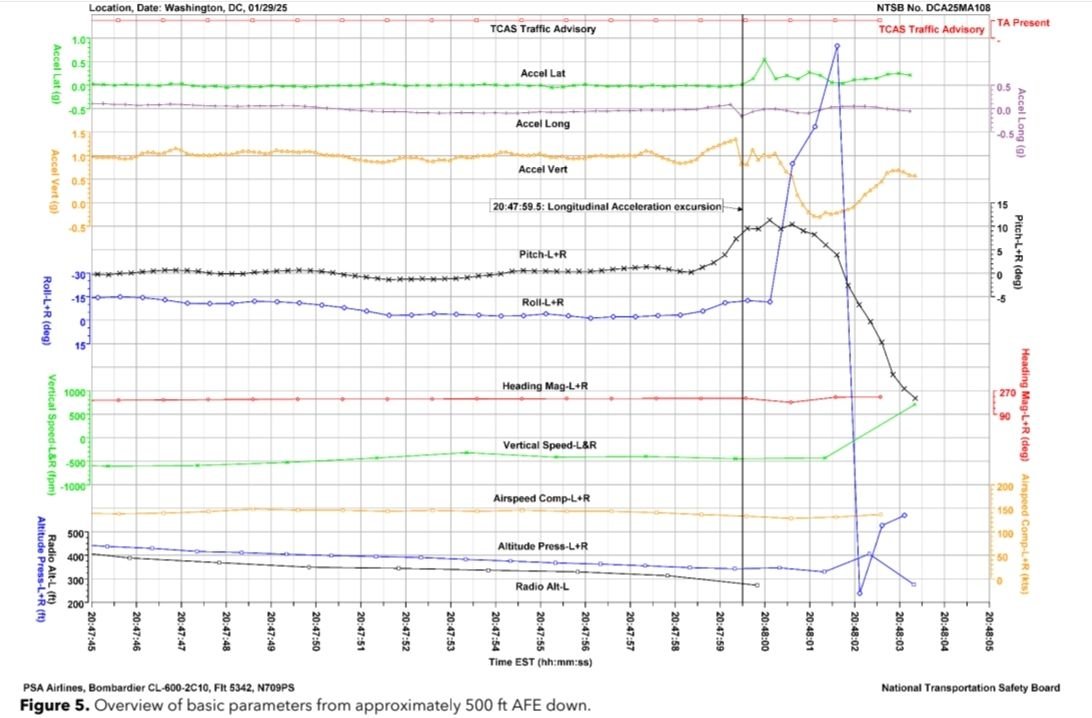
You can see that the pitch-up reduced the airspeed, and the vertical speed was mostly unaffected. This would have had a net effect of making the descent steeper (as the Radio Alt suggests).
If the CRJ crew had remained unaware, we would've learned how the downwash of a helicopter affects the wings of a jet.
The ultimate point is that a situation where a helicopter scrapes by the underside of a jet is not supposed to occur. At this point, all bets are off anyway, and rather than pondering what to do in such a situation, the focus should be on how to prevent it in the first place.
Subjects
CRJ
Links are to this post in the relevant subject page so that this post can be seen in context.
Reply to this quoting this original post. You need to be logged in. Not available on closed threads.
August 10, 2025, 18:08:00 GMT
permalink Post: 11936308
"Request visual separation" is non-standard.
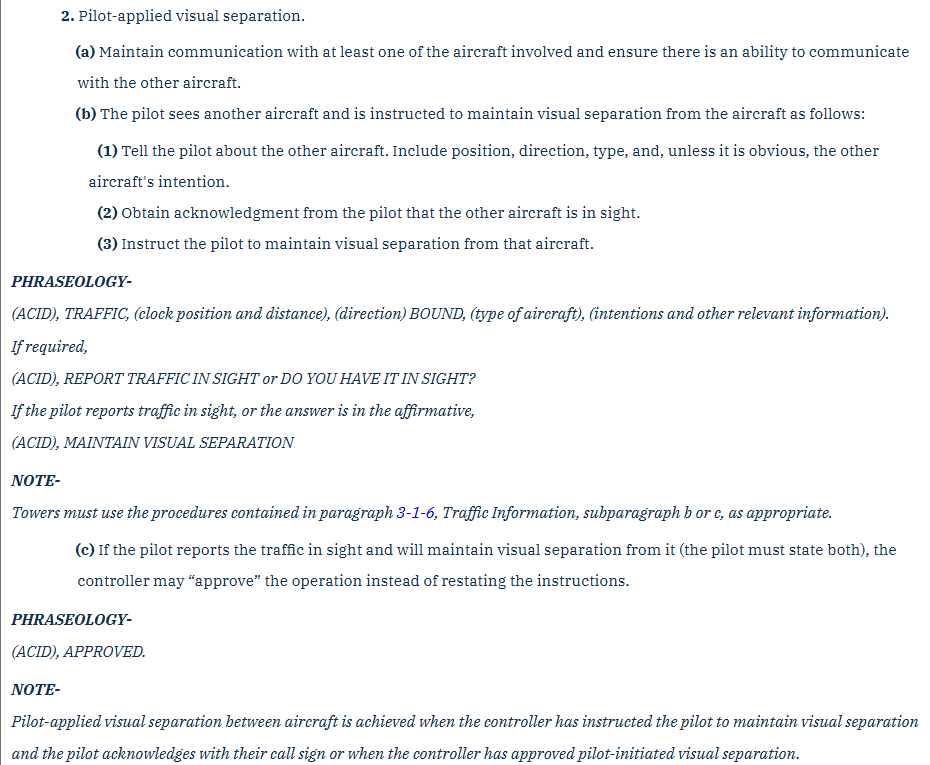
https://www.faa.gov/air_traffic/publ...section_2.html
Subjects
ATC
Separation (ALL)
Traffic in Sight
Visual Separation
Links are to this post in the relevant subject page so that this post can be seen in context.
Reply to this quoting this original post. You need to be logged in. Not available on closed threads.
August 11, 2025, 23:34:00 GMT
permalink Post: 11936975
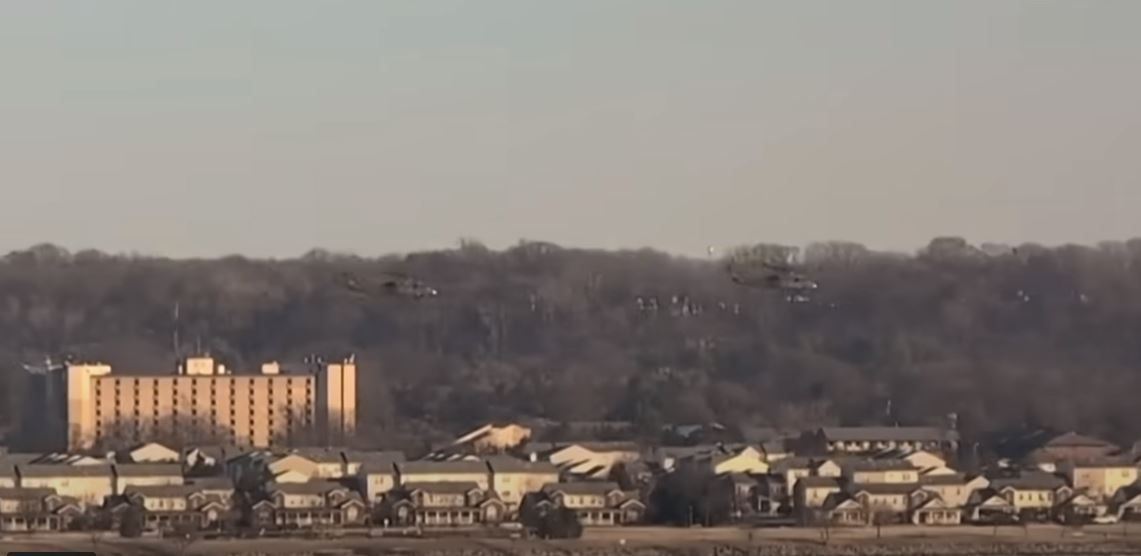
I wonder how many pilots on rwy 01/19 really perceived this section of the routing as unsafe (when flown correctly = hugging the shoreline at max 200ft).
A nuisance, undoubtedly. And the whole helicopter traffic surrounding DCA, pretty unsafe, I can understand.
And then we have nighttime...
A helicopter may be operated at less than the minimums prescribed in paragraph (b) or (c) of this section, provided each person operating the helicopter complies with any routes or altitudes specifically prescribed for helicopters by the FAA
Subjects
DCA
FAA
Route 4
Links are to this post in the relevant subject page so that this post can be seen in context.
Reply to this quoting this original post. You need to be logged in. Not available on closed threads.
August 12, 2025, 00:21:00 GMT
permalink Post: 11936996
"Request visual separation" is non-standard.
https://www.faa.gov/air_traffic/publ...section_2.html
Absolutely, it was a non-standard discourse. But however you look at what was said, PAT 25 requested the change to visual separation. Meaning PAT25 correctly believed he was under standard 1.5nm/500ft separation at the time and that he needed LC approval for Visual separation to be applied. The change in the separation standard being applied did not happen until the LC accepted PAT 25\x92s traffic visual report and authorised the change. It\x92s not an automatic change made just on the pilot\x92s say so, ie by reporting visual, which I think is what you may be implying (happy if you correct me). Both pilot and LC are necessary (and both made errors here).
Subjects
ATC
PAT25
Separation (ALL)
Traffic in Sight
Visual Separation
Links are to this post in the relevant subject page so that this post can be seen in context.
Reply to this quoting this original post. You need to be logged in. Not available on closed threads.
October 20, 2025, 23:41:00 GMT
permalink Post: 11973406
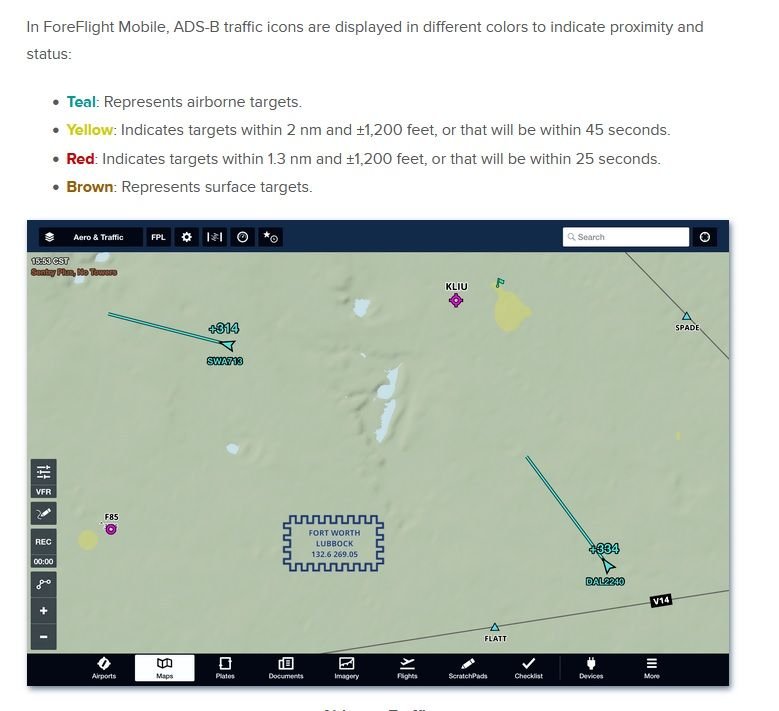
(the same thing happens with boat transponders, once you get close enough to throw a beer at the other boat they can be on the opposite side of you as the traffic display shows)
For myself, I get to look at the pretty colors. If I was the AA plane the helo would have been red, but it was close enough to be red even if it was going behind me.
Last edited by island_airphoto; 20th October 2025 at 23:54 .
Subjects
ADSB (All)
ADSB Out
Radar
Separation (ALL)
TCAS (All)
Links are to this post in the relevant subject page so that this post can be seen in context.
Reply to this quoting this original post. You need to be logged in. Not available on closed threads.
January 27, 2026, 21:50:00 GMT
permalink Post: 12028235
@Osinttechnical
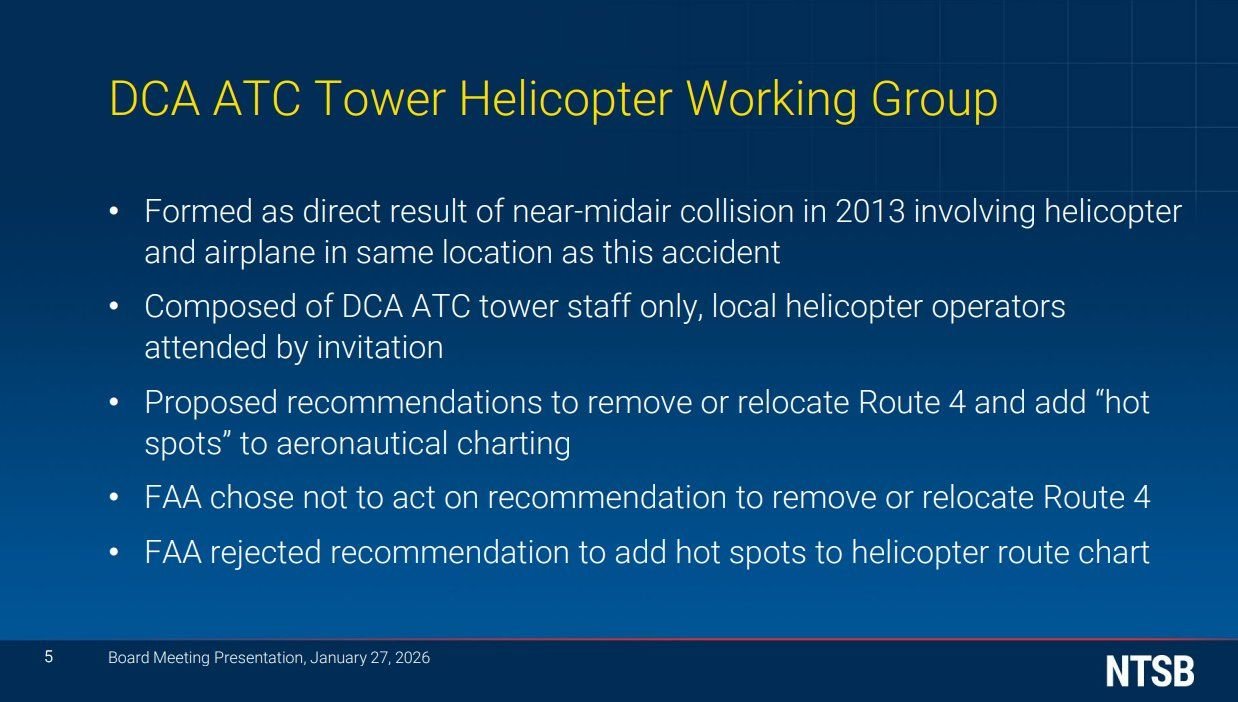
Possibly one of the more damning slides in NTSB history found in the Blackhawk-American Airline
s crash investigation.
In 2013, a group of local ATC and helicopter pilots proposed moving flight paths to avoid aircraft-helicopter collisions on landing at DCA. The FAA ignored them.
Subjects
ATC
DCA
FAA
NTSB
Links are to this post in the relevant subject page so that this post can be seen in context.
Reply to this quoting this original post. You need to be logged in. Not available on closed threads.
February 16, 2026, 15:23:00 GMT
permalink Post: 12038098
I have unfortunately witnessed this almost all the time in the accidents I surveyed.
On the legal front , only in my home country, France , it always has been a disaster for the families , from the 1968 AF Caravelle shot down , the 1973 Iberia mid air collision in Nantes, the 1986 UTA DC10 bombing , the Concorde, or AF447 , every single time , it took well over 10 years to get a trial and every time the judgement was absolving , what the families saw as the real culprits, and the wounds are still open for them , decades later
Justice in the US is much faster , but I am not convinced the result will be better for the families. I hope for them I am wrong . Keep us posted WR 6-3.
.
One of my best school friends was on UTA 772 that was bombed over Niger in 1989, he was 36. We had learnt to fly together, I saw his first solo and he saw mine. We both worked in Africa in the 1980s but for different companies.
I knew his family well and I spent a fair bit of time with them after the accident and here are a few things I learnt:
Firstly, immediately after an accident the friends and relatives are desperate for information, first the What, then the Why. They will look anywhere and everywhere for this information. In this modern world this might well lead them here. When I post on this forum I am always conscious that some of the bereaved are most likely reading. If that is you then I hold you in the light. Getting clear, accurate, timely information to them can be a great comfort. Not everyone can comprehend an accident report or some technical aviation detail but they can if it is explained in a language they can understand so good posts on pprune can help. Consider it a service.
The second lesson for me was dealing with grief. I have been involved in several fatal (non-aviation) accidents and with the families of the victims. As an engineer by training I was taught, reinforced later by experience, that an objective approach is most likely to get to understand the cause and prevention of an accident. However that objective, dispassionate, disinterested approach completely ignores the very powerful emotions that can consume the surviving victims. It is all too easy use the objective facts as some kind of shield for yourself. I think that some recognition that grief can be a great help to the bereaved. The spectrum of grief is enormous and no two people deal with it in the same way.
Motivation: In my experience (and this seems to be the case with Tim and Sheri Lilley) is that some bereaved often have a powerful motivation to prevent this happening again. These people can help you advance your cause if you feel the same way.
A final lesson, and apologies to any lawyers here, is that most legal systems utterly fail to serve the victims or their bereaved. They are glacially slow, bureaucratic, wildly expensive, and polluted with politics. They usually serve the powerful at the expense of the weak (in the UK the NHS is the poster child for this). UTA 772 was one and there are many other aviation ones as ATC Watcher mentions. More examples would be Hillsborough, Grenfell Tower, Pan Am 103, Deepwater Horizon, and Piper Alpha, the list goes on and on.
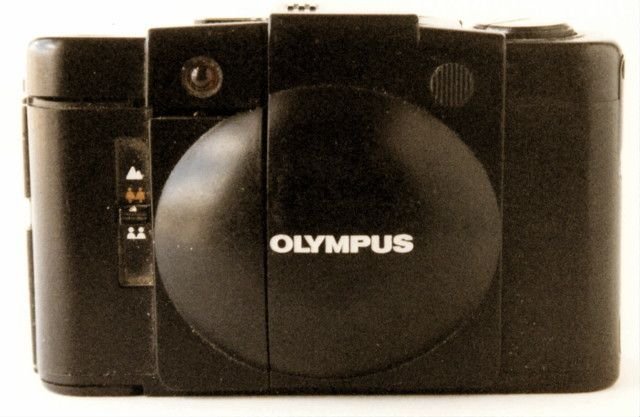
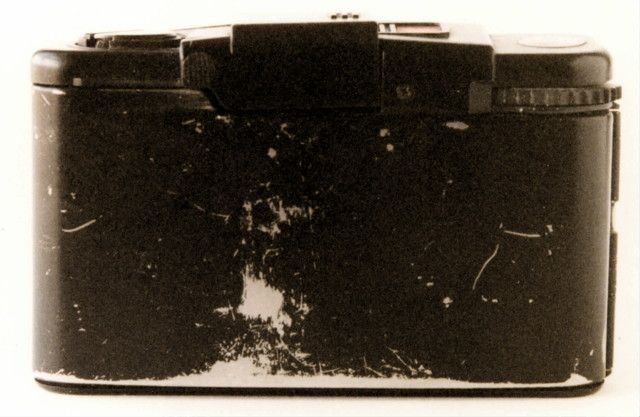
There is a postscript to my story of UTA 772. My friend's body was never identified so it was nearly seven years later that his affairs could be settled. We then held a memorial service at our flying club (he had left some money in his will to the club). After the memorial his mother reached into her bag and handed me a camera. Apparently the French military would regularly visit the UTA 772 crash site where the shifting sands would often reveal new wreckage. They found some of his belongings, including this camera. Here is what it looked like having survived the bomb, falling from 35,000 feet and spending several years in the desert:
It was pretty beaten up but I could tell it had a film in it. With a specialist photo laboratory in London and help from Kodak's technical department we carefully processed the film. The negatives were pretty thin but there were definitely half a dozen images there. As the lab said "once we heard the story all of our printers wanted to have a go at getting some prints from this."
I remember the joy on his mothers face when she leafed through the prints and right near the end was a picture of her son. It must have been taken a few days before the crash and was certainly the last image of him alive.
Personally, I hate the word 'closure' in these situations as it implies that the grief ends at some point. It never does, all you can hope for is that day by day one manages it a little better. I think that photograph helped his mother to do this, if only a little.
Others weren't so lucky; her other son became obsessed with finding out what had happened to UTA 772, also with Pan Am 103 which had some obvious similarities. That obsession gradually descended into mania.
Subjects
ATC
Grief
Links are to this post in the relevant subject page so that this post can be seen in context.
Reply to this quoting this original post. You need to be logged in. Not available on closed threads.