January 30, 2025, 15:12:00 GMT
permalink Post: 11817315
I suppose this is what you'll get if you routinely direct aircraft onto a collision course with each other, and therefore ignoring the CA will also become routine because you expect the pilots to sort it out. At 300' while lining up on short final, or looking into an environment full of lights. Normalisation of Deviation.
Subjects
Normalization of Deviance
Radar
Links are to this post in the relevant subject page so that this post can be seen in context.
Reply to this quoting this original post. You need to be logged in. Not available on closed threads.
January 30, 2025, 15:21:00 GMT
permalink Post: 11817322
I suppose this is what you'll get if you routinely direct aircraft onto a collision course with each other, and therefore ignoring the CA will also become routine because you expect the pilots to sort it out. At 300' while lining up on short final, or looking into an environment full of lights. Normalisation of Deviation.
Subjects
Normalization of Deviance
Radar
Links are to this post in the relevant subject page so that this post can be seen in context.
Reply to this quoting this original post. You need to be logged in. Not available on closed threads.
January 30, 2025, 17:54:00 GMT
permalink Post: 11817466
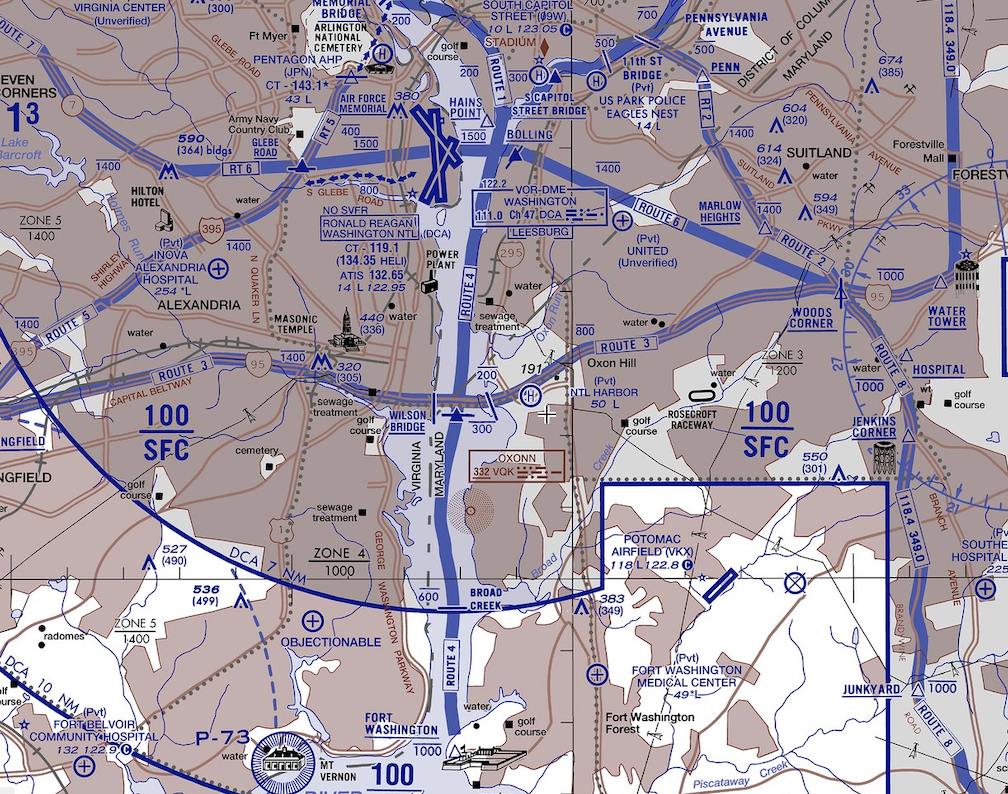
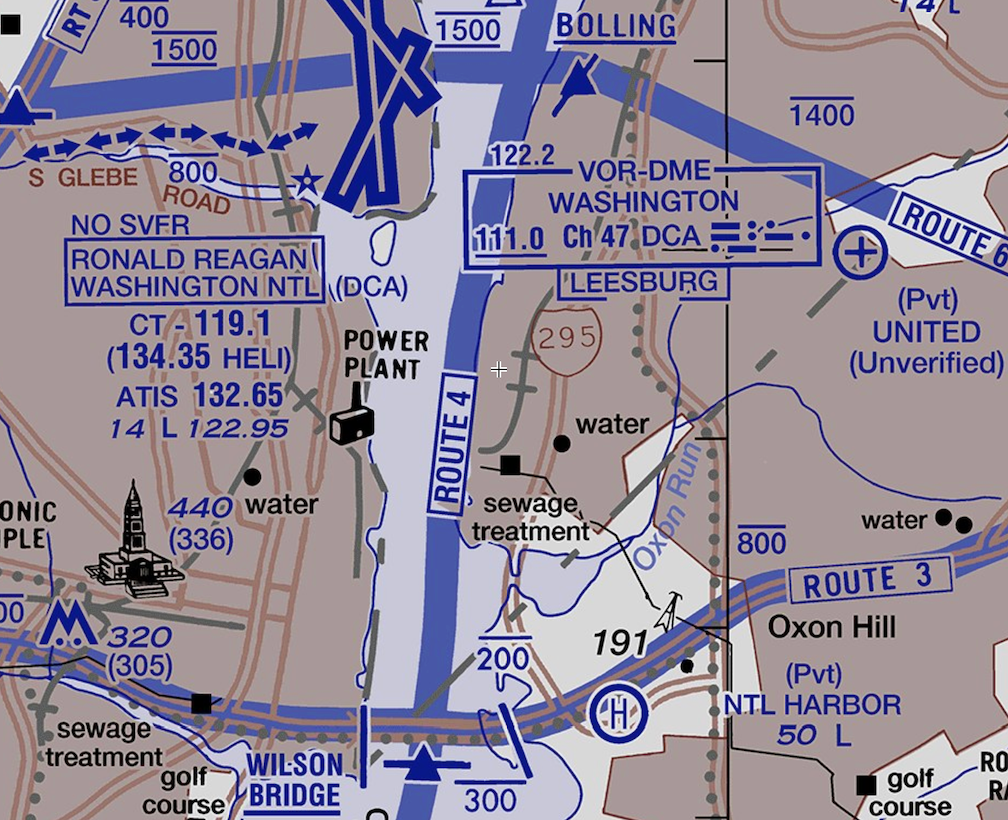
Hanging the ATCO on duty will not bring back the dead, and was not the cause of the problem. Having a civil aircraft flight path immediately overhead a LL RW VFR transit lane that guarantees that there is a loss of separation standards is what set this off, and that has been the case for decades. The crews, pax, ATC officers and families just happened to be the ones that got caught out by the insanity that permitted this track and procedure to exist.
Will Mr T go after the ATC guy? probably, the ATC officer doesn't own a kingdom, a corporation, in fact he is highly unlikely to have a DUI, and certainly won't be a convicted felon. So, I would rate the ATC guy as the convenient fall guy for the US Govt, the FAA who should not have permitted the operation of civil aircraft proximate to military LL traffic, and the US DOD, who will have signed off on the practice of disregarding minimum separation per \xa791.111. As far as right of way, the CRJ was landing, \xa791.113(g) applies, notwithstanding 91.113(d). The CRJ had every reasonable expectation of not sharing a cockpit on short finals to a short runway with crossing helo traffic.
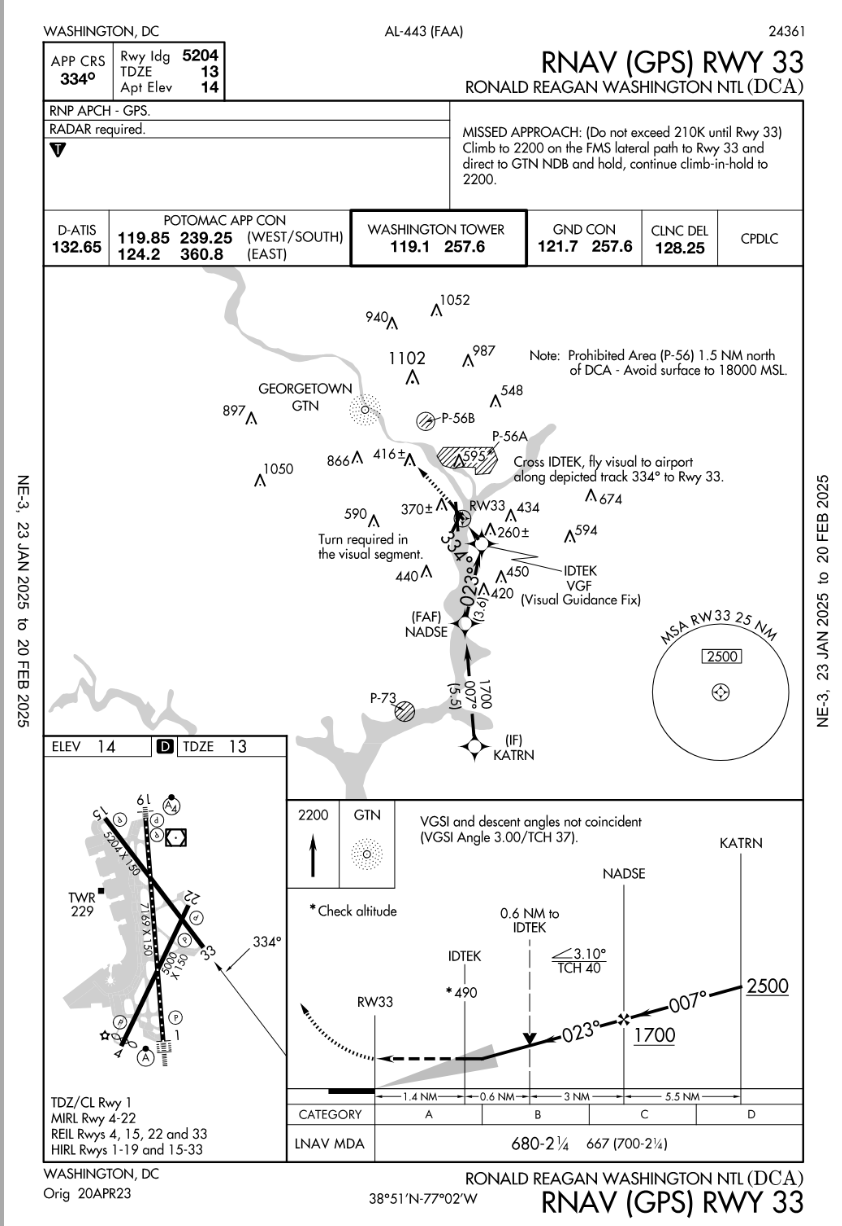
- IDTEK is 1.4nm from touchdown, 490' PA
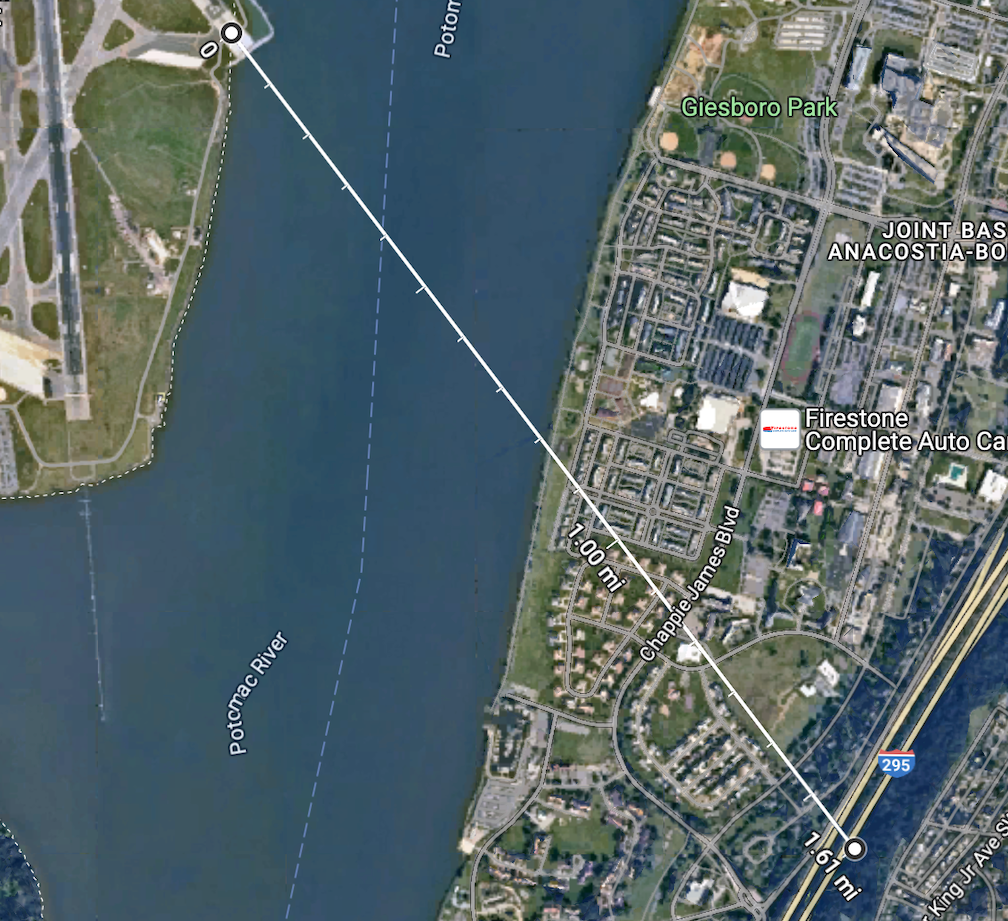
- the east bank of the river is half way to the runway, ~0.7nm, -> 245'+40' = 285'PA
- the collision occurred around mid river, ~0.3-0.4nm from T/D, or 125+40=165'
What is particularly annoying is that the generals and other command staff, and Secretaries of Transport, Defence etc are quite happy to cashier the F-18 pilots who do a slow flypast of an arena, or the T-38 instructors who do the same over some other game, and yet, what is the chance that any general takes responsibility for their part in this sorry state of affairs. responsibility like other stuff, only goes downwards,
Its pretty easy for the guy in charge to defame the ATCO.
Glass houses.

Subjects
ATC
ATCO
CRJ
FAA
Normalization of Deviance
President Donald Trump
Separation (ALL)
VFR
Links are to this post in the relevant subject page so that this post can be seen in context.
Reply to this quoting this original post. You need to be logged in. Not available on closed threads.
January 31, 2025, 14:55:00 GMT
permalink Post: 11818269
JFK’s Canarsie in the old days was straight in that wasn’t to get around the rules. There’s a lot of normalization of deviance in FAAland.
As a survivor of an A-10 mid-air with similar geometry and height, it easy to imagine the event.
Last edited by galaxy flyer; 31st January 2025 at 15:00 . Reason: Clean up a mistake
Subjects
ATC
CRJ
DCA
IFR
Normalization of Deviance
Links are to this post in the relevant subject page so that this post can be seen in context.
Reply to this quoting this original post. You need to be logged in. Not available on closed threads.
January 31, 2025, 15:55:00 GMT
permalink Post: 11818314
The NASA ASRS database contains safety reports raised over the US. A quick search with the term \x93helicopter\x94 produced 40+ reports with the highlights shown below.. (apologies, to save time these are all copy and pasted) There are more, but I appreciate that most of us have annual eye examinations to pass so didn\x92t want to overdo it!
^^^^^^^^
Subjects
Normalization of Deviance
Links are to this post in the relevant subject page so that this post can be seen in context.
Reply to this quoting this original post. You need to be logged in. Not available on closed threads.
January 31, 2025, 22:33:00 GMT
permalink Post: 11818580
- more than half (26) of the 48 reported incidents occurred in the 1990s.
- there were ten incidents reported between 2000 and 2014, inclusive.
- there were nine incidents reported between 2015 and 2020 inclusive.
- there were three incidents reported from 2021 to present; two incidents in 2022, and one in 2024.
The submission dates for the 16 incidents referenced in your post are as follows:
1. April 2024
2. January 2022
3. July 2018
4. July 2015
5. May 2015
6. March 2015
7. June 2013
8. May 2013
9. April 1999
10. February 1997
11. September 1993
12. August 1993
13. July 1993
14. June 1993
15. August 1992
16. April 1991
Subjects
ATC
Accident Waiting to Happen
Close Calls
Normalization of Deviance
Links are to this post in the relevant subject page so that this post can be seen in context.
Reply to this quoting this original post. You need to be logged in. Not available on closed threads.
January 31, 2025, 23:15:00 GMT
permalink Post: 11818608
O ver reliance on "see and avoid" in ATC
M ixture of military and civil traffic in terminal areas
P olitical interference at Federal level
L essons not learned from previous incidents
A TC shortages and chronic understaffing
C omplexity of airspace around major cities
E quipment and technology outdated or inadequate
N ormalisation of deviance
C onvenience chosen over safety
Y our luck runs out
Subjects
ATC
Normalization of Deviance
See and Avoid
Links are to this post in the relevant subject page so that this post can be seen in context.
Reply to this quoting this original post. You need to be logged in. Not available on closed threads.
February 01, 2025, 20:50:00 GMT
permalink Post: 11819292
- Thanks to Henra for reminding us that the ATC radar displays altitudes to the nearest 100 \xb150'
- The nytimes.com images of heli positions outside the depicted corridors posted by fdr in #578 is massive evidence of normalisation of deviance
- I am beginning to suspect that the CAs noted by the controller are a commonplace occurrence. It would be interesting to learn the frequency of DCA CAs between the helicopters and traffic on approach and departure. How much and how long has deviance been normalized?
- The CRJ crew was left out of the information loop. I have a dedicated traffic display on the top of my glider panel which shows ADS-B and Flarm traffic. A similar display would have enabled the CRJ crew to monitor traffic and get the hell out of the way when necessary.
Subjects
ADSB (All)
ATC
CRJ
DCA
Normalization of Deviance
Radar
Links are to this post in the relevant subject page so that this post can be seen in context.
Reply to this quoting this original post. You need to be logged in. Not available on closed threads.
February 02, 2025, 01:26:00 GMT
permalink Post: 11819432
Ws should expect more.
Subjects
ATC
CRJ
Normalization of Deviance
VFR
Links are to this post in the relevant subject page so that this post can be seen in context.
Reply to this quoting this original post. You need to be logged in. Not available on closed threads.
February 02, 2025, 02:19:00 GMT
permalink Post: 11819453
Also that plot might include times when helo pilots get other routing due to no DCA traffic. Speculating, but some of those points are pretty close to the airport.
Last edited by YRP; 2nd February 2025 at 02:34 .
Subjects
DCA
Normalization of Deviance
Links are to this post in the relevant subject page so that this post can be seen in context.
Reply to this quoting this original post. You need to be logged in. Not available on closed threads.
February 02, 2025, 02:53:00 GMT
permalink Post: 11819469
Subjects
ATC
CRJ
Normalization of Deviance
VFR
Links are to this post in the relevant subject page so that this post can be seen in context.
Reply to this quoting this original post. You need to be logged in. Not available on closed threads.
February 02, 2025, 06:12:00 GMT
permalink Post: 11819533
It's a symptom of a system operating beyond its capacity.
The fact that this sort of procedure is so normalised that many crew don\x92t even see this as a threat is quite telling about the safety culture within the US aviation sector. Someone above mentioned that night circling approaches are not approved in many company Ops Manuals, so ATC issue late visual approaches instead, as a means to work around this limitation. This should be ringing alarm bells to all.
This sort of thing wouldn\x92t even be attempted in most parts of the world, let alone allowed to become normal sop.
Plus the often aggressive and intimidating tone from US ATC, and their habit of simply talking faster and saying everything multiple times (eg say again), has persuaded pilots and controllers that they are "making it work"
Whereas it's a classic example of Normalisation of Deviance
Subjects
ATC
Normalization of Deviance
Links are to this post in the relevant subject page so that this post can be seen in context.
Reply to this quoting this original post. You need to be logged in. Not available on closed threads.
February 02, 2025, 09:27:00 GMT
permalink Post: 11819621
Now , is delegating visual separation to an Helicopter ,at night ,( with pilots wearing NGV ) on an aircraft cleared off the ILS doing a circle visual NPA at 500 ft with 4 eyes most probably locked on the PAPI something safe ? with a 150- Ft margin of error designed on the chart ? But it is how the system was built and local controllers trained on doing this , since years. Normalization of Deviance.
I wish good luck to the NTSB and the FAA is trying to reverse this .
Subjects
FAA
IFR
Land and Hold Short
NTSB
Normalization of Deviance
Separation (ALL)
Visual Separation
Links are to this post in the relevant subject page so that this post can be seen in context.
Reply to this quoting this original post. You need to be logged in. Not available on closed threads.
February 02, 2025, 13:57:00 GMT
permalink Post: 11819813
Spot on, but there is no EU or EASA IFR there are IFR rules and agreed global aviation standards ,Period What is ( or should I say was ) done in DC , or in SFO or with LAHSO, etc are all deviations to allow more traffic outside of the rules. Expedition taking over our good old "safety first" mantra .
Now , is delegating visual separation to an Helicopter ,at night ,( with pilots wearing NGV ) on an aircraft cleared off the ILS doing a circle visual NPA at 500 ft with 4 eyes most probably locked on the PAPI something safe ? with a 150- Ft margin of error designed on the chart ? But it is how the system was built and local controllers trained on doing this , since years. Normalization of Deviance.
I wish good luck to the NTSB and the FAA is trying to reverse this .
1.The bat-s### crazy way they run helicopters around DCA.
2. The usual practice of visual approaches and spacing in good weather. It has been that way for as long as I have been flying and I am having a hard time even visualizing all IFR spacing to the pavement on a clear day. Maybe asking an American about this is like asking a fish if water is wet?
The OTHER unrelated (?) issue of sorting out ground traffic. I was one on the same trip cleared to take off with an aircraft on short final and then cleared to land with an airplane just pulling out onto the active. To make that one better, I knew the person flying that plane and couldn't resist being snarky: "Ah XYZ tower, we'll be going around, Bob says not to wreck his airplane by landing on it".
Subjects
ATC
DCA
FAA
IFR
Land and Hold Short
NTSB
Normalization of Deviance
Separation (ALL)
Visual Separation
Links are to this post in the relevant subject page so that this post can be seen in context.
Reply to this quoting this original post. You need to be logged in. Not available on closed threads.
February 03, 2025, 01:06:00 GMT
permalink Post: 11820211
Spot on, but there is no EU or EASA IFR there are IFR rules and agreed global aviation standards ,Period What is ( or should I say was ) done in DC , or in SFO or with LAHSO, etc are all deviations to allow more traffic outside of the rules. Expedition taking over our good old "safety first" mantra .
Now , is delegating visual separation to an Helicopter ,at night ,( with pilots wearing NGV ) on an aircraft cleared off the ILS doing a circle visual NPA at 500 ft with 4 eyes most probably locked on the PAPI something safe ? with a 150- Ft margin of error designed on the chart ? But it is how the system was built and local controllers trained on doing this , since years. Normalization of Deviance.
I wish good luck to the NTSB and the FAA is trying to reverse this .
The \x93single point of failure\x94 thing has been around forever. Reminds me of when ATC decided it was OK to start using land and hold short procedures at major air carrier airports. My airline immediately put out ALL CAPS memo that we were not to accept LAHSO clearance under any circumstances. It wasn\x92t long after that I was operating into BOS landing 27, when controller says \x93______ 123 you are cleared to land 27, ________ XYZ will be landing 22L and holding short of your runway.\x94 I politely said we can\x92t accept that clearance. Controller got PO\x92ed a bit and wanted to debate it, but in the end he removed the LAHSO clearance from the other aircraft/cancelled our landing clearance/told us to continue then subsequently cleared us to land after the other aircraft landed. The gist of all that is that ATC was miffed because everybody else was going along with their questionable tactics until I came along. In my mind it was clear: technically we would not have been accepting a land and hold short clearance, but we would all be cemetery dead if the other guy screwed up. We would be \x93dead right.\x94
Over the course of the next few weeks/months I queried every check airman/chief pilot I came across and got differing opinions from nearly every one. The majority of them leaned towards the \x93 it\x92s ok you are not landing/holding short,\x94 idea. When I would point out the \x93dead right\x94 concept they would just look at me like I was speaking Mandarin Chinese.
It seems like most pilots (myself included) have a can do attitude and are willing to help ATC out whenever they can so long as it\x92s \x93legal.\x94
There was an old captain I flew with years ago that said \x93We get paid the big bucks to say no.\x94
Subjects
ATC
FAA
IFR
Land and Hold Short
NTSB
Normalization of Deviance
Separation (ALL)
Visual Separation
Links are to this post in the relevant subject page so that this post can be seen in context.
Reply to this quoting this original post. You need to be logged in. Not available on closed threads.
February 06, 2025, 03:55:00 GMT
permalink Post: 11822721
I wouldn't be surprised if the same applied to helos flying above the 200' ceiling, but that's more of an incidental factor. It would still have been unacceptably close had they been at the correct altitude, and could have been a collision if the CRJ was a little low on approach.
Subjects
CRJ
Close Calls
Normalization of Deviance
Links are to this post in the relevant subject page so that this post can be seen in context.
Reply to this quoting this original post. You need to be logged in. Not available on closed threads.
February 11, 2025, 09:56:00 GMT
permalink Post: 11825962
Speculation : The helicopter crews know that if they don't report traffic in sight as soon as it's called, they'll be slowed down and deprioritised by ATC and eventually held back until they either do report the traffic, or there's a substantial gap in arrivals - see the LH A380. That makes them unpopular with their passengers and/or superiors, so they are very flexible with what 'in sight' means.
ATC likewise knows that if they push helicopter crews too hard on altitude busts, report anything involving a helicopter, or hold up either kind of traffic, they might get people breathing down their neck and certainly nothing good comes of it.
Calling traffic immediately and not enforcing separation too strictly allows both parties to 'get on with their jobs' while looking more-or-less by-the-book - until an incident like this happens.
I'm hopeful I'm wrong, but given there seems to be a long history of near misses and altitude busts this seems like the obvious conclusion. No-one high-up wanted to hear about it or change anything , because no-one had died yet.
On a slightly different note, I'm curious whether anyone is familiar with the Hierarchy of Controls by NIOSH? It doesn't map 1:1 to aviation, but it codifies some things that are 'obvious' in hindsight:
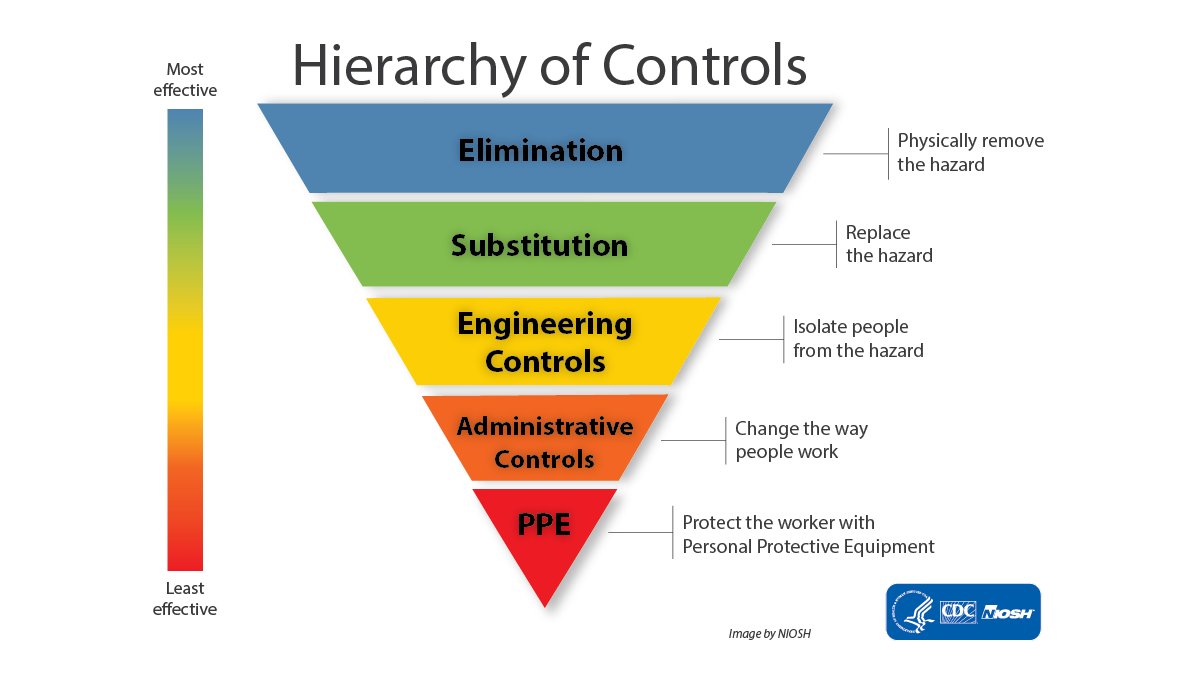
Broadly speaking, some controls are more effective than others. Wherever possible, you should attempt to use more effective controls in place of less effective ones. More effective means not just that it reduces the risk the most, but also the most reliable over time and most resistant to having rules bent, being left broken, being ignored due to alarm fatigue, or 'normalisation of deviation'. Procedures that assume everything is working perfectly and everyone is 100% competent will fail; see MCAS and a great number of other accidents.
Elimination is rarely possible but substitution (radar vs visual) and isolation (separate helicopters from other traffic) amongst other engineering controls are potentially more feasible, and much higher up the hierarchy than a glorified instruction not to crash (the very bottom of administrative). Engineering a problem out of existence is far superior to having a procedure to fix it in the QRH.
I list things like TCAS, GPWS, RSAs, and crash-proof seating as broadly being under PPE: they're nice to have and certainly worth pursuing, but unless there is no other alternative, they should never be your primary protection. Something has gone wrong if they get used.
Subjects
ATC
Close Calls
Normalization of Deviance
Radar
Separation (ALL)
TCAS (All)
Traffic in Sight
Links are to this post in the relevant subject page so that this post can be seen in context.
Reply to this quoting this original post. You need to be logged in. Not available on closed threads.
February 12, 2025, 16:42:00 GMT
permalink Post: 11826805
I am sorry you see a witch hunt in my post. It was supposed to be an idea for a future improvement, rather than a criticism of the very hard worked man who was on the job. On the flying end, there is quite a rigid procedure to follow if a TCAS RA goes off. From posts since I see, that there seems to be one for for STCA triggers too. It seems to me that the gravity of the situation is brought faster to a pilot's attention if the Conflict warning is announced on the RT.
That is just one factor in this sad affair of course. Both TCAS and STCA are last ditch saviours but only if full attention can be paid to them.
Now on the Conflict alert on the BRITE display . I have no first hand info on the SOPs in DCA on how a TWR controller uses the BRITE and if STCA are even displayed . `, but if they are, seen the charts and the routes , I guess STCA alerts are very common .especially when you delegate separation and you then play with a couple of hundred feet, vertical separation Too many unnecessary alerts equals normalization of deviance, . Look at the Haneda preliminary report , same ..
Finally since you mention TCAS RAs , there is a major difference with STCA , it is not the same as a TCAS RA . With an RA , as a pilot you have to react and follow , it is mandatory , for a controller a STCA is just an alert , just like a TCAS TA , if in your judgement it will pass you will not do anything , and if you have already issued a correcting instruction ( heading, level , etc,,) or here delegate visual separation , the STCA just becomes a nuisance. .
I sincerely hope the DC Controller will not be made the scapegoat of this accident . Not so sure it will not.
Subjects
ATC
DCA
FAA
NTSB
Normalization of Deviance
Preliminary Report
Separation (ALL)
TCAS (All)
TCAS RA
Vertical Separation
Visual Separation
Links are to this post in the relevant subject page so that this post can be seen in context.
Reply to this quoting this original post. You need to be logged in. Not available on closed threads.
February 12, 2025, 19:46:00 GMT
permalink Post: 11826918
Now on the Conflict alert on the BRITE display . I have no first hand info on the SOPs in DCA on how a TWR controller uses the BRITE and if STCA are even displayed . `, but if they are, seen the charts and the routes , I guess STCA alerts are very common .especially when you delegate separation and you then play with a couple of hundred feet, vertical separation Too many unnecessary alerts equals normalization of deviance, . Look at the Haneda preliminary report , same ..
Finally since you mention TCAS RAs , there is a major difference with STCA , it is not the same as a TCAS RA . With an RA , as a pilot you have to react and follow , it is mandatory , for a controller a STCA is just an alert , just like a TCAS TA , if in your judgement it will pass you will not do anything , and if you have already issued a correcting instruction ( heading, level , etc,,) or here delegate visual separation , the STCA just becomes a nuisance. .
I sincerely hope the DC Controller will not be made the scapegoat of this accident . Not so sure it will not.
Rarely does the "bad apple" theory of accident causation survive the scrutiny of a robust, honest investigation.
Last edited by Senior Pilot; 12th February 2025 at 23:14 . Reason: Quote was unreadable
Subjects
ATC
DCA
FAA
NTSB
Normalization of Deviance
Preliminary Report
Separation (ALL)
TCAS (All)
TCAS RA
Vertical Separation
Visual Separation
Links are to this post in the relevant subject page so that this post can be seen in context.
Reply to this quoting this original post. You need to be logged in. Not available on closed threads.
February 16, 2025, 04:57:00 GMT
permalink Post: 11828979
Now on the Conflict alert on the BRITE display . I have no first hand info on the SOPs in DCA on how a TWR controller uses the BRITE and if STCA are even displayed . `, but if they are, seen the charts and the routes , I guess STCA alerts are very common .especially when you delegate separation and you then play with a couple of hundred feet, vertical separation Too many unnecessary alerts equals normalization of deviance, . Look at the Haneda preliminary report , same ..
Finally since you mention TCAS RAs , there is a major difference with STCA , it is not the same as a TCAS RA . With an RA , as a pilot you have to react and follow , it is mandatory , for a controller a STCA is just an alert , just like a TCAS TA , if in your judgement it will pass you will not do anything , and if you have already issued a correcting instruction ( heading, level , etc,,) or here delegate visual separation , the STCA just becomes a nuisance. .
I sincerely hope the DC Controller will not be made the scapegoat of this accident . Not so sure it will not.
In the US, physicians who work for "Health Maintenance Organizations" are asked to practice medicine, at times, in a "basically unsafe" manner...to keep patients moving. On occasion, such practices will bite a patient (and sometimes the physician). As a whole, HMO physicians do not enjoy the best reputation.
From my perspective, there is practically no difference between the plight of an American air traffic controller and an American HMO physician. Both are expected to "squeeze one more in." Both fields are staffed by above-average capable individuals who thrive on challenges. Both are managed in such a manner that they cannot say "no" and also keep their job. In this regard, at least physicians have job portability.
But the take home point is that one cannot admit to knowing a practice is fundamentally unsafe, yet do it anyway. The public, rightfully, should not accept this. I have no solution except more staff and/or more airports (and not some next-gen whizzbang computer system).
Subjects
ATC
DCA
FAA
NTSB
Normalization of Deviance
Preliminary Report
Separation (ALL)
TCAS (All)
TCAS RA
Vertical Separation
Visual Separation
Links are to this post in the relevant subject page so that this post can be seen in context.
Reply to this quoting this original post. You need to be logged in. Not available on closed threads.