March 29, 2025, 12:08:00 GMT
permalink Post: 11856609
How would the successful transmission of ADSB Out information by the Blackhawk have changed the outcome on January 29?
After watching the US Congress \x93grill\x94 the military, FAA and NTSB how could they participate in a conspiracy of silence\x85
The NTSB will be seen as either very dumb or deceitful or both.
Now what was the number of the Q ANON Pizza shop, I feel like some truth tonight.
Send it to me via Signal. What a joke! The relatives of the crash victims were there to watch the farce.
I'm all ears, excellent point. This focus on ADSB-OUT, and ADSB-IN is really a furphy in terms of this investigation to determine the facts, the whole facts and nothing but the facts.
If 5342 had ADSB-IN then PAT25 not having or not displaying ADSB-OUT could be relevant depending on 5342's cockpit display, the training of the pilots and their scanning.
5342 didn't have ADSB-IN so move along, move along, nothing to see, these aren't the droids you're looking for.
**Caveat. If the TWR display were using ADS-B for their updates and to generate Collision Alerts then the absence of PAT25 ADSB-OUT could be relevant.
But would the TWR ATC even know (or care) whether PAT-25 was ADSB-OUT capable. TWR ATC involves looking out the windows and judging the relative positions of aircraft.
Note: ATC display systems are not referenced in the NTSB Aviation Investigation Preliminary Report. This seems to be a glaring omission. So perhaps the NTSB are either very dumb or deceitful or both.
To further illustrate the focus on ADSB. Figure 1 Google Earth image with preliminary ADS-B data for flight 5342 and radar data for PAT25.
The ADS-B plots are 1 seconds intervals, the radar data are 4 second interval (as stated during US Congress Q&A).
So the focus is on the whizz bang ADS-B kit rather than what the ATC saw on their display.
There is reference to ATC radios, and 5342 was on frequency 119.1 MHZ and PAT25 was on frequency 134.35 MHZ. The ATC could've had them on the same frequency (changed PAT25 to 119.1 MHZ) but this would be abnormal. ATC Voice Switch systems like Frequentis, SITTI and Rohde & Schwarz typically have a frequency coupling, whereby controller broadcasts on multiple frequencies (2 or more) and voice communications on one frequency are heard on the other. In this case, ATC would broadcast on 119.1 MHZ and 134.55 MHZ and 5342 would hear instructions for aircraft on 134.55 MHZ, and PAT25 would hear instructions for aircraft on 119.1 MHZ.
Dumbo Question 3
As you are no doubt aware TWR Visual Separation is a very powerful tool / method in the eyes of the controller or in the eyes of a delegated pilot. (Literally and metaphorically speaking, i.e pun intended.)
It is the very basis of ATC Aerodrome Control. Sophisticated use requires experience and excellent situational awareness.
I just wonder how many (if any) of the \x93reported\x94 near collisions in the NTSB Preliminary report going back 4 and 14 years respectfully included perfectly safe visual separation?
I just wonder how many of the January Route 4 Helicopter plots crossing RWY 33 Approach (post 1346) were the result of ATC issuing a control instruction to change the track to closer to the shoreline or further over water.
Use of Route 4 during RWY 33 Approaches or RWY 15 Departures is possible providing a clearance limit is imposed prior to assigning relevant traffic, positive control instruction(s) and in the case of 5342, advising them of the relative position of PAT25 and that PAT25 would be maintaining separation from them.
Example for Route 4 southbound would be a clearance limit of Hains Point. Helicopter would be released past this point when there is no conflict (nil traffic) or assigned separation to avoid (pass behind). If there is a in-line stream of arriving traffic then Route 4 may not be available.
Sydney KSA has something similar for one of their helicopter routes - BONDI 5 (yep, named after the beach), delays may occur when RWY 07 is in use for DEP, or RWY 25 is in use for ARR. Further, the route is not available when RWY 16 PRM approaches are being conducted. Sydney KSA helicopter routes are in text form - TRACK TO..., TRACK VIA..., EAST OF..., and the INBOUND routes to Sydney KSA have a clearance limit in the clearance. A map display is very useful however it should be based on route descriptions. Perhaps the committee of 17 knows the history of the helicopter routes in and around DCA.
Subjects
ADSB (All)
ADSB Out
ATC
Blackhawk (H-60)
DCA
FAA
Frequency 119.1
Frequency 134.35
NTSB
PAT25
Pass Behind
Pass Behind (All)
Preliminary Report
Radar
Route 4
Separation (ALL)
Situational Awareness
Visual Separation
Links are to this post in the relevant subject page so that this post can be seen in context.
Reply to this quoting this original post. You need to be logged in. Not available on closed threads.
April 01, 2025, 14:14:00 GMT
permalink Post: 11858658
Not to mention one of the two is not going to turn Final... head on Base Legs? Not foolin here.
Last edited by BugBear; 1st April 2025 at 14:27 . Reason: Gramer
Subjects
ATC
Radar
Links are to this post in the relevant subject page so that this post can be seen in context.
Reply to this quoting this original post. You need to be logged in. Not available on closed threads.
April 01, 2025, 22:38:00 GMT
permalink Post: 11858937
BugBear : In your post above you appear to imply that the LC had to work 2 different radar screens. (Memories of Uberlingen?)
Are you sure about that?
And to manage two discrete VHF frequencies. What, two different ?headsets? Is that what you are implying?
And where do you think the ADS-B information from the CRJ was displayed in the TWR Cab, on one or more of the radar screens?
Subjects
ADSB (All)
CRJ
Radar
Links are to this post in the relevant subject page so that this post can be seen in context.
Reply to this quoting this original post. You need to be logged in. Not available on closed threads.
April 04, 2025, 21:49:00 GMT
permalink Post: 11860845
Nope
Yes. LC could hear both Heli and AA. Neither AA Nor helo could hear the other ....."
From ATCDumbo......
"And where do you think the ADS-B information from the CRJ was displayed in the TWR Cab, on one or more of the radar screens?"
One hopes. If not to both pilots, then eyes on by LC ?? How are two conflicted aircraft that close in not aware of each other ?? Doesn't AA get a chance to look for traffic??
Even if traffic is changing orientation from Four 0'clock to12 in ten seconds????
Last edited by BugBear; 4th April 2025 at 22:09 .
Subjects
ADSB (All)
CRJ
Radar
Links are to this post in the relevant subject page so that this post can be seen in context.
Reply to this quoting this original post. You need to be logged in. Not available on closed threads.
April 05, 2025, 06:38:00 GMT
permalink Post: 11860955
Radar control is done by Approach control , ( Potomac in this case) and here done from another city .
Subjects
ATC
Radar
Links are to this post in the relevant subject page so that this post can be seen in context.
Reply to this quoting this original post. You need to be logged in. Not available on closed threads.
April 29, 2025, 03:55:00 GMT
permalink Post: 11875184
Somehow I doubt that all those responsible for those lapses in oversight were female - quite possibly they were all male.
The CRJ didn't have ADS-B IN, and the ATC Surveillance system (radar) doesn't process the data.
DM as required to convince me otherwise.
Subjects
ADSB (All)
ADSB In
ADSB Out
ATC
CRJ
DCA
FAA
Radar
Separation (ALL)
Vertical Separation
Links are to this post in the relevant subject page so that this post can be seen in context.
Reply to this quoting this original post. You need to be logged in. Not available on closed threads.
August 01, 2025, 20:09:00 GMT
permalink Post: 11932030
To complicate further, the Army Day 1 witness, CW4 Lewis, indicated she would have flown route 1/4 using radalt as her altitude reference. She also offered that she had zero DC route experience.
It was her.
Lewis: In my experience, when flying at low altitude, I would be referencing the radar altimeter.
Mueller: And when would you transition roughly between the two?
Lewis: In my experience, certainly 200 feet and below, I would be referencing the radar altimeter. However, if I was flying on a published MSL route, I would be referencing barometric altitude.
and later
(unsure): This is a scenario based, one based on what the chairman asked about flying over the Potomac River route. If you had a route ceiling of about 200 feet and you were to look at your barometric altimeter and see about 160 feet, but then it's all on your radar altimeter, about 280 feet. How would you triage that situation in your experience?
Lewis: So if the barometric altimeter is reading 160 feet, you're saying and the radar altimeter is reading significantly higher than that, I would still my primary concern on the MSL route would be staying below the 200 feet. And I would definitely, you know, take note of that and and maybe write the aircraft up for some, you know, maintenance action. But at that particular time I would as long as there was nothing wrong with the aircraft before we took off. As far as the field elevation and barometric altimeter, I would, you know, continue to assume that I was below that 200 foot MSL.
Subjects
Altimeter (All)
Barometric Altimeter
Radar
Radio Altimeter
Links are to this post in the relevant subject page so that this post can be seen in context.
Reply to this quoting this original post. You need to be logged in. Not available on closed threads.
August 03, 2025, 16:13:00 GMT
permalink Post: 11932824
(I need to see a bit more of the documentation on the difference between the hard altitude (200') that I was under the impression was on that route, as opposed to the "recommended altitude" statement made there...maybe it will make more sense to me then).
As to altimeter errors.
The UH-60L has a radalt.
Are you trying to tell me that the alleged acceptable error for a rad alt is 80'-130'?
I think not.
I doubt that the rules have changed that much since I was last flying a Blackhawk. (yes, it has been a while).
Will do a bit more reading, thanks.
Subjects
Altimeter (All)
Blackhawk (H-60)
Radar
Radio Altimeter
Links are to this post in the relevant subject page so that this post can be seen in context.
Reply to this quoting this original post. You need to be logged in. Not available on closed threads.
August 03, 2025, 21:48:00 GMT
permalink Post: 11932914
Subjects
NTSB
NTSB Docket
Radar
Links are to this post in the relevant subject page so that this post can be seen in context.
Reply to this quoting this original post. You need to be logged in. Not available on closed threads.
August 06, 2025, 19:27:00 GMT
permalink Post: 11934326
Paris and London have heliroutes. Been awhile since flying both of these, but my recollection is that they were tightly managed by theATC folks with radar. Ignore their instructions and be met by the gendarmerie ( at least thats what happened to a pilot in front of us who ignored a hold at Bagnolet instruction -when we arrived at LeBourget, the cops had him, and there was a big black van awaiting.
The FAA might look into these two examples.
Subjects
FAA
Radar
Links are to this post in the relevant subject page so that this post can be seen in context.
Reply to this quoting this original post. You need to be logged in. Not available on closed threads.
October 16, 2025, 04:57:00 GMT
permalink Post: 11970724
___________
Rotor Operations Transparency and Oversight Reform (ROTOR) Act
Upgrading In-Flight Safety Technology and Fixing Helicopter Operations to Eliminate Risk
[Sponsors] Senators Ted Cruz (R-TX), Jerry Moran (R-KS), Marsha Blackburn (R-TN), Ted Budd (R-NC), Shelley Moore Capito (R-WV), Roger Marshall (R-KS), Eric Schmitt (R-MO), Tim Sheehy (R-MT), Todd Young (R-IN)
The Problem : The midair collision between American Airlines Flight 5342 and an Army Black Hawk helicopter on January 29th was preventable. For decades, the airspace around the Ronald Reagan Washington National Airport (DCA) operated without an accident, but with thousands of close calls that should have resulted in preventive action. The Black Hawk was likely operating in congested airspace without transmitting Automatic Dependent Surveillance Broadcast (ADS-B) Out\x97a satellite beacon technology that can transmit location, altitude, and velocity to air traffic control and other nearby aircraft faster than radar or other transponders. The airspace is only as safe as its least equipped aircraft, which is why military aircraft must not play by different rules.
The Solution: The ROTOR Act
The ROTOR Act improves aviation safety, addresses FAA knowledge and oversight of ADS-B, and directs the Army Inspector General (OIG) to reevaluate its aviation safety practices. The bill requires:
1. All aircraft operators to equip with ADS-B In technology and transmit such information. ADS-B In is a technology for aircraft to receive location signals from other nearby aircraft and ground technology, improving safety in the sky and on runways.
2. Closes Federal Aviation Administration (FAA) loophole that permitted the Army Black Hawk to fly without broadcasting ADS-B Out. The ROTOR Act allows the FAA to only grant exceptions for \x93sensitive government missions,\x94 not training flights.
3. Requires the FAA to review helicopter routes near airports. The FAA would comprehensively evaluate the airspace at congested airports\x97where helicopters and airplanes are flying near each other\x97nationwide.
4. Directs the Army OIG to initiate a safety coordination audit. The Army Inspector General has declined to voluntarily review the Army\x92s aviation safety practices. The Inspector General would conduct an independent review of the Army's approach to safety.
5. Initiates FAA study on dynamic restricted area for helicopters near airports. The FAA would review whether audio and visual signals could be deployed to reduce airspace confusion and avoid traffic conflicts.
6. Repeals a Fiscal Year 2019 NDAA provision that exempted the Department of Defense from enacted ADS-B transmission requirements.
Why This Matters: The tragic midair collision earlier this year exposed serious and systemic weaknesses in how civilian and military aircraft share and operate in congested airspace. While the National Transportation Safety Board (NTSB) investigation continues, initial findings show glaring failures in oversight and coordination that must be addressed now, not later. The ROTOR Act was drafted in direct response to the operational shortcomings that led to the midair collision. Deconflicting congested airspace and establishing better communication standards between civilian and military aircraftis not optional\x97it is essential. The ROTOR Act does exactly that, ensuring American skies remain the safest in the world.
Subjects
ADSB (All)
ADSB In
ADSB Out
Blackhawk (H-60)
Close Calls
DCA
FAA
Findings
NDAA
NTSB
Radar
Links are to this post in the relevant subject page so that this post can be seen in context.
Reply to this quoting this original post. You need to be logged in. Not available on closed threads.
October 18, 2025, 10:20:00 GMT
permalink Post: 11971999
It would not have changed much for the AA CRJ either , the TA would have been more precise and maybe a second or two earlier , but he had already 2 TAs and most certainly so short from landing the PF was focusing on the PAPI not his TA display
It might have changed something if the Heli was equipped with a CDTI ( ADS-B in display) as it is a powerful tool to help identify traffic visually. But not separate yourself from another aircraft . One thing people in offices making such statements forget is that to provide separations maneuvers ATC needs a stable radar picture , with antennas firmly on the ground facing North . Inside an aircraft constantly moving the picture moves with it , (as you can see on your TCAS display ) Extremely complex to separate yourself using that kind of picture when both you and the target are moving. AWACS operators are trained to do this , but not your average pilot .
So I think this ADS-B on the Military Helis is a red herring made by politicians wanting to appear to \x93do something \x93 and perhaps distract the public from the FAA and regulator failures on both the design of the airspace / routes and the lack of action after numerous previous serious incidents reports ,
Subjects
ADSB (All)
ADSB In
ATC
CRJ
FAA
Radar
TCAS (All)
Links are to this post in the relevant subject page so that this post can be seen in context.
Reply to this quoting this original post. You need to be logged in. Not available on closed threads.
October 18, 2025, 12:38:00 GMT
permalink Post: 11972056
It would not have changed much for the AA CRJ either , the TA would have been more precise and maybe a second or two earlier , but he had already 2 TAs and most certainly so short from landing the PF was focusing on the PAPI not his TA display
It might have changed something if the Heli was equipped with a CDTI ( ADS-B in display) as it is a powerful tool to help identify traffic visually. But not separate yourself from another aircraft . One thing people in offices making such statements forget is that to provide separations maneuvers ATC needs a stable radar picture , with antennas firmly on the ground facing North . Inside an aircraft constantly moving the picture moves with it , (as you can see on your TCAS display ) Extremely complex to separate yourself using that kind of picture when both you and the target are moving. AWACS operators are trained to do this , but not your average pilot .
So I think this ADS-B on the Military Helis is a red herring made by politicians wanting to appear to “do something “ and perhaps distract the public from the FAA and regulator failures on both the design of the airspace / routes and the lack of action after numerous previous serious incidents reports ,
Can I add some sympathy for the AA crew - A night over water runway change on final combined with dodging traffic is a LOT to ask of anyone. I can't say for sure what they would have done with ADS-B on the chopper, they said they would miss us, not by how much and we are 30 seconds from landing. The benefit here is the helo crew realizing they are dodging the wrong airplane.
* full disclosure, I have had a close call with the helo traffic there more than once, back in the day they did some crazy stuff. I would have LOVED to have seen them coming on a screen if such a thing had existed.
Last edited by island_airphoto; 18th October 2025 at 13:00 .
Subjects
ADSB (All)
ADSB In
ATC
CRJ
Close Calls
FAA
Radar
TCAS (All)
Links are to this post in the relevant subject page so that this post can be seen in context.
Reply to this quoting this original post. You need to be logged in. Not available on closed threads.
October 20, 2025, 23:10:00 GMT
permalink Post: 11973389
Subjects
ADSB (All)
ADSB In
ADSB Out
Radar
TCAS (All)
Links are to this post in the relevant subject page so that this post can be seen in context.
Reply to this quoting this original post. You need to be logged in. Not available on closed threads.
October 20, 2025, 23:41:00 GMT
permalink Post: 11973406
(the same thing happens with boat transponders, once you get close enough to throw a beer at the other boat they can be on the opposite side of you as the traffic display shows)
For myself, I get to look at the pretty colors. If I was the AA plane the helo would have been red, but it was close enough to be red even if it was going behind me.
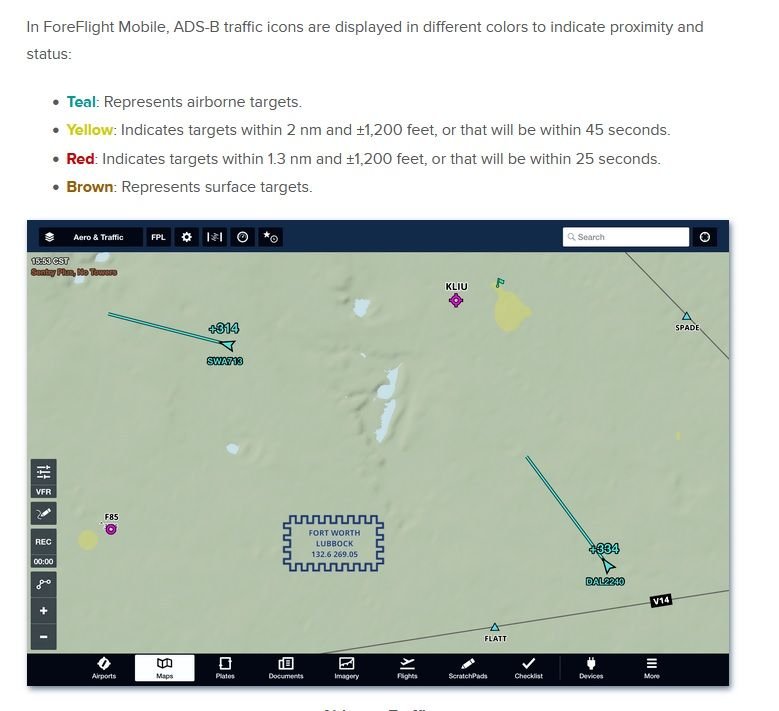
Last edited by island_airphoto; 20th October 2025 at 23:54 .
Subjects
ADSB (All)
ADSB Out
Radar
Separation (ALL)
TCAS (All)
Links are to this post in the relevant subject page so that this post can be seen in context.
Reply to this quoting this original post. You need to be logged in. Not available on closed threads.
January 31, 2026, 09:23:00 GMT
permalink Post: 12030100
Relatedly, the 200 foot maximum altitude might have given the impression that procedural separation was built in to the route design. Beyond 2.5 miles from the airport, it could perhaps have been used to establish procedural separation against traffic on a 3 degree glideslope (probably in conjunction with stepped descent minima for that traffic). But so close to the airport, route parameters could never have provided separation on their own.
Subjects
Radar
Separation (ALL)
Visual Separation
Links are to this post in the relevant subject page so that this post can be seen in context.
Reply to this quoting this original post. You need to be logged in. Not available on closed threads.
January 31, 2026, 11:16:00 GMT
permalink Post: 12030143
Relatedly, the 200 foot maximum altitude might have given the impression that procedural separation was built in to the route design. Beyond 2.5 miles from the airport, it could perhaps have been used to establish procedural separation against traffic on a 3 degree glideslope (probably in conjunction with stepped descent minima for that traffic). But so close to the airport, route parameters could never have provided separation on their own.
Subjects
Radar
Separation (ALL)
Visual Separation
Links are to this post in the relevant subject page so that this post can be seen in context.
Reply to this quoting this original post. You need to be logged in. Not available on closed threads.
January 31, 2026, 18:23:00 GMT
permalink Post: 12030315
The UH-60 Maintenance Test Flight Manual includes a barometric altimeter accuracy check, which is accomplished by calling the tower for the local altimeter setting, set the altimeter accordingly and comparing the altimeter readout to the elevation of that heliport/airport. THE ACCEPTED MAXIMUM ERROR IS 70 FEET. So, the baro altimeter readout can be 70 ft off and you are OK to fly: VFR or IFR.
The radar altimeter ( APN-171 or later APN-209 ) accuracy is similar at +/- 3 ft then 3% of indicated altitude, so, for the H-4 Route Maximum altitude of 200 ft. The Rad Alt could be as much as 9 ft off.
The NVGs do show Rad Alt.
Haven\x92t seen any submittal indicating the Rad Alt was inoperative or unusable.
Subjects
Altimeter (All)
Barometric Altimeter
IFR
Night Vision Goggles (NVG)
Radar
Radio Altimeter
VFR
Links are to this post in the relevant subject page so that this post can be seen in context.
Reply to this quoting this original post. You need to be logged in. Not available on closed threads.
January 31, 2026, 21:00:00 GMT
permalink Post: 12030376
The UH-60 Maintenance Test Flight Manual includes a barometric altimeter accuracy check, which is accomplished by calling the tower for the local altimeter setting, set the altimeter accordingly and comparing the altimeter readout to the elevation of that heliport/airport. THE ACCEPTED MAXIMUM ERROR IS 70 FEET. So, the baro altimeter readout can be 70 ft off and you are OK to fly: VFR or IFR.
The radar altimeter ( APN-171 or later APN-209 ) accuracy is similar at +/- 3 ft then 3% of indicated altitude, so, for the H-4 Route Maximum altitude of 200 ft. The Rad Alt could be as much as 9 ft off.
The NVGs do show Rad Alt.
Haven\x92t seen any submittal indicating the Rad Alt was inoperative or unusable.
The Helicopter Operations presentation included a slide stating that pilots are "Trained to use barometric altimeter to navigate helicopter route ceilings".
Subjects
Altimeter (All)
Barometric Altimeter
HUD
IFR
Night Vision Goggles (NVG)
Radar
Radio Altimeter
VFR
Links are to this post in the relevant subject page so that this post can be seen in context.
Reply to this quoting this original post. You need to be logged in. Not available on closed threads.
January 31, 2026, 22:24:00 GMT
permalink Post: 12030414
Subjects
Altimeter (All)
Night Vision Goggles (NVG)
Radar
Radio Altimeter
Links are to this post in the relevant subject page so that this post can be seen in context.
Reply to this quoting this original post. You need to be logged in. Not available on closed threads.