August 14, 2025, 22:06:00 GMT
permalink Post: 11938639
Subjects
ATC
Separation (ALL)
Links are to this post in the relevant subject page so that this post can be seen in context.
Reply to this quoting this original post. You need to be logged in. Not available on closed threads.
August 15, 2025, 02:11:00 GMT
permalink Post: 11938729
Note that the apparently informal procedure of holding helicopters at Hains Pt or golf balls was an effective method of deconflicting Route 4 and 15/33 traffic. However it appears that the use of this \x93procedure\x94 was left to the discretion of the individual controller.
One of the Army pilots at the NTSB hearing said he'd always been instructed to hold when there was traffic on approach to 33. I'd be willing to bet that he never called "traffic in sight" in those instances. That's the crucial difference.
Subjects
ATC
CRJ
NTSB
Route 4
Separation (ALL)
Traffic in Sight
VFR
Links are to this post in the relevant subject page so that this post can be seen in context.
Reply to this quoting this original post. You need to be logged in. Not available on closed threads.
August 15, 2025, 06:32:00 GMT
permalink Post: 11938787
He's quite clear that he thinks that ATC alerting the CRJ about the presence of the helo (using visual flight separation) probably wouldn't have changed the outcome.
But he does pick up on the cockpit dynamics on PAT25. He says
"Now, the most important facts to emerge from the hearings this week center on the cockpit exchange between Warrant Officer Eves and Captain Robach that happened just about a minute before the midair. He says to her, " All right, kind of come left for me, ma'am. I think that's why he's asking ." And she replies, " Sure ." He says, " We're kinda.. ." And she cuts him off by saying, " Oh-kay, fine ." And he finishes his statement “… out toward the middle ”, meaning the middle of the river and west of helicopter route 4. So PAT 25 is above and west of where they should have been as the CRJ is properly on final approach for runway 33. Using maritime rules of the road terms, the CRJ was the burden vessel and the Blackhawk was the giveway vessel." He quotes someone (David Cherbonnier) posting:
"In military protocol, referring to a fellow officer as sir or ma'am is the role of a subordinate. It’s use in the cockpit indicated ‘privilege of rank’ as opposed to the typical instructor student relationship. The instructor was a Chief Warrant Officer with over 10 years service as an enlisted person prior to selection as a Chief Warrant Officer and as well as met all criteria to be a check pilot and as such was the person in charge during the entire training/examination exercise. In any other capacity, a Captain represents a person who has been recognized by Congress to have the qualifications to become an officer. In my experience, an examinee’s response in a drawn out “ oh-kay fine ” would have signaled check ride over. In this instance, deference was given to rank. Was that a contributing factor?"
Subjects
ATC
Blackhawk (H-60)
CRJ
PAT25
Route 4
Separation (ALL)
Links are to this post in the relevant subject page so that this post can be seen in context.
Reply to this quoting this original post. You need to be logged in. Not available on closed threads.
August 15, 2025, 06:37:00 GMT
permalink Post: 11938789
Taking a road procedure similarity : . at a crossroad you can have a stop sign or a triangle giving priority , or nothing
The written procedures are : at a stop sign you must stop even if there is no traffic.
:Transposing this to DCA route 4 map l the procedure should have been in Europe at least ;
1) hold ay golf balls until you get a clearance to proceed . (so that in case of loss of comms , blocked freq, etc.. you can't proceed ).
2) pilot or controller can request visual separation if all t he following conditions re met : typically VMC, and in daylight and traffic is in sight and maintained in sight and both aircrfat pilots are informed. of each other position
3) lateral deviations by the helicopters to fly over built up areas of the city at 200ft will; not be permitted.
Big differences .
Now a pilot can request visual separation at any time but Controller can refuse at any time to .. To my knowledge requesting visual a night using NVG is not covered in the definition of " visual acquisition " in ICAO, so legally it could be challenged I guess . Same as when a pilot reports "visual" on his TCAS display . It is not valid , and for good reasons .
But KDCA is not in Europe, and ICAO SARPs do not apply to military aircrfat , so the outcome of all this is quite uncertain .In fact i would not be surprised if nothing dramatic changes as far as procedures are concerned, Route 4 will be permanently removed I guess, but other than that ? business a usual with visual separations at night ? .
Subjects
ATC
DCA
ICAO
KDCA
Night Vision Goggles (NVG)
Route 4
Separation (ALL)
TCAS (All)
Traffic in Sight
Visual Separation
Links are to this post in the relevant subject page so that this post can be seen in context.
Reply to this quoting this original post. You need to be logged in. Not available on closed threads.
August 15, 2025, 06:49:00 GMT
permalink Post: 11938790
Subjects
ATC
CRJ
Separation (ALL)
TCAS (All)
Links are to this post in the relevant subject page so that this post can be seen in context.
Reply to this quoting this original post. You need to be logged in. Not available on closed threads.
August 15, 2025, 07:31:00 GMT
permalink Post: 11938800
Subjects
ATC
CRJ
DCA
Route 4
Separation (ALL)
VFR
Links are to this post in the relevant subject page so that this post can be seen in context.
Reply to this quoting this original post. You need to be logged in. Not available on closed threads.
August 15, 2025, 09:39:00 GMT
permalink Post: 11938867
Last edited by Stagformation; 15th August 2025 at 21:48 .
Subjects
ATC
Separation (ALL)
Traffic in Sight
VFR
Links are to this post in the relevant subject page so that this post can be seen in context.
Reply to this quoting this original post. You need to be logged in. Not available on closed threads.
August 16, 2025, 03:15:00 GMT
permalink Post: 11939359
He's quite clear that he thinks that ATC alerting the CRJ about the presence of the helo (using visual flight separation) probably wouldn't have changed the outcome.
But he does pick up on the cockpit dynamics on PAT25. He says
"Now, the most important facts to emerge from the hearings this week center on the cockpit exchange between Warrant Officer Eves and Captain Robach that happened just about a minute before the midair. He says to her, " All right, kind of come left for me, ma'am. I think that's why he's asking ." And she replies, " Sure ." He says, " We're kinda.. ." And she cuts him off by saying, " Oh-kay, fine ." And he finishes his statement \x93\x85 out toward the middle \x94, meaning the middle of the river and west of helicopter route 4. So PAT 25 is above and west of where they should have been as the CRJ is properly on final approach for runway 33. Using maritime rules of the road terms, the CRJ was the burden vessel and the Blackhawk was the giveway vessel." He quotes someone (David Cherbonnier) posting:
Subjects
ATC
Blackhawk (H-60)
CRJ
PAT25
Route 4
Separation (ALL)
Links are to this post in the relevant subject page so that this post can be seen in context.
Reply to this quoting this original post. You need to be logged in. Not available on closed threads.
August 23, 2025, 02:15:00 GMT
permalink Post: 11942779
In the case you quote, Tower reported the traffic had you in sight. In the case in question, AA5342 was not provided traffic by the DCA LC.
In the case you quote, did Tower say that the traffic was going to maintain own separation? Did Tower provide a bearing/direction and distance to this traffic? Did Tower provide the height of the traffic?
Subjects
AA5342
DCA
Separation (ALL)
TCAS (All)
Traffic in Sight
Links are to this post in the relevant subject page so that this post can be seen in context.
Reply to this quoting this original post. You need to be logged in. Not available on closed threads.
September 29, 2025, 02:48:00 GMT
permalink Post: 11961287
In the case you quote, Tower reported the traffic had you in sight. In the case in question, AA5342 was not provided traffic by the DCA LC.
In the case you quote, did Tower say that the traffic was going to maintain own separation? Did Tower provide a bearing/direction and distance to this traffic? Did Tower provide the height of the traffic?
Subjects
AA5342
DCA
Separation (ALL)
TCAS (All)
Traffic in Sight
VFR
Links are to this post in the relevant subject page so that this post can be seen in context.
Reply to this quoting this original post. You need to be logged in. Not available on closed threads.
September 29, 2025, 15:28:00 GMT
permalink Post: 11961563
This is the problem with enthusiastic amateurs and blood-thirsty lawyers: all these peripheral issues take centre-stage and the real causes are not addressed. Easier to spear the pilots of the CRJ for not doing a unneeded briefing or missing a TCAS alerts than get the FAA and army boffins that approved that sh1tshow in the first place...
I also don't advocate for that issue taking center stage, but to taboo it and to say we can't talk about it ever doesn't seem right, either. The central issue in this accident is ATC's decision to routinely leave separation in the hands of a heli crew with night vision goggles and less than 75 feet of procedural separation. But we all know this by now if we've watched the NTSB presentation, so please excuse me for not repeating this with every post.
The central issue of the lawsuit is whether the level of safety provided by FAA rules, FAA/ATC procedures, Airline decisions and SOPs, Army decisions and SOPs, and pilot performance on the day are sufficient to legal standards. It's a complex interplay of factors, and even though it's clearly far from the deciding factor, I'm not going to say that a late approach briefing did not matter at all.
Subjects
CRJ
FAA
NTSB
Separation (ALL)
Situational Awareness
TCAS (All)
Links are to this post in the relevant subject page so that this post can be seen in context.
Reply to this quoting this original post. You need to be logged in. Not available on closed threads.
October 16, 2025, 09:20:00 GMT
permalink Post: 11970787
Every pax jet is separated by SIDs and STARs, with either lateral and/or vertical separation. That is what is required here with the choppers. Playing TCAS dodgem-cars below 1000ft when you're trying to land is not the way to go.
Point 3 is the only one that makes any real sense. The rest sound good only to the great-unwashed.
Subjects
ADSB (All)
ADSB In
ATC
Separation (ALL)
TCAS (All)
Vertical Separation
Links are to this post in the relevant subject page so that this post can be seen in context.
Reply to this quoting this original post. You need to be logged in. Not available on closed threads.
October 16, 2025, 16:07:00 GMT
permalink Post: 11971014
Every pax jet is separated by SIDs and STARs, with either lateral and/or vertical separation. That is what is required here with the choppers. Playing TCAS dodgem-cars below 1000ft when you're trying to land is not the way to go.
Point 3 is the only one that makes any real sense. The rest sound good only to the great-unwashed.
"Directs the Army OIG to initiate a safety coordination audit. The Army Inspector General has declined to voluntarily review the Army's aviation safety practices. The Inspector General would conduct an independent review of the Army's approach to safety."
Why does this not make real sense?
The NTSB will very likely (undoubtedly, I think) include, in its report, quite extensive findings about the Army's operations. It was at least very unusual, if not unprecedented, for the NTSB to issue urgent recommendations to FAA in the immediate aftermath of January 29 with regard to use of the helicopter routes. On these facts, why is it not sensible to require the Army to undergo an IG review?
Although without a service record, I do generally understand the idea that the Army's task and purpose is lethality, at least in the meaning of that term before the assemblage at Quantico earlier this fall. Surely operating in domestic airspace doesn't make safety irrelevant "becasue lethality", does it?
One other aspect of this tragic and from many perspectives senseless midair collision is that very dedicated professional people in the aviation field are going to have their respective actions and failures to act in the events of January 29 scrutinized in the most harshly critical light in a courtroom. Bluntly, their performance will be trashed - the Army pilots, one or more controllers, and as discussed recently on this thread, the airline aviators too. On these facts, and hoping that reasonable minds may differ, I think the IG review isn't just a sensible idea, it's a necessity. It is something owed to those people, who are not going to speak up in their defense, or in their eternal regrets, from the great beyond. The least the United States can do is to find out what to do better. I'll work for the IG project, gratis, .... if they'd take me.
Subjects
ADSB (All)
ADSB In
ATC
FAA
Findings
NTSB
Separation (ALL)
TCAS (All)
Vertical Separation
Links are to this post in the relevant subject page so that this post can be seen in context.
Reply to this quoting this original post. You need to be logged in. Not available on closed threads.
October 18, 2025, 03:44:00 GMT
permalink Post: 11971880
Every pax jet is separated by SIDs and STARs, with either lateral and/or vertical separation. That is what is required here with the choppers. Playing TCAS dodgem-cars below 1000ft when you're trying to land is not the way to go.
Point 3 is the only one that makes any real sense. The rest sound good only to the great-unwashed.
Subjects
ADSB (All)
ADSB In
ATC
Separation (ALL)
TCAS (All)
Vertical Separation
Links are to this post in the relevant subject page so that this post can be seen in context.
Reply to this quoting this original post. You need to be logged in. Not available on closed threads.
October 18, 2025, 19:27:00 GMT
permalink Post: 11972195
Subjects
ADSB (All)
ATC
IFR
Separation (ALL)
VFR
Links are to this post in the relevant subject page so that this post can be seen in context.
Reply to this quoting this original post. You need to be logged in. Not available on closed threads.
October 19, 2025, 08:59:00 GMT
permalink Post: 11972330
Subjects
ADSB (All)
IFR
Separation (ALL)
VFR
Links are to this post in the relevant subject page so that this post can be seen in context.
Reply to this quoting this original post. You need to be logged in. Not available on closed threads.
October 19, 2025, 21:05:00 GMT
permalink Post: 11972680
I continue to doubt the discretionary exception will be important to this case. In my view the helicopter crew was clearly negligent (in ways that are not covered by the discretionary exception) and that is all that is needed to make the government liable. There is no need (and it would probably be inadvisable) for the plaintiffs to bring in anything that might be covered by the discretionary exception.
If I were the government I would be trying to settle these cases. I expect there are plenty of plaintiffs (and even some plaintiff's lawyers) who would rather have a certain $x now instead of an uncertain $3x in 5 years.
Without an assessment of potential liability and damages, no defense counsel I have ever known would recommend settlement negotiations to start. What you say about some plaintiffs and their counsel potentially wanting to buy certainty of recovery in exchange for waiving possibly larger recovery later on certainly can happen in litigation. However in this case, the attorneys who filed the Complaint are, to state it (or to try to state it) neutrally, about the biggest guns in the business of litigating claims on behalf of air crash victimns' families. Sure, they might take the earlier, lower dollar route, and/or recommend such a choice to clients, but their reputations - and track records - suggest this will be the least likely course, and only much futher down the timeline. On the other hand, I have no role in the case and do not know whether the two firms (one in NYC the other Chicago) actually represent all the passengers on the American Eagle flight. (And do the estates and survivors of the deceased airline pilots have representation? Or the estates and survivors of the decesased soldiers? I don't know - and not getting into why they might have representation in this case or in general. Or whether an organization on behalf of ATCOs, in the U.S., or more globally, might seek to intervene in light of the facts being asserted against one or more controllers.)
Further, the government attorneys as well as the airline attorneys on the defense would be (imo) pretty far outside practice norms to recommend settlement negotiations without joining issue on anything yet. Perhaps one or more defendants will not file their (respective) Answer to the Complaint before broaching settlement, but doubtful this will happen (insurers' counsel lurking off-stage probably would insist upon an Answer being filed). And, the defense applying sovereign immunity through the discretionary function exception to the FTCA waiver is most likely an "affirmative defense" which, under the Federal Rules of Civil Procedure, probably must be included in a defendant's Answer to the Complaint. Even if your continued doubts about its applicability prove correct, it strikes me as quite inconsistent with the current Department of Justice approach to things to skip the pleading stage and jump to settlement. Especially when the opposing attorneys are among the biggest guns in this part of the trial bar, and especially with the political overtones of the litigation looming (as in, funding by Congress of the new ATC system, and legislation which may be lurching ahead of NTSB findings, as in recent posts about 'the ROTOR Act').
As to the discretionary function exception on the merits:
On the current state of the public record, it is pretty straightforward to say that the helicopter crew deviated from the applicable duty of care (i.e., negligence) - as noted, though, I can't imagine the Army component of the Defendant-USA just declining to contest liability at this stage. It must be noted that plenty of acts and/or failures to act by the FAA component of the Defendant-USA also appear to have departed substantially from the applicable duty of care. Maybe it's too cyncial to have this view, but I think FAA is more deeply entrenched in trying to prevent a litigated result that it had mismanaged the DCA airspace - more deeply entrenched than the Army because, as the airline company attorney reportedly said, the helicopter flew into the airliner, pretty simple. I cannot quite verbalize how the FAA would try to shift major responsibility to the Army and off itself, but the discretionary judgments FAA might argue drove its methods and processes for operating the DCA airspace could be the way FAA tries to do so. Of course, ultimately that still leaves Defendant-USA fully liable - just a politically different outcome.
But recall that the defense of sovereign immunity through the discretiionary function exception to the FTCA waiver is an Affirmative Defense. The defendant can rasie it even when the plaintiff has not sought to plead anything which would, by itself, invoke the issue. And in federal court (unless things have drastically changed since I last stepped up to the lectern in a courtroom with the Big Eagle on the wall behind the bench) the standard for pleading is "notice pleading" not "fact pleading". The Complaint just has to give sufficient notice of what the claims are about and what they're based on, and not all the facts necessary to state a particular claim under the specific substantive law. (Certain State courts still follow "fact pleading" though....been a minute.)
I think the point you were making is that nothing the Complaint has alleged factually, and nothing else about the accident that is in the public record at this time, suggests that a defense based on the discretionary function exception would work, or in fact would be worth trying. My view is that the government will take a very close look at trying to assert it. For example, the way the Army operated the proficiency flights in general and in DCA airspace in partiucular, including but not limited to use of NVGs, draws upon (it would be argued) policy judgments about the critical importance of "continuity of government" operations, and even the more routine VIP transport. Will that be enough to overcome the assertedly "clear negiigence" of the helicopter crew in their visual scan for visual separation, and altitude adherence (and possibly other related operational factors)? Maybe not, but I have no clear idea what process the Army went through to devise the rules by which those proficiency flights are conducted, evaluated, and so on. (And which a proper Army Inspector General inquiry and review would delineate, and with clarity.)
And for the FAA, how many times on this forum have posters pointed out that FAA's operating principle has been to move traffic in volume, and not to focus on what FAA eviderntly considers minor details of proper ATC methods and procedures? Sloppy discretion, maybe, but Congress recently expanded the slots at DCA (iirc) and so in a sense the United States did indeed exercise discretion.
I have posted several times that I do not believe the defense should be successful here. But what some non-pilot SLF and attorney writes (hoping not to overstay my guest-on-the-forum status) here might be many levels of altitude below what will actually happen in the litigation and in the courtroom.
Subjects
ATC
Accountability/Liability
DCA
FAA
Findings
NTSB
Night Vision Goggles (NVG)
Separation (ALL)
Visual Separation
Links are to this post in the relevant subject page so that this post can be seen in context.
Reply to this quoting this original post. You need to be logged in. Not available on closed threads.
October 20, 2025, 23:41:00 GMT
permalink Post: 11973406
(the same thing happens with boat transponders, once you get close enough to throw a beer at the other boat they can be on the opposite side of you as the traffic display shows)
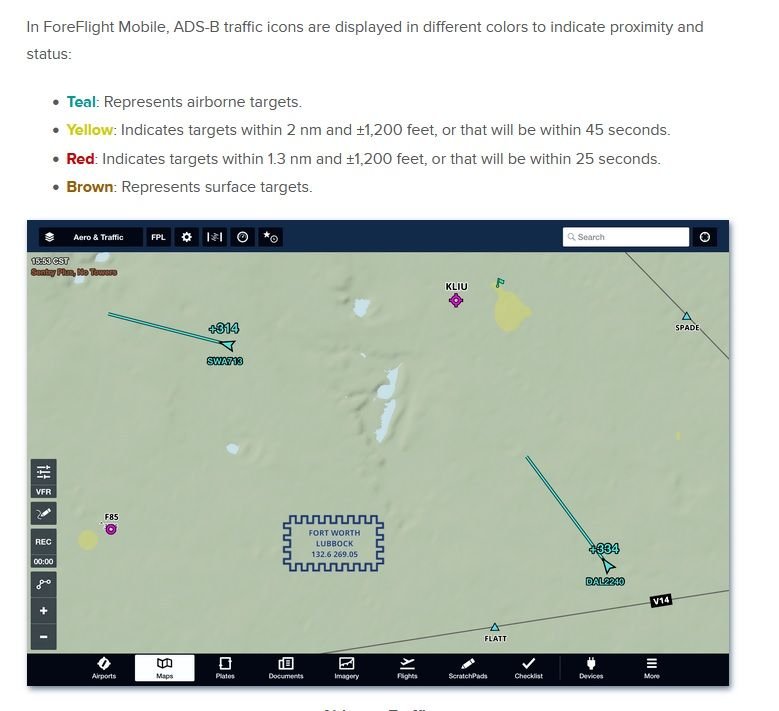
For myself, I get to look at the pretty colors. If I was the AA plane the helo would have been red, but it was close enough to be red even if it was going behind me.
Last edited by island_airphoto; 20th October 2025 at 23:54 .
Subjects
ADSB (All)
ADSB Out
Radar
Separation (ALL)
TCAS (All)
Links are to this post in the relevant subject page so that this post can be seen in context.
Reply to this quoting this original post. You need to be logged in. Not available on closed threads.
October 21, 2025, 14:54:00 GMT
permalink Post: 11973706
Also, as an aside the term "altitude" is typically used in aviation.
 (Yes, I know that DH for a precision approach is "decision height"...and HAT is shown on approach plates (Height Above Touchdown).
Why do I think the IFR ACS might be relevant? Because it specifies the accuracy the FAA requires of skilled pilots when separation is to be achieved by procedural means. The fact that the "designed" separation between the 33 approach slope and the top of Route 4 was less than the allowable error for skilled pilots could be used to rebut an allegation of negligent flying as the cause of the accident. The Army no doubt has its own standards document, but I'd be surprised if it was radically different. Building the argument off the FAA's own document forces the focus onto its route design and visual separation procedures.
As to why this might be relevant to VFR flying - is it your opinion that parameters should be flown more accurately in VFR than in IFR? In any case, I have now dug further into the ACS and the same tolerance is prescribed for commercial VFR helicopter operations (see CH.VII.A.S8).
Last edited by Easy Street; 21st October 2025 at 15:16 .
Subjects
FAA
IFR
Radio Altimeter
Route 4
Separation (ALL)
VFR
Visual Separation
Links are to this post in the relevant subject page so that this post can be seen in context.
Reply to this quoting this original post. You need to be logged in. Not available on closed threads.
October 21, 2025, 16:33:00 GMT
permalink Post: 11973744
Subjects
Blackhawk (H-60)
FAA
NTSB
Preliminary Report
Separation (ALL)
Links are to this post in the relevant subject page so that this post can be seen in context.
Reply to this quoting this original post. You need to be logged in. Not available on closed threads.