January 31, 2025, 20:43:00 GMT
permalink Post: 11818517
It is genuinely odd how they flew directly into this thing which must literally have been lighting up the interior of their cockpit. Also, why were they above the 200ft route ceiling?
(Still from the video referenced above by ORAC.)
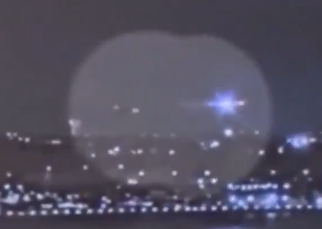
Helo on the left
I have ZERO doubt that either crew had a slightest idea of what was about to happen. I can fill 30 minutes explaining my next 10 seconds but suffice to say, a complete surprise. “WTF was that” will be the short version.
Subjects
CRJ
Findings
Separation (ALL)
Visual Separation
Links are to this post in the relevant subject page so that this post can be seen in context.
Reply to this quoting this original post. You need to be logged in. Not available on closed threads.
January 31, 2025, 20:53:00 GMT
permalink Post: 11818524
Subjects
ATC
CRJ
DCA
Separation (ALL)
Visual Separation
Links are to this post in the relevant subject page so that this post can be seen in context.
Reply to this quoting this original post. You need to be logged in. Not available on closed threads.
January 31, 2025, 21:35:00 GMT
permalink Post: 11818547
Comments appreciated of course. Indeed, I was referring to the second LC comms with the helo (coinciding with CA alerts). Class B mandates ATC to ensure separation , no matter VFR (indeed twice requested and twice accepted) or IFR (on the question whether AA by/when accepting 33 canceled IFR or not). This IMO implies much more on ATC than re-requesting whether A/C in sight, in particular in case of CA alert, less than one good/bad minute apart.
Last edited by D Bru; 31st January 2025 at 21:41 . Reason: clarity :)
Subjects
ATC
IFR
Separation (ALL)
VFR
Links are to this post in the relevant subject page so that this post can be seen in context.
Reply to this quoting this original post. You need to be logged in. Not available on closed threads.
January 31, 2025, 22:09:00 GMT
permalink Post: 11818564

I\x92ve always wondered if they really saw us or the other Cessna. It was probably the closest I\x92ve ever been to another aircraft not in the pattern. It felt way too close.
\x93See and avoid\x94 is really not the basis for safe separation of traffic in the air. Depending on it at night in airspace as busy as DC is choosing poorly.
TCAS has mostly solved the separation problem for every phase of flight except very close to the airport or on the ground. If the industry is going to short-staff ATC and keep cramming more traffic into the same airspace, the industry needs to develop and equivalent solution for those phases of flight as well.
Subjects
ATC
IFR
Separation (ALL)
TCAS (All)
Links are to this post in the relevant subject page so that this post can be seen in context.
Reply to this quoting this original post. You need to be logged in. Not available on closed threads.
January 31, 2025, 22:11:00 GMT
permalink Post: 11818566
Comments appreciated of course. Indeed, I was referring to the second LC comms with the helo (coinciding with CA alerts). Class B mandates ATC to ensure separation , no matter VFR (indeed twice requested and twice accepted) or IFR (on the question whether AA by/when accepting 33 canceled IFR or not). This IMO implies much more on ATC than re-requesting whether A/C in sight, in particular in case of CA alert, less than one good/bad minute apart.
VFR aircraft must be separated from VFR/IFR aircraft/ helicopter/rotorcraft that weigh more than 19,000 pounds and turbojets by no less than:
- 1 \xbd miles separation, or
- 500 feet vertical separation, or
- Visual separation, as specified in paragraph 7-2-1 , Visual Separation, paragraph 7-4-2 , Vectors for Visual Approach, and paragraph 7-6-7 , Sequencing.
The rules for pilot-applied visual separation state:
- If the aircraft are on converging courses, inform the other aircraft of the traffic and that visual separation is being applied.
- Advise the pilots if the radar targets appear likely to merge.
Subjects
ATC
IFR
Radar
Separation (ALL)
VFR
Vertical Separation
Visual Separation
Links are to this post in the relevant subject page so that this post can be seen in context.
Reply to this quoting this original post. You need to be logged in. Not available on closed threads.
January 31, 2025, 22:24:00 GMT
permalink Post: 11818577
Subjects
CRJ
Separation (ALL)
Links are to this post in the relevant subject page so that this post can be seen in context.
Reply to this quoting this original post. You need to be logged in. Not available on closed threads.
January 31, 2025, 22:30:00 GMT
permalink Post: 11818579
Subjects
ATC
Close Calls
IFR
Separation (ALL)
TCAS (All)
Links are to this post in the relevant subject page so that this post can be seen in context.
Reply to this quoting this original post. You need to be logged in. Not available on closed threads.
January 31, 2025, 22:36:00 GMT
permalink Post: 11818582
It works most of the time until you run out of luck.
Subjects
Separation (ALL)
Visual Separation
Links are to this post in the relevant subject page so that this post can be seen in context.
Reply to this quoting this original post. You need to be logged in. Not available on closed threads.
January 31, 2025, 22:40:00 GMT
permalink Post: 11818585
I don't think this was done and implies controller is not absolved of responsibility even after visual separation approved.
Subjects
ATC
Radar
Separation (ALL)
Visual Separation
Links are to this post in the relevant subject page so that this post can be seen in context.
Reply to this quoting this original post. You need to be logged in. Not available on closed threads.
January 31, 2025, 23:31:00 GMT
permalink Post: 11818616
VFR aircraft must be separated from VFR/IFR aircraft/ helicopter/rotorcraft that weigh more than 19,000 pounds and turbojets by no less than:
- 1 \xbd miles separation, or
- 500 feet vertical separation, or
- Visual separation, as specified in paragraph 7-2-1 , Visual Separation, paragraph 7-4-2 , Vectors for Visual Approach, and paragraph 7-6-7 , Sequencing.
The rules for pilot-applied visual separation state:
- If the aircraft are on converging courses, inform the other aircraft of the traffic and that visual separation is being applied.
- Advise the pilots if the radar targets appear likely to merge.
- If aircraft are on converging courses, inform the other aircraft of the traffic and that visual separation is being applied.
(ACID), TRAFFIC, (clock position and distance), (direction) BOUND, (type of aircraft), HAS YOU IN SIGHT AND WILL MAINTAIN VISUAL SEPARATION.
- Advise the pilots if the targets appear likely to merge.
Issue this advisory in conjunction with the instruction to maintain visual separation, the advisory to the other aircraft of the converging course, or thereafter if the controller subsequently becomes aware that the targets are merging.\x94
Subjects
ATC
CRJ
Radar
Separation (ALL)
VFR
Vertical Separation
Visual Separation
Links are to this post in the relevant subject page so that this post can be seen in context.
Reply to this quoting this original post. You need to be logged in. Not available on closed threads.
February 01, 2025, 00:03:00 GMT
permalink Post: 11818637
Note I say \x91through\x92 and not \x91under\x92.
I\x92m sure it is done at many airports around the World and we have a similar procedure at a large international airport in East Asia.
HOWEVER, the idea that the 200ft ceiling on the heli route is designed to provide vertical separation from the approach is ludicrous.
I suspect that limit is imposed to allow clearance from the Take-off climb surface if using the opposite direction runways. That would indeed be possible from a flight procedure design point of view (TERPS or PANS-OPS).
The only safe way is to cross behind traffic on final laterally . In some ways it would be better for the heli to be at a higher altitude if on 33 but for simplicity of procedure they may have just made it a blanket 200ft regardless.
Our procedure has laterally separated holding points either side of final which is the clearance limit where the heli can orbit or delay as necessary until confirming the aircraft to pass behind is in sight. The heli is also advised where the next aircraft in the sequence is to further verify the correct aircraft is in sight and what margin they need to leave behind the one crossing behind. Again, being higher is better as they can avoid wake turbulence by remaining well an above the glide path and pass closer behind, well ahead of the following.
There is no doubt night time makes this a far more critical operation and requires full attention. In our operation the heli is also on the same frequency as the approach aircraft, so having separate positions to control fixed wing and helis wouldn\x92t have any benefit.
This controller was hugely busy however, handling departures as well. I can\x92t believe the speed of his transmissions - even as a controller for over 30 years I have trouble with all the abbreviated phrases- of course local pilots would be used to it and expecting clipped frequencies etc\x85
The trouble with a lot of these types of procedures is a lot is carried out as a box ticking exercise - heli calls requesting to cross the final ✅, LC provides the position of the aircraft to pass behind ✅, heli reports sighting and requests own visual separation ✅, approved ✅.
LC is no doubt expected to monitor compliance visually although hugely busy with other traffic on the runway. It does sound like he was doing so, especially when the CA goes off in the background audio and puts doubt in his mind the heli is passing clear of the CRJ. He asks again immediately.
The heli confirms, so difficult to further challenge the pilot.
In my view a poorly designed procedure which was guaranteed to place the 2 aircraft in the same position if an error was made.
Subjects
ATC
CRJ
Pass Behind
Pass Behind (All)
Separation (ALL)
Vertical Separation
Visual Separation
Links are to this post in the relevant subject page so that this post can be seen in context.
Reply to this quoting this original post. You need to be logged in. Not available on closed threads.
February 01, 2025, 00:06:00 GMT
permalink Post: 11818639
To take the analogy first, when a PIC takes responsibility for separation from terrain, that PIC is putting only one aircraft and its POB at risk: The aircraft that the PIC is flying. In the case of the current tragedy, the system seems effectively to have put responsibility for the safety of two aircraft (at least) and all their POB into the lap of the PIC of one of them, on the basis of the (demonstrably dangerous) assumption that the PIC could reliably sight and follow a specific aircraft, at night, without any risk of misidentification.
Speaking of assumptions, I'm confident that the passengers on the CRJ would have assumed - reasonably I'd suggest - that the ATC system would always 'have their back'. I'm also confident that there will be a lot of grieving people at the moment, simply unable to grapple with the enormity of the realisation that the assumption was dangerously na\xefve. (Presumably, similar airspace arrangements continue in place at other locations, where the system continues to allocate responsibility similarly?)
Note that I do not presume to allocate responsibility for the tragedy to any individual/s. If I were pressed, I would allocate responsibility to whomever 'signed off' on arrangements in Class B airspace that entailed such a durr-obvious risk of precisely what happened.
Last edited by Lead Balloon; 1st February 2025 at 00:24 .
Subjects
ATC
CRJ
Separation (ALL)
Links are to this post in the relevant subject page so that this post can be seen in context.
Reply to this quoting this original post. You need to be logged in. Not available on closed threads.
February 01, 2025, 02:33:00 GMT
permalink Post: 11818713
Subjects
CRJ
Circle to Land (Deviate to RWY 33)
PAT25
Separation (ALL)
Traffic in Sight
Visual Separation
Links are to this post in the relevant subject page so that this post can be seen in context.
Reply to this quoting this original post. You need to be logged in. Not available on closed threads.
February 01, 2025, 03:34:00 GMT
permalink Post: 11818738
1. The CRJ was on approach to 1 and then was asked to divert to 33. They complied, which added to their workload. From what I understand, that runway is rarely used for commercial aircraft. So, ATC added to the CRJ's workload while introducing and "unusual event." The CRJ crew appears to have acted professionally in changing their approach.
2. ATC didn't hold the helo short of the runway path, instead relied on them to correctly identify an aircraft, at night, over an urban area. That introduced a "single point of failure" to an already complex situation.
3. There was no way for the helo to pass safely under the CRJ at the altitude of impact.
3. I don't recall hearing ATC asking the CRJ if they could see the helo, though they already overtasked them. At that point, I don't think they could do anything at that point to prevent the collision.
Other factors may come into play, such as if ATC was properly staffed that night. I've read that DCA had two incidents that week where an aircraft had to perform a "go around" because of helo traffic. Also, was the CRJ's TCAS system operational?
This was completely preventable if things work they way they're supposed to.
Everything else is moot, really...
Subjects
ATC
CRJ
DCA
FAA
Separation (ALL)
TCAS (All)
Visual Separation
Links are to this post in the relevant subject page so that this post can be seen in context.
Reply to this quoting this original post. You need to be logged in. Not available on closed threads.
February 01, 2025, 10:05:00 GMT
permalink Post: 11818884
The accident appears, almost certainly, to have been directly caused by the misidentification of conflicting traffic by the helo.
Fundamentally though the accident was entirely set up and enabled by critical faults in airspace usage and procedures, viz no vertical separation betwen the helo lane and glideslope at their point of intersection (to my mind simply incredible) and to a lesser extent perhaps the (again to my mind) extraordinary split frequency system. The first provides only one slice of swiss cheese - substantial vertical separation would add a second slice while the frequency thing is no cheese at all.
Despite what some commentators here and elsewhere seem to think there is never intended to be a situation when a helo passes under an aircraft on finals at 200ft. Helo traffic is held, or holds itself following a conditional clearance short of runway track before proceeding visually behind landing traffic or ahead of traffic on longer finals, exactly as is done at Heathrow. The difference is that in the event of an error at LHR there is 1000ft of vertical separation to add guartanteed separation if a helo wanders off track. Here there is next to none, it is very like a road intersection where cars on a minor road cross a big highway with conditional (orange flashing) traffic lights. Elsewhere in aviation this is just never done, there is always vertical separation too as a most basic safety precaution - ie like an overpass. The 1000ft also has the advantage that helo traffic is clearly visible on radar which is not the case when its grubbing along at 200ft.
Equally, the London helilanes too carry both mil and civ traffic, but critically both are on the same frequency (or if not the system re-broadcasts everything so it sounds as if they are) so everyone is playing the same ball. As every mil helo (surely?) has VHF nowadays why the digamma aren't procedures requiring its use when interracting in close/very close proximity with civ traffic?
Contributory factors include grossly sloppy r/t which employs open questions instead of closed ones - "do you see the CRJ on finals" when there are two unidentifiable aircraft visible on finals instead of "do you see the aircraft on 2 mile finals".
Doubtless there may be other consideration such as insufficient controllers and excessive workload too but that is not for me to say.
Bottom line is this appears to be a classic human factors accident induced by badly designed airspace, voice and control procedures.
+++++++++++
Why was the helo high? Not that I've ever done it but 200 ft or below at night over a big black hole of a river surrounded by bright city lights (800ft is my lowest) sounds pretty adventurous to me, it's very low indeed, and when a threator distraction is introduced at such low level in a helo one's instinct, even reflex is often to just squeeze back a little on the cyclic to give you a bit more space while your attention is drawn elsewhere. 100ft extra comes in a very short time and with less than 100ft of vertical separation from mis-identified traffic, that's it.
Subjects
CRJ
Radar
Separation (ALL)
Vertical Separation
Links are to this post in the relevant subject page so that this post can be seen in context.
Reply to this quoting this original post. You need to be logged in. Not available on closed threads.
February 01, 2025, 11:39:00 GMT
permalink Post: 11818951
https://edition.cnn.com/2025/01/30/u...nvs/index.html
https://www.youtube.com/watch?v=hfgllf1L9_4
If they were using NVG as speculated, the failure to see the landing lights of the approaching aircraft might be explained by a scenario where :
Crew mistakenly identified the following aircraft, either with NVG on or temporarily off. Happy with the separation, the NGV gear goes back on and with the limited field of view from the goggles, focused ahead and down as visual flight demands, the landing lights, so bright in the videos, were just never seen, but without the goggles the peripheral vision of the crew might have had some warning.
Subjects
CNN
CRJ
Circle to Land (Deviate to RWY 33)
Night Vision Goggles (NVG)
PAT25
Separation (ALL)
Traffic in Sight
Visual Separation
Links are to this post in the relevant subject page so that this post can be seen in context.
Reply to this quoting this original post. You need to be logged in. Not available on closed threads.
February 01, 2025, 11:49:00 GMT
permalink Post: 11818962
"Why was the helo high? Not that I've ever done it but 200 ft or below at night over a big black hole of a river surrounded by bright city lights (800ft is my lowest) sounds pretty adventurous to me, it's very low indeed, and when a threator distraction is introduced at such low level in a helo one's instinct, even reflex is often to just squeeze back a little on the cyclic to give you a bit more space while your attention is drawn elsewhere. 100ft extra comes in a very short time and with less than 100ft of vertical separation from mis-identified traffic, that's it."
Can't help but wonder about the sudden supposed change in height. I can't imagine that the heli pilot didn't see the jet in the final moments......reaction is "avoid"....turn right? ....in front of it? No, Go down into the blackness below, No, Turn left towards it? No,
So only way is up, another 100ft and we'd not all be writing this.Tragic beyond words.
Subjects
Separation (ALL)
Vertical Separation
Links are to this post in the relevant subject page so that this post can be seen in context.
Reply to this quoting this original post. You need to be logged in. Not available on closed threads.
February 01, 2025, 13:35:00 GMT
permalink Post: 11819026
The helicopter crew is said to have had NVG's but at this point no information has been provided re their use of NVG's.
The height issue is not the primary issue as the intent of the procedures and ATC instructions was to separate the two aircraft.
Had that separation effort worked there would have been no conflict thus no collision.
It is the failure of the separation and the meeting over the river the two aircraft in the same bit of air that height mattered.
No where in the standard procedure was it intended to have helicopter traffic fly below landing aircraft on RWY 33.
Poll the Pilots here folks....ask them if they would routinely fly 100-200 feet below a crossing aircraft? What do you think the answer would be?
I thank 212 Man for his input reminding me why he was the Teacher's Pet. I depend upon his ability to get into the books to keep me straight.
Now a test question for him.....were you flying the incident airplane doing a Visual Approach to RWY33....would you have tuned up the IAP for that RWY as an additional reference for your approach?
SOP's usually instruct Crews to use ILS data when doing Visual Approaches to runways with that kind of IAP so would that kind of thinking apply in this incident? Would that have been of any benefit considering the existing weather and terrain? Or, would that have been a distraction?
This was not a "Circling Approach" but it was very similar.
Subjects
ATC
Circle to Land (Deviate to RWY 33)
Night Vision Goggles (NVG)
Separation (ALL)
Links are to this post in the relevant subject page so that this post can be seen in context.
Reply to this quoting this original post. You need to be logged in. Not available on closed threads.
February 01, 2025, 14:03:00 GMT
permalink Post: 11819042
Subjects
ATC
CRJ
Separation (ALL)
Visual Separation
Links are to this post in the relevant subject page so that this post can be seen in context.
Reply to this quoting this original post. You need to be logged in. Not available on closed threads.
February 01, 2025, 14:12:00 GMT
permalink Post: 11819054
The helicopter crew is said to have had NVG's but at this point no information has been provided re their use of NVG's.
The height issue is not the primary issue as the intent of the procedures and ATC instructions was to separate the two aircraft.
Had that separation effort worked there would have been no conflict thus no collision.
It is the failure of the separation and the meeting over the river the two aircraft in the same bit of air that height mattered.
No where in the standard procedure was it intended to have helicopter traffic fly below landing aircraft on RWY 33.
Poll the Pilots here folks....ask them if they would routinely fly 100-200 feet below a crossing aircraft? What do you think the answer would be?
I thank 212 Man for his input reminding me why he was the Teacher's Pet. I depend upon his ability to get into the books to keep me straight.
Now a test question for him.....were you flying the incident airplane doing a Visual Approach to RWY33....would you have tuned up the IAP for that RWY as an additional reference for your approach?
SOP's usually instruct Crews to use ILS data when doing Visual Approaches to runways with that kind of IAP so would that kind of thinking apply in this incident? Would that have been of any benefit considering the existing weather and terrain? Or, would that have been a distraction?
This was not a "Circling Approach" but it was very similar.
Subjects
ATC
Circle to Land (Deviate to RWY 33)
Night Vision Goggles (NVG)
Separation (ALL)
Links are to this post in the relevant subject page so that this post can be seen in context.
Reply to this quoting this original post. You need to be logged in. Not available on closed threads.