January 31, 2025, 10:05:00 GMT
permalink Post: 11818064
Perhaps I should rephrase. Responsibility for separation was given to PAT25. Failure to maintain separation was caused by PAT25 not maintaining the separation that they were responsible for. Ergo, the collision was caused by a reduction in separation to zero, which was the responsibility of PAT25.
Perhaps the "responsibility" should never have been "given" to a helicopter to maintain separation on the basis of visual identification of another aircraft, at night, in close proximity to an airport in Class B airspace.
Subjects
PAT25
Separation (ALL)
Links are to this post in the relevant subject page so that this post can be seen in context.
Reply to this quoting this original post. You need to be logged in. Not available on closed threads.
February 01, 2025, 00:06:00 GMT
permalink Post: 11818639
To take the analogy first, when a PIC takes responsibility for separation from terrain, that PIC is putting only one aircraft and its POB at risk: The aircraft that the PIC is flying. In the case of the current tragedy, the system seems effectively to have put responsibility for the safety of two aircraft (at least) and all their POB into the lap of the PIC of one of them, on the basis of the (demonstrably dangerous) assumption that the PIC could reliably sight and follow a specific aircraft, at night, without any risk of misidentification.
Speaking of assumptions, I'm confident that the passengers on the CRJ would have assumed - reasonably I'd suggest - that the ATC system would always 'have their back'. I'm also confident that there will be a lot of grieving people at the moment, simply unable to grapple with the enormity of the realisation that the assumption was dangerously na\xefve. (Presumably, similar airspace arrangements continue in place at other locations, where the system continues to allocate responsibility similarly?)
Note that I do not presume to allocate responsibility for the tragedy to any individual/s. If I were pressed, I would allocate responsibility to whomever 'signed off' on arrangements in Class B airspace that entailed such a durr-obvious risk of precisely what happened.
Last edited by Lead Balloon; 1st February 2025 at 00:24 .
Subjects
ATC
CRJ
Separation (ALL)
Links are to this post in the relevant subject page so that this post can be seen in context.
Reply to this quoting this original post. You need to be logged in. Not available on closed threads.
February 01, 2025, 22:36:00 GMT
permalink Post: 11819353
No the airspace does not take the blame. Apparently the hello pilots missed the lookout. And the controller could have been clearer, instead of “still in sight?” perhaps “the RJ is now 1/2 mile 10 o’clock, confirm you have him?”.
(not criticizing him, guessing that he saw them closer than expected, was concerned, and made a very quick call)
But the airspace & procedure seems to not tolerate mistakes. There ought to be some safety margin. While not the primary fault, it could be improved.
The difficulties of identifying a specific aircraft, at night, in a background of stationary and moving lights, when moving objects on a collision course will always appear stationary to each other, are well known, as are the probabilities of mis-identification. The airspace design 'squeezes' inbound aircraft and transiting helicopters to practicality the same altitude, when instrument and other tolerances are taken into consideration.
I'm guessing that those focusing on the helo pilot's lookout and aircraft identification responsibilities haven't done much flying, at night, over a busy city. Maybe the procedure and airspace designers haven't either, though I get the distinct whiff of political and bureaucratic expediency in the helicopter lane design. I'm also guessing that earlier near misses in similar circumstances will be identified, where the ball on the Roulette Wheel fortunately didn't land on 00.
Last edited by Lead Balloon; 1st February 2025 at 23:06 .
Subjects
ATC
Close Calls
Separation (ALL)
Links are to this post in the relevant subject page so that this post can be seen in context.
Reply to this quoting this original post. You need to be logged in. Not available on closed threads.
February 02, 2025, 00:38:00 GMT
permalink Post: 11819412
Subjects
ATC
Altimeter (All)
IFR
Links are to this post in the relevant subject page so that this post can be seen in context.
Reply to this quoting this original post. You need to be logged in. Not available on closed threads.
February 02, 2025, 03:23:00 GMT
permalink Post: 11819488
The procedures allowed the controller to hand responsibility for separation to the helo pilot, once the helo was instructed to pass behind an aircraft which the helo said it had identified (twice I think?). However, it seems that the helo identified the wrong aircraft. That's hardly surprising when it's night, there's lots of stationary and moving lights around, and one of the apparently stationary lights is in fact bolted to an aircraft with which you're on a collision course.
Subjects
ATC
CRJ
NTSB
Pass Behind
Pass Behind (All)
Separation (ALL)
Links are to this post in the relevant subject page so that this post can be seen in context.
Reply to this quoting this original post. You need to be logged in. Not available on closed threads.
February 02, 2025, 04:12:00 GMT
permalink Post: 11819502
Subjects
Altimeter (All)
Barometric Altimeter
Blackhawk (H-60)
CRJ
Links are to this post in the relevant subject page so that this post can be seen in context.
Reply to this quoting this original post. You need to be logged in. Not available on closed threads.
February 02, 2025, 06:03:00 GMT
permalink Post: 11819532
Did ATC do all of that? Having listened to the ATC comms (including the UHF) a few times, I believe they did, for the most part? They mentioned CRJ (of what use is mentioning the type at night, I have no idea, but they did), they mentioned where it was and where it was headed, and they received two acknowledgments...
So that means this collision occurred entirely within all established protocls?
These aircraft crashed, as per the system specifications.
So the system is, to put it plainly...FUBAR?
That's not good.

The procedures effectively abdicate separation responsibility to a single point of failure, where failure is not unlikely and, as a consequence of the airspace design, failure results in high probabilities of collision.
The difficulties of identifying a specific aircraft, at night, in a background of stationary and moving lights, when moving objects on a collision course will always appear stationary to each other, are well known, as are the probabilities of mis-identification. The airspace design 'squeezes' inbound aircraft and transiting helicopters to practicality the same altitude, when instrument and other tolerances are taken into consideration.
Subjects
ATC
CRJ
Separation (ALL)
Links are to this post in the relevant subject page so that this post can be seen in context.
Reply to this quoting this original post. You need to be logged in. Not available on closed threads.
February 02, 2025, 11:38:00 GMT
permalink Post: 11819710
I accept the point regarding the likely economic impact. However I think its worth making the point that in the context of that '16 years without a fatality' record. there have been a number of potentially serious near-misses on the ground (JBU at BOS, AAL/DAL at JFK, SWA/FDX at AUS, etc etc) that are indicative of a system operating beyond its capacity and implementing procedures that are deemed to be of an acceptable risk profile in order to stretch that capacity. It was fortunate that those previous incidents were narrowly avoided. Wednesday night was where that luck, sadly, ran out.
Despite what's said almost universally by politicians and aviation authorities worldwide, the answers are driven and determined by politics, not the laws of physics and probabilities. "Safety is always our highest priority" is a meaningless but comforting sop for the public.
Ponder this question: If the POB the CRJ were senior politicians and important bureaucrats instead of the actual POB killed in this tragedy, would the investigation be carried out any differently, and its outcomes be any different, than if the POB were us nobodies?
I earnestly (perhaps naively) hope that the NTSB has and continues to have the corporate competence and the corporate integrity to investigate the circumstances of this tragedy, comprehensively, and to make frank and fearless findings and recommendations based on the objective facts and objective risks.
Subjects
ATC
CRJ
Close Calls
Findings
NTSB
Links are to this post in the relevant subject page so that this post can be seen in context.
Reply to this quoting this original post. You need to be logged in. Not available on closed threads.
February 08, 2025, 05:02:00 GMT
permalink Post: 11824104
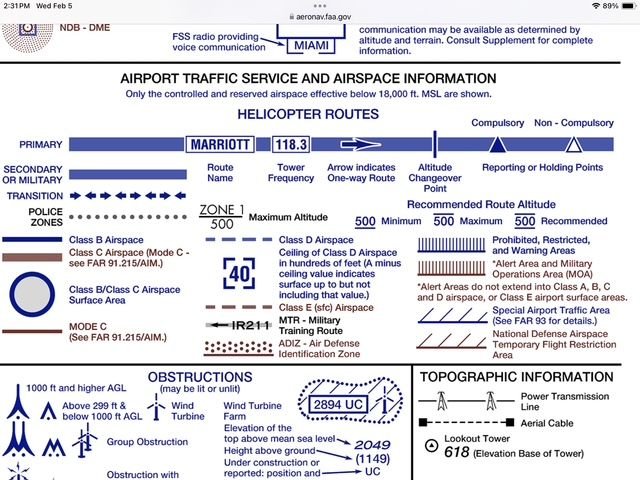
The river is 4000 feet wide just south of that designated point. I imagine there is a procedure otherwise what would be the point?
The other option is that they would have to have the landing traffic go around.
...
Subjects: None
No recorded likes for this post (could be before pprune supported 'likes').Reply to this quoting this original post. You need to be logged in. Not available on closed threads.
February 08, 2025, 06:25:00 GMT
permalink Post: 11824116
Subjects: None
3 recorded likes for this post.Reply to this quoting this original post. You need to be logged in. Not available on closed threads.
February 15, 2025, 04:03:00 GMT
permalink Post: 11828354
Subjects
ATC
CRJ
CVR
Pass Behind
Pass Behind (All)
Links are to this post in the relevant subject page so that this post can be seen in context.
Reply to this quoting this original post. You need to be logged in. Not available on closed threads.
February 15, 2025, 10:26:00 GMT
permalink Post: 11828492
...
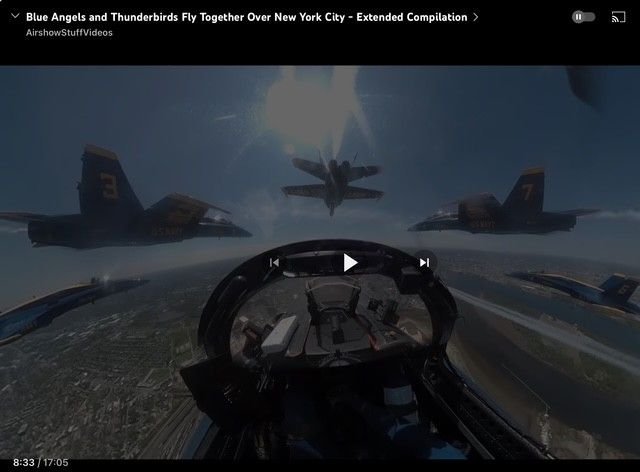
I was recently watching a video on the highlights of Oshkosh, the relevance of which will hopefully become clear shortly.
One part of the video was some POV footage from the cockpit of one of the Blue Angels. I had a 'double-take' and triple rewind to confirm what I thought I saw on the glareshield: I think I saw a piece of portable avionics that is very, very familiar to me.
Is any expert able to confirm what that white block on the glareshield is?
I've been in a discussion about the complexity of avionics upgrades to military flying machinery, the discussion precipitated by the differing terminology about "fitted with" and "equipped with" and "carried". And I suggest that even if the helo was "fitted with" an ADS system, at the altitude the aircraft were operating at the time of the collision any alerts may have been suppressed.
Subjects: None
No recorded likes for this post (could be before pprune supported 'likes').Reply to this quoting this original post. You need to be logged in. Not available on closed threads.
February 15, 2025, 23:36:00 GMT
permalink Post: 11828906
I suppose the operational question is whether the aircraft on which these portable units are used are permitted to fly without them on board and working. My guess is that there will be no prohibition. They are just ‘nice to haves’ but not essential for the ops in which they engage.
And there’s a causal question anyway: Would a functioning ADS-B system – portable or otherwise - on the PAT helo have made any difference? The answer depends on the variables around the alert suppression parameters in each aircraft’s systems and the effectiveness of the format of alerts – if any – given in each cockpit.
Subjects
ADSB (All)
Links are to this post in the relevant subject page so that this post can be seen in context.
Reply to this quoting this original post. You need to be logged in. Not available on closed threads.
February 16, 2025, 03:52:00 GMT
permalink Post: 11828969
What they could have seen and heard in the PAT helo depends on a lot on the matters to which I referred, among others, in my earlier post.
Subjects
ADSB (All)
KDCA
Links are to this post in the relevant subject page so that this post can be seen in context.
Reply to this quoting this original post. You need to be logged in. Not available on closed threads.
February 16, 2025, 06:04:00 GMT
permalink Post: 11828994
The one I use looks similar but is a different brand and is a portable ADS-B In/Out transceiver . Looks like it's not compatible with whatever systems are in use in the USA.
But I reiterate that w hat they could have seen and heard in the PAT helo, had it been fitted with an ADS-B "receiver" depends a lot on the matters to which I referred, among others, in my earlier post.
Last edited by Lead Balloon; 16th February 2025 at 06:33 .
Subjects
ADSB (All)
Links are to this post in the relevant subject page so that this post can be seen in context.
Reply to this quoting this original post. You need to be logged in. Not available on closed threads.
August 02, 2025, 09:04:00 GMT
permalink Post: 11932221
Subjects: None
1 recorded likes for this post.Reply to this quoting this original post. You need to be logged in. Not available on closed threads.