January 30, 2025, 06:03:00 GMT
permalink Post: 11816902
Subjects: None
1 recorded likes for this post.Reply to this quoting this original post. You need to be logged in. Not available on closed threads.
January 30, 2025, 07:54:00 GMT
permalink Post: 11816967
Might have helped the CRJ see the helicopter (except a military helicopter probably won't be illuminated anyway). But if the helicopter crew has CRJ landing lights pointing at them, are they going to see anything? It seems like another poor-quality band-aid on top of the fundamental problem of trusting see-and-avoid and voice comms.
Subjects
CRJ
See and Avoid
Separation (ALL)
Visual Separation
Links are to this post in the relevant subject page so that this post can be seen in context.
Reply to this quoting this original post. You need to be logged in. Not available on closed threads.
January 30, 2025, 08:02:00 GMT
permalink Post: 11816975
Subjects
ATC
CRJ
Night Vision Goggles (NVG)
Links are to this post in the relevant subject page so that this post can be seen in context.
Reply to this quoting this original post. You need to be logged in. Not available on closed threads.
January 30, 2025, 15:22:00 GMT
permalink Post: 11817323
Subjects
Separation (ALL)
Visual Separation
Links are to this post in the relevant subject page so that this post can be seen in context.
Reply to this quoting this original post. You need to be logged in. Not available on closed threads.
January 30, 2025, 17:54:00 GMT
permalink Post: 11817466
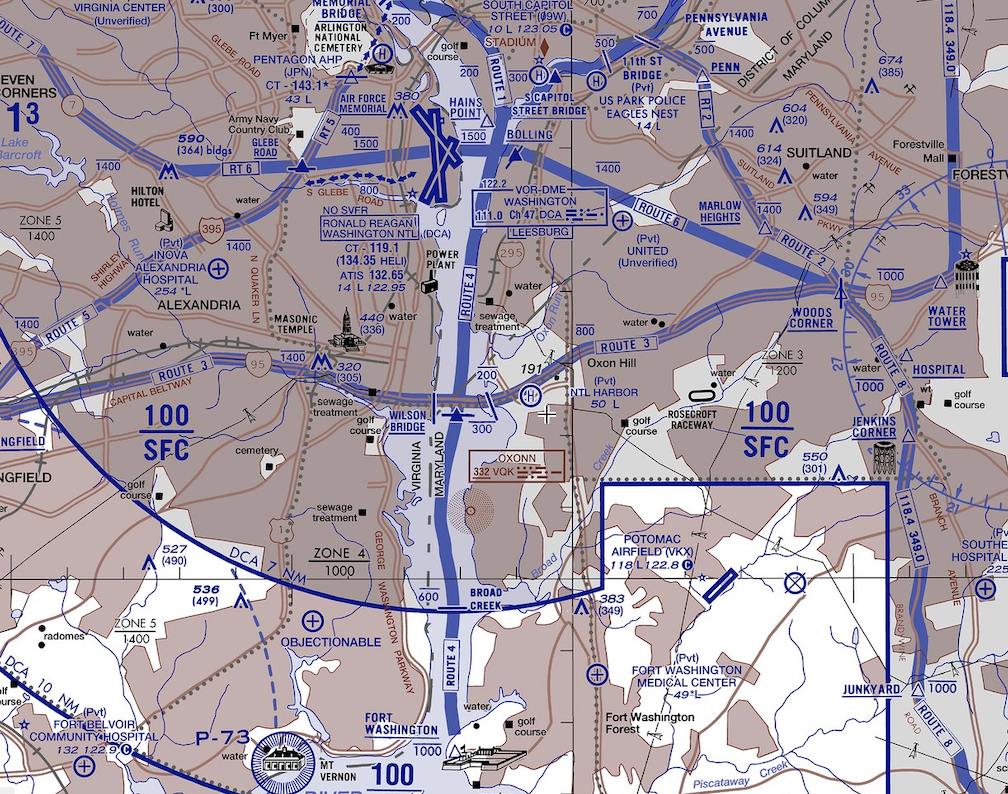
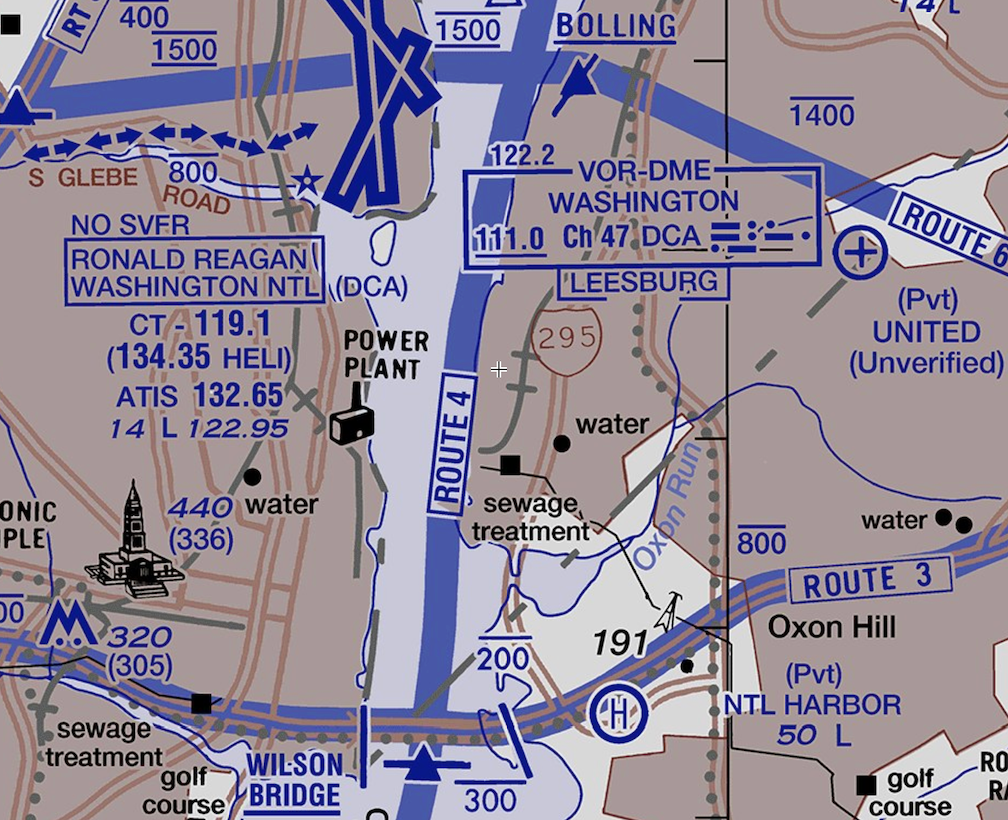
Hanging the ATCO on duty will not bring back the dead, and was not the cause of the problem. Having a civil aircraft flight path immediately overhead a LL RW VFR transit lane that guarantees that there is a loss of separation standards is what set this off, and that has been the case for decades. The crews, pax, ATC officers and families just happened to be the ones that got caught out by the insanity that permitted this track and procedure to exist.
Will Mr T go after the ATC guy? probably, the ATC officer doesn't own a kingdom, a corporation, in fact he is highly unlikely to have a DUI, and certainly won't be a convicted felon. So, I would rate the ATC guy as the convenient fall guy for the US Govt, the FAA who should not have permitted the operation of civil aircraft proximate to military LL traffic, and the US DOD, who will have signed off on the practice of disregarding minimum separation per \xa791.111. As far as right of way, the CRJ was landing, \xa791.113(g) applies, notwithstanding 91.113(d). The CRJ had every reasonable expectation of not sharing a cockpit on short finals to a short runway with crossing helo traffic.
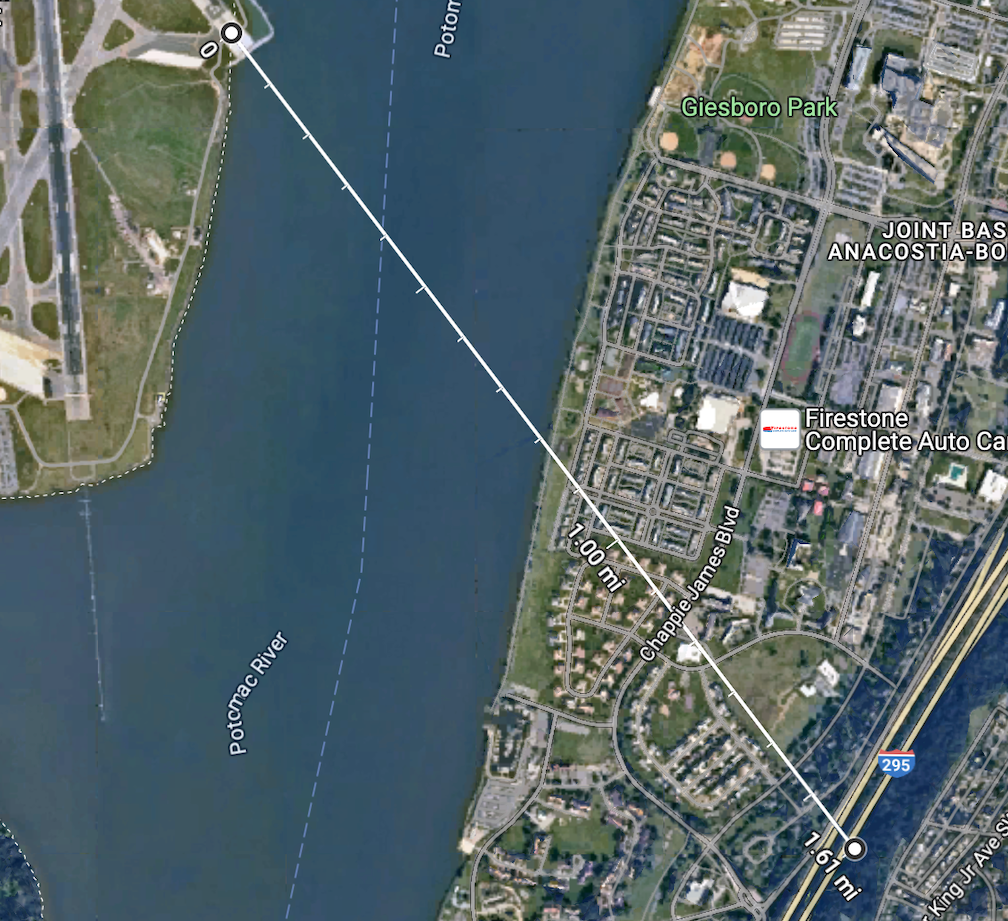
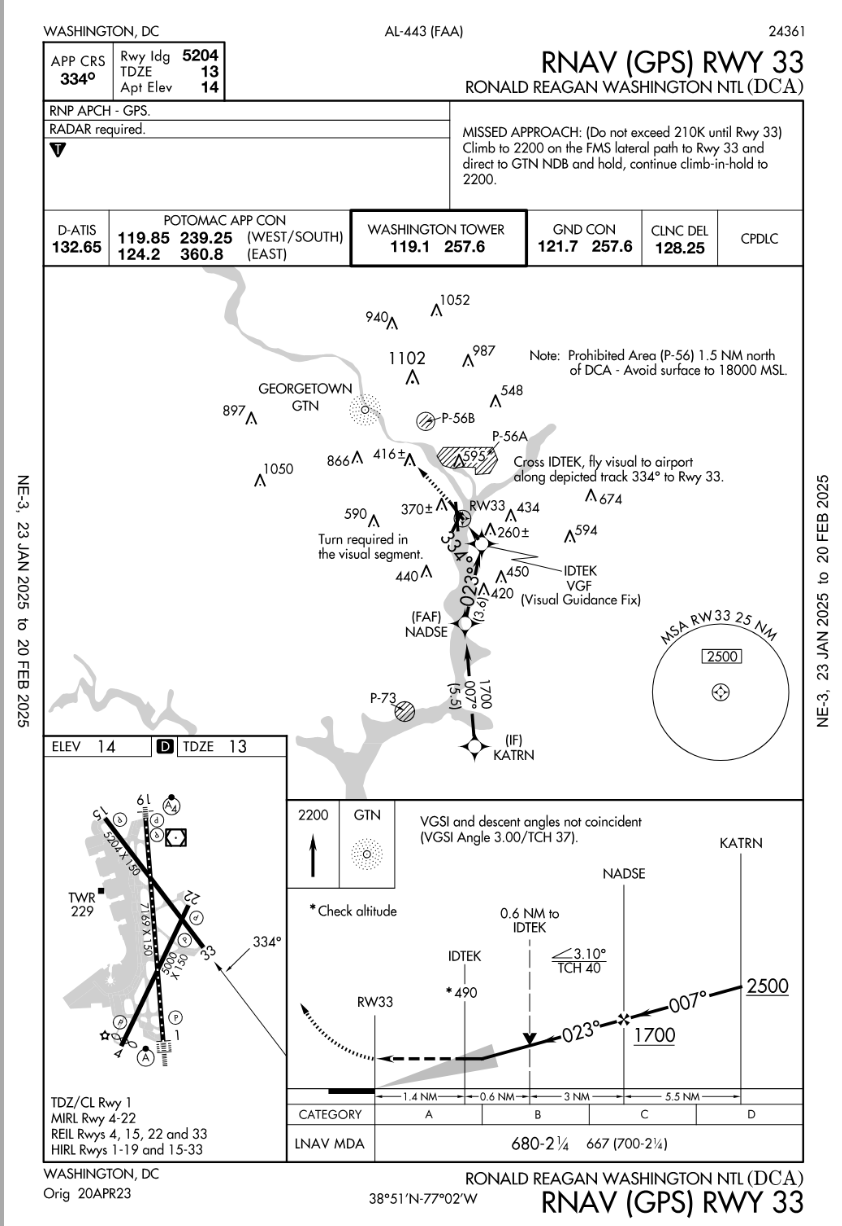
- IDTEK is 1.4nm from touchdown, 490' PA
- the east bank of the river is half way to the runway, ~0.7nm, -> 245'+40' = 285'PA
- the collision occurred around mid river, ~0.3-0.4nm from T/D, or 125+40=165'
What is particularly annoying is that the generals and other command staff, and Secretaries of Transport, Defence etc are quite happy to cashier the F-18 pilots who do a slow flypast of an arena, or the T-38 instructors who do the same over some other game, and yet, what is the chance that any general takes responsibility for their part in this sorry state of affairs. responsibility like other stuff, only goes downwards,
Its pretty easy for the guy in charge to defame the ATCO.
Glass houses.

Subjects
ATC
ATCO
CRJ
FAA
Normalization of Deviance
President Donald Trump
Separation (ALL)
VFR
Links are to this post in the relevant subject page so that this post can be seen in context.
Reply to this quoting this original post. You need to be logged in. Not available on closed threads.
January 30, 2025, 18:10:00 GMT
permalink Post: 11817490
Subjects
ATC
Night Vision Goggles (NVG)
Links are to this post in the relevant subject page so that this post can be seen in context.
Reply to this quoting this original post. You need to be logged in. Not available on closed threads.
January 31, 2025, 07:40:00 GMT
permalink Post: 11817969
Subjects
Republic Airways Flight 4514 Go-around
Links are to this post in the relevant subject page so that this post can be seen in context.
Reply to this quoting this original post. You need to be logged in. Not available on closed threads.
January 31, 2025, 08:52:00 GMT
permalink Post: 11818002
As an aside, the RHC is quite maneuverable, our low level / ag ratings using it require competency in torque turns, pedal turns which are entertaining but hardly beneficial to a UH-60 crew doing 115KGS towards a jet doing 130 KTS GS.
Subjects
Blackhawk (H-60)
Hover
Links are to this post in the relevant subject page so that this post can be seen in context.
Reply to this quoting this original post. You need to be logged in. Not available on closed threads.
January 31, 2025, 16:26:00 GMT
permalink Post: 11818343
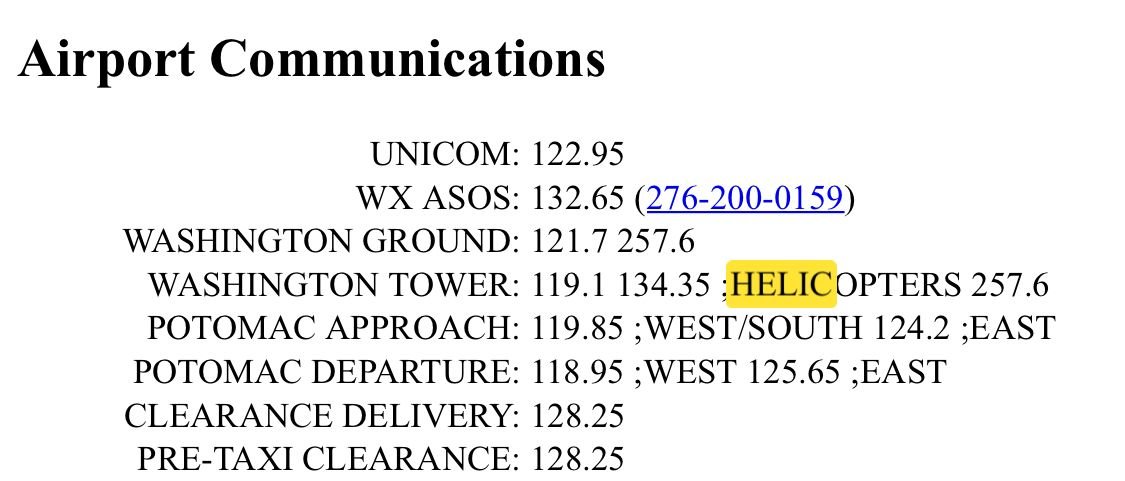
Was there a change to the definition of VHF and UHF that we didn't get the memo on?
Our own versions of the 60 have needs for VHF along with FM, UHF and HF, secure or not. Presumably the USA doesn't use an ICOM A23 or similar when dropping in to some towns local airstrip. ARC-231"s? using a UHF freq when mixing with civil traffic would be self limiting, presumably the tapes will indicate the helo was on VHF freq not the UHF one.
Subjects: None
2 recorded likes for this post.Reply to this quoting this original post. You need to be logged in. Not available on closed threads.
January 31, 2025, 16:36:00 GMT
permalink Post: 11818347
Even as they apologize for setting up a near miss, they are, polite and calm.
They are human, and subject to the same frailties as the rest of us.
They are sure polite though.
Heathrow suffers from the problem that their local airspace is.. logical, as are the flight paths, and generally the runway utilisation. They don't have the benefit of the special design skills applied to JFK's terminal procedures which seem to have been designed to give cardio workouts for the controller and the pilots. Masterful airspace design.
JFK, making Abuja look attractive.
Subjects
ATC
Close Calls
Links are to this post in the relevant subject page so that this post can be seen in context.
Reply to this quoting this original post. You need to be logged in. Not available on closed threads.
January 31, 2025, 17:26:00 GMT
permalink Post: 11818392
FAA Near Midair Collision System (NMACS)
BackgroundA NMAC is an incident associated with the operation of an aircraft in which a possibility of a collision occurs as a result of proximity of less than 500 feet to another aircraft, or a report is received from a pilot or flight crew member stating that a collision hazard existed between two or more aircraft. A report does not necessarily involve the violation of regulations or error by the air traffic control system, nor does it necessarily represent an unsafe condition.
You are allowed to do formation, that's in the rules, it just requres all participants to be have agreed to be part of the formation and a few other pesky things, like...
\xa7 91.111 Operating near other aircraft.
(a) No person may operate an aircraft so close to another aircraft as to create a collision hazard.(b) No person may operate an aircraft in formation flight except by arrangement with the pilot in command of each aircraft in the formation.
(c) No person may operate an aircraft, carrying passengers for hire, in formation flight.
Given how unusual the airspace is around DC, at least there would be good guidance and x'lent safety priorities related to that, which would come up in 14CFRPart 93, SATR.
Subpart T—Ronald Reagan Washington National Airport Traffic Rules
Source ocket No. 25143,
51 FR 43587
, Dec. 3, 1986; Amdt. 93-82,
68 FR 9795
, Feb. 28, 2003, unless otherwise noted.
ocket No. 25143,
51 FR 43587
, Dec. 3, 1986; Amdt. 93-82,
68 FR 9795
, Feb. 28, 2003, unless otherwise noted.
\xa7 93.251 Applicability.
This subpart prescribes rules applicable to the operation of aircraft to or from Ronald Reagan Washington National Airport.\xa7 93.253 Nonstop operations.
No person may operate an aircraft nonstop in air transportation between Ronald Reagan Washington National Airport and another airport that is more than 1,250 miles away from Ronald Reagan Washington National Airport.hmmm,
Noise abatement. MACs are quite noisy.
Last edited by Saab Dastard; 31st January 2025 at 18:02 . Reason: reference to deleted posts removed
Subjects
FAA
Links are to this post in the relevant subject page so that this post can be seen in context.
Reply to this quoting this original post. You need to be logged in. Not available on closed threads.
January 31, 2025, 17:42:00 GMT
permalink Post: 11818402
Lets break it down based on what we know so far:
See and Avoid We have years...
Procedures - There is nothing inherently wrong...
The Controller - Reports suggest that controller numbers...
Phraseology - Others on here have mentioned about phraseology used..
Duty of Care - Some of here have spoken about the transfer of responsibility onto the helicopter operator. This is a pet hate of mine, of people hiding behind the rules to abrogate responsibility. Everyone in the system has a duty of care and Air Traffic Controllers, regardless of type of service, have an accountability to do what they can to prevent collisions. That is written into the highest levels of ICAO Annex 11
My condolences to all involved and my thoughts are also with those under investigation, who I feel may have been let down by the system.
The losses so far in this case are almost defined, except that the unfortunate ATC officer is a victim of nothing more than being human and working within the constraints of a system that he did not design or have responsibility of. He has the most powerful pumpkin in the world defaming him from the normalised position of gross ignorance to such an extent that even Fox news and CNN push back. I would suggest that a suicide watch be placed on this poor individual to protect him from the hurtful comments that exude from the incumbent of the WH. This guy is going through hell, as much or more so than any other person suffering the loss in this mishap.
PS:
Humans may be the frail part of the system but they are also the most resilient parts. We will have moments in the following months to doubt that, history highlights failures not successes.
Last edited by fdr; 31st January 2025 at 17:56 .
Subjects
ATC
Accountability/Liability
CNN
ICAO
Phraseology (ATC)
See and Avoid
Links are to this post in the relevant subject page so that this post can be seen in context.
Reply to this quoting this original post. You need to be logged in. Not available on closed threads.
January 31, 2025, 20:43:00 GMT
permalink Post: 11818518
Hope the pax on the RH side were fully distracted with a beautiful view of the capitol and Washington monuments. The 60 has nav, beacon/strobe and landing light on, which would have still been hard to see on a steady bearing line.
from the video here are observations that can be drawn, without the trauma of viewing the video (this is brutal, you are forewarned ) :
Last edited by fdr; 31st January 2025 at 21:01 .
Subjects
CRJ
Links are to this post in the relevant subject page so that this post can be seen in context.
Reply to this quoting this original post. You need to be logged in. Not available on closed threads.
February 01, 2025, 03:57:00 GMT
permalink Post: 11818752
Would suspending all operations of the cross runways not simplify the flow control and traffic management, while achieving the needs of the DOD and the unique needs of DC, without setting up new risks over densely populated areas? The primary runway is fit for purpose, the cross runways do not meaningfully increase operational capacity any more than a well set up series of taxiways at either end of the main runway.
The FAA's response is laudable as an immediate response, but it may not be the best risk mitigation in this case.
Subjects
CNN
FAA
Route 4
Links are to this post in the relevant subject page so that this post can be seen in context.
Reply to this quoting this original post. You need to be logged in. Not available on closed threads.
February 01, 2025, 17:18:00 GMT
permalink Post: 11819178
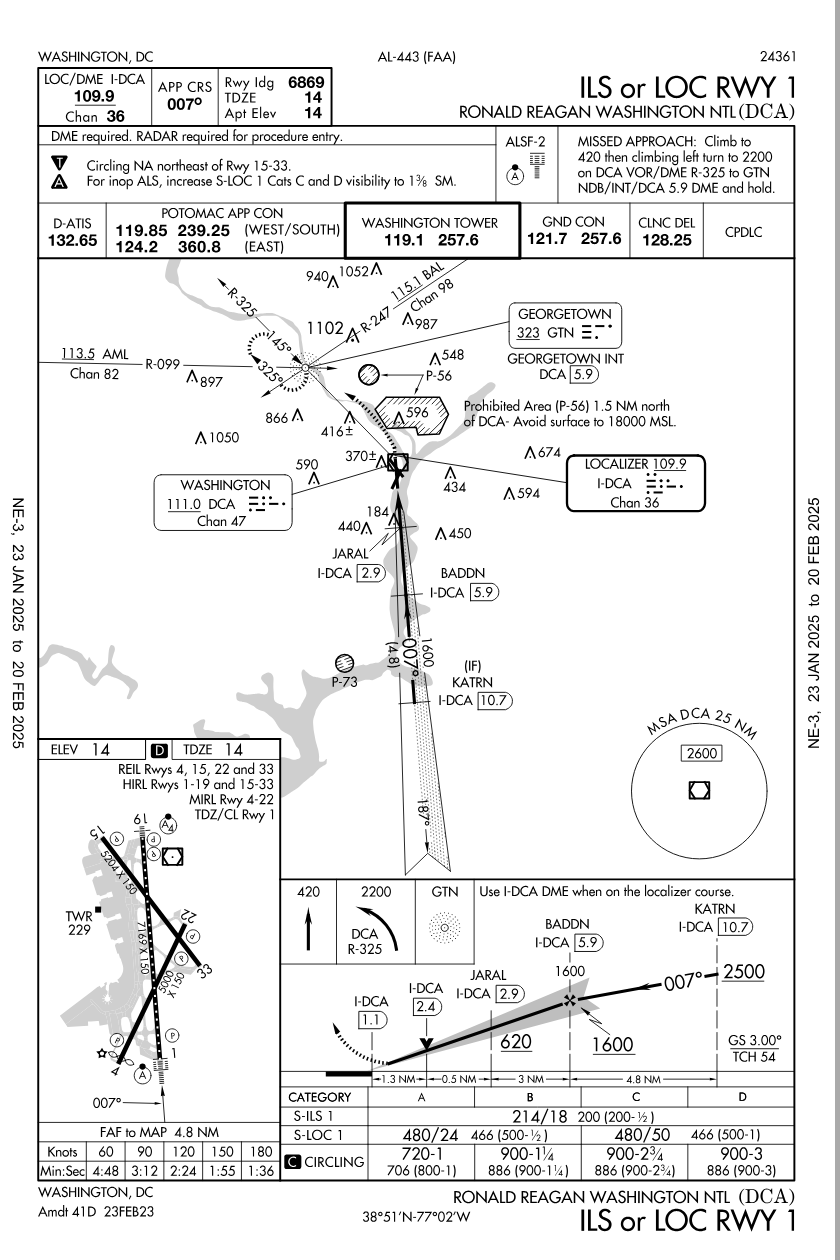
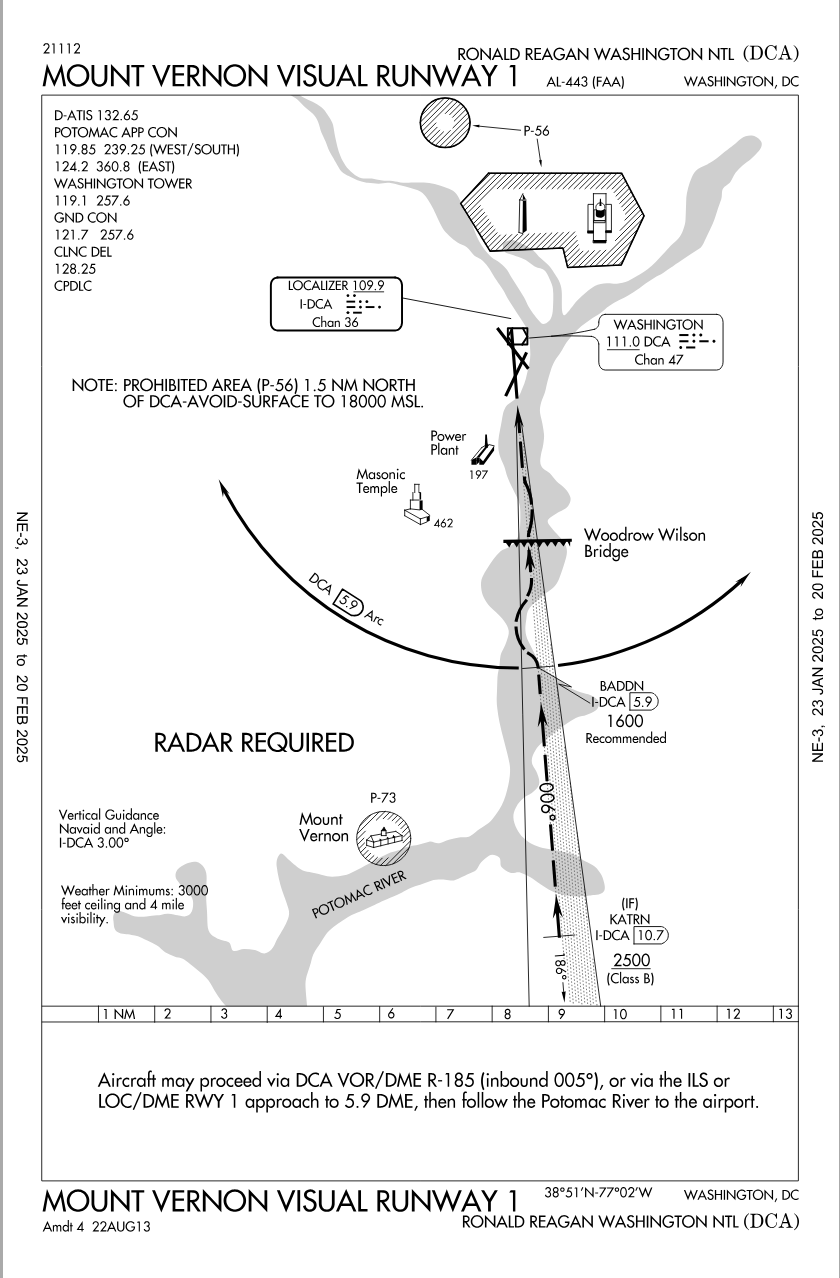
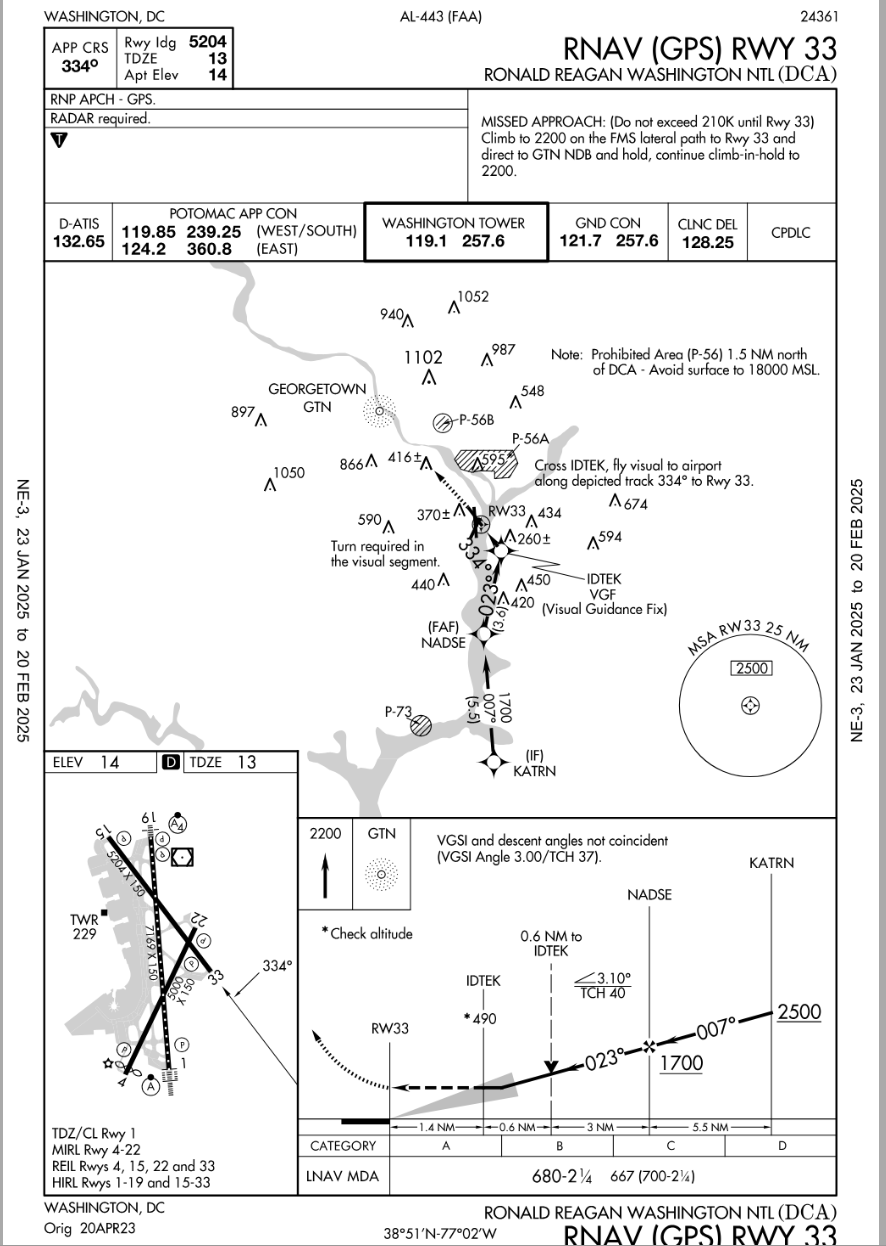
There is a curving RNAV approach, that is not in line with the runway until 490 feet/1.4nm, where one makes the last-minute ~50\xb0 left turn for visual runway alignment.
In light of that fact, maybe you can reframe your question.
AirNav: KDCA - Ronald Reagan Washington National Airport
https://aeronav.faa.gov/d-tpp/2501/00443R33.PDF
Now a test question for him.... . were you flying the incident airplane doing a Visual Approach to RWY33....would you have tuned up the IAP for that RWY as an additional reference for your approach ?
SOP's usually instruct Crews to use ILS data when doing Visual Approaches to runways with that kind of IAP so would that kind of thinking apply in this incident? Would that have been of any benefit considering the existing weather and terrain? Or, would that have been a distraction?
Pattern, perhaps you might review your comment.
It really is not a difficult concept or question.
Seems easy enough to understand if the post is actually read for comprehension sakes.
About 80% of all IATA operators would be discomforted by such changes, outside of the USA visual approaches at night have a litany of requirements to adhere to for the purposes of terrain separation, vs Texas big sky rules that do work in the US. In the end, taht didn't cause the accident, it is one of those things that goes with the freedom of flight in the USA.
...
Subjects
ATC
CRJ
KDCA
Separation (ALL)
Links are to this post in the relevant subject page so that this post can be seen in context.
Reply to this quoting this original post. You need to be logged in. Not available on closed threads.
February 01, 2025, 18:07:00 GMT
permalink Post: 11819203
My thoughts:
I continue to see this as:
- a failure of imagination by command;
- a system failure by command to monitor performance against expected system behaviour;
- an information system failure, the evidence has been in front of those that are charged with having safe systems such as the govt, regulator, DOD, airlines;
- The crew and the the ATC controller, and certainly the passengers are not high in the systemic failures that occur here, I would contend that the crew and the ATC officer are victims of the systemic failures.
Criss-Crossing Routes in D.C. Airspace Leave Little Room for Error
By Elena Shao , Leanne Abraham , Eli Murray and Lazaro GamioThe pictures are out of order, the tracks are for "1-Week" of data. The latest NOTAM is a good start, the helo fleet operators may want to revisit the concept of the flyways.
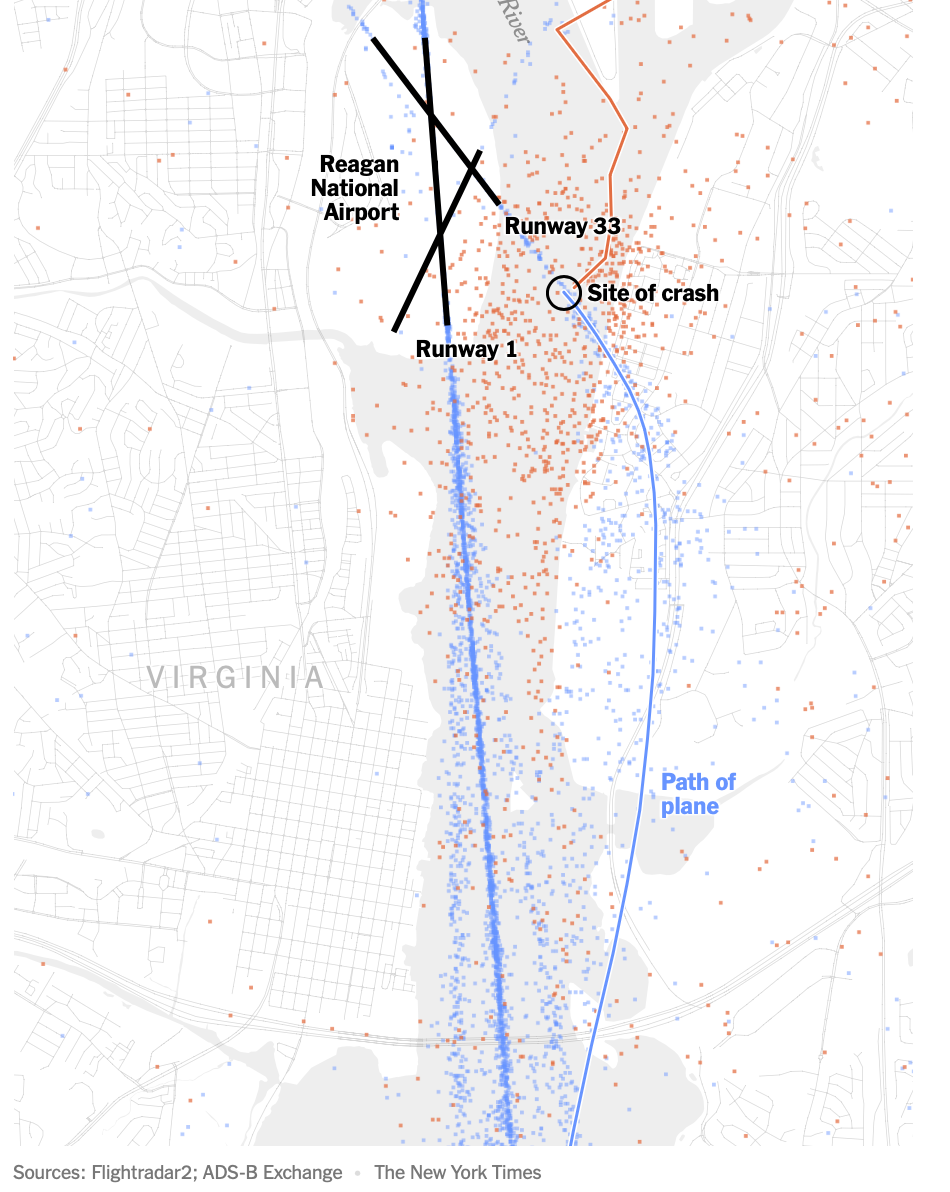
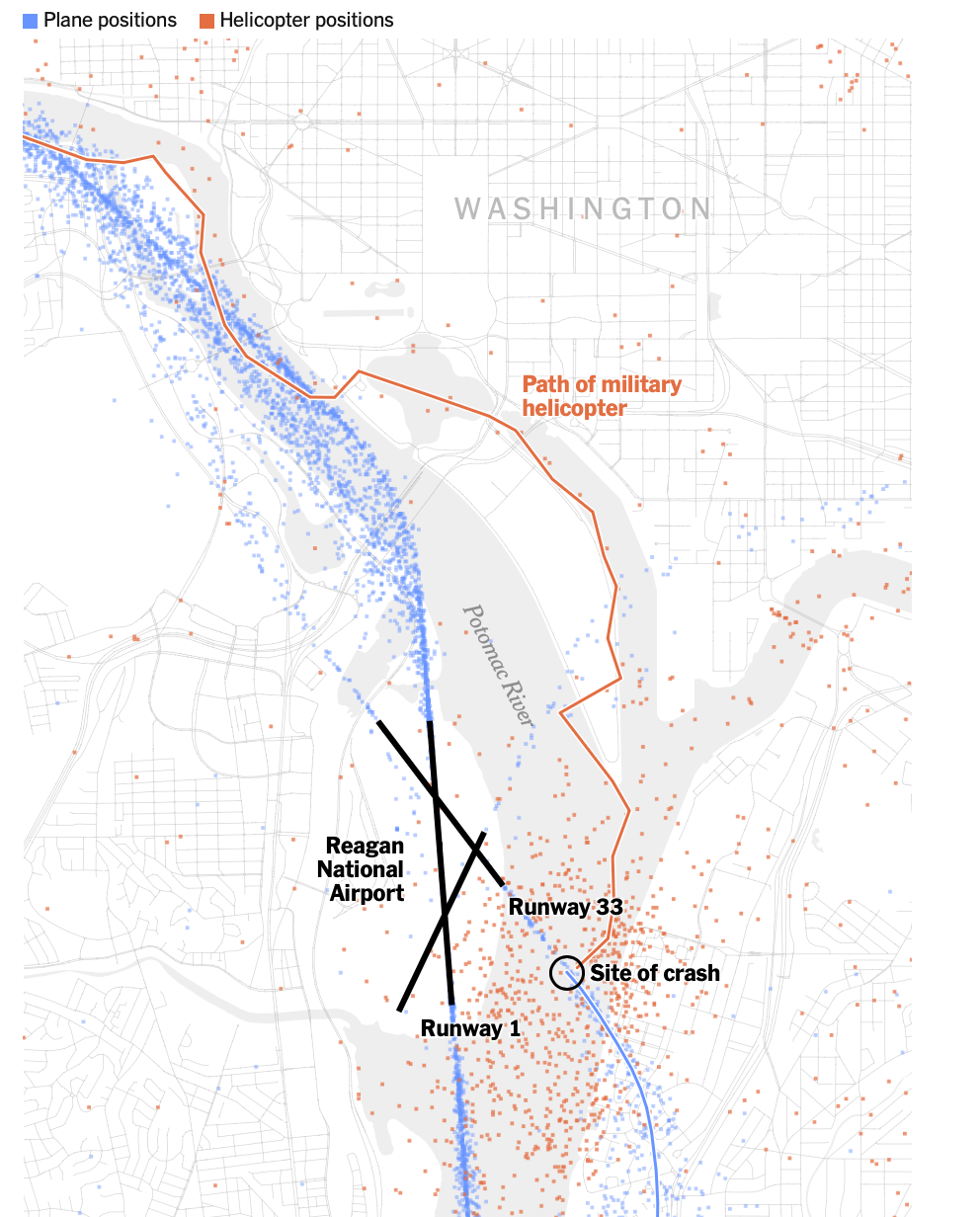
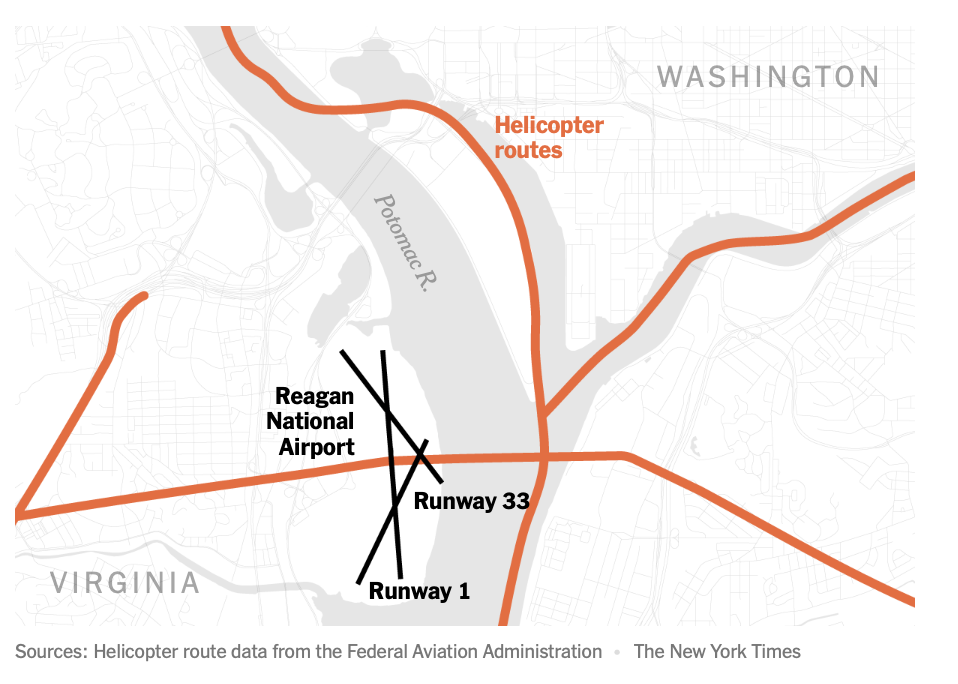
A deadly midair collision between an American Airlines passenger jet and a U.S. Army helicopter near Ronald Reagan National Airport in Washington highlights the complexity of navigating an airspace with many civilian and military aircraft.
The airport has three runways that intersect, but only one is used for nearly all of its hundreds of daily flights. With the routes of aircraft routinely criss-crossing one another, there is little room for error as planes descend onto the runways. To stay out of the way of commercial jets, helicopters in this area are supposed to fly along a route designated by the Federal Aviation Administration at an altitude no higher than 200 feet.
Air traffic data from the past week shows that helicopters flying along the Potomac River must navigate amid the takeoffs and landings of hundreds of planes daily. While they are advised by the F.A.A. to stick to a tight air corridor above the eastern bank of the river, data shows that in reality, helicopters can be spotted across the width of the river.
One week of air traffic at Reagan National
Dots show positions of planes during their takeoffs and landings at Reagan National Airport, as well as the positions of helicopters as they traversed the area from Jan. 23 to Jan. 30.The American Airlines flight was cleared to land on Runway 1 before being instructed by an air traffic controller shortly before the collision to pivot its landing route to the intersecting Runway 33.
The last-minute request to switch runways at Reagan National is “very common,” said Shawn Pruchnicki, a former airline pilot and an assistant professor at the Center for Aviation Studies at Ohio State University, who said he has piloted aircraft into the airport more than a hundred times.
Skies were clear on Wednesday night when the two aircraft collided. But, in case of low visibility, like in poor weather, the F.A.A. has designed “instrument approaches,” or descents that involve a series of steps pilots must follow to maneuver down to the runway safely.
The instrument approach for Runway 1 calls for a descending plane to cross over the helicopter corridor while the plane is at a much higher altitude, somewhere from 620 to 1,700 feet and more than a minute from landing. The approach for Runway 33, however, calls for a plane to cross over the helicopter corridor at a much lower altitude, because a plane is seconds from landing. The clearance between a helicopter in the corridor and a descending plane may be from 100 to 300 feet, which can result in close calls if there are severe fluctuations in the altitude of either aircraft.
Sources: Helicopter route and instrument approach data from the Federal Aviation Administration
Note: An instrument approach is a descent that involves a series of scripted flight maneuvers, with pilots using navigation aids and instruments to reach the runway safely when visibility is low, such as in poor weather.
The [failing] New York Times
Given the clear nighttime weather, the plane’s pilots would not have been expected to initiate an instrument approach to aid their landing, Mr. Pruchnicki said, and instead could have used their vision to guide their descent to the runway. Data on the aircraft’s positions indicates that the pilots’ route was very similar to the one outlined in an instrument approach. For example, the plane maintained roughly the recommended altitude when it made a leftward turn toward Runway 33.
In this case, the Army Black Hawk requested permission to use the route designated for helicopters, meaning that it would keep to the eastern bank of the Potomac and stay under 200 feet in altitude. But the helicopter was at least a half-mile off of the approved route when it collided with the jet, according to four people briefed on the matter but not authorized to speak publicly. The helicopter was also flying above 300 feet, not below 200, the people said.
The crash also renewed questions about the safety of intersecting runways, which the F.A.A. has sought to eliminate or close in recent years in places like Chicago and Dallas because of concerns over congestion on the ground. The setup can increase the workload of the air traffic controller, especially if the two runways are getting used simultaneously for takeoff and landing, said Cyriel Kronenburg, a former air traffic controller and pilot.
An internal preliminary report from the F.A.A., which was reviewed by The New York Times , said that a supervisor allowed an air traffic controller to leave early, sometime before the crash. This left one air traffic controller to manage the dual roles of handling helicopters in the airport’s vicinity and also instructing planes that were landing and departing from runways, according to a person briefed on the matter. While it is within the supervisor’s discretion to combine the duties, that staffing configuration “was not normal for the time of day and volume of traffic,” the F.A.A. report said.
A Times investigation in 2023 found that the nation’s air traffic control facilities are chronically understaffed , contributing to an alarming number of close calls in the skies and on the runways across the country. Before the plane crash on Wednesday night, there were at least 10 close calls at Reagan National in the last three years that were documented in government records reviewed by The Times.
Additional research by Riley Mellen.
See more on: Federal Aviation Administration (F.A.A.)
https://www.nytimes.com/interactive/...smid=url-share
Subjects
ATC
Blackhawk (H-60)
Close Calls
FAA
Preliminary Report
Links are to this post in the relevant subject page so that this post can be seen in context.
Reply to this quoting this original post. You need to be logged in. Not available on closed threads.
February 01, 2025, 23:39:00 GMT
permalink Post: 11819382
Having coffee this morning with my friend (my old CFI) who's a FO for one of the other American Eagle providers based at DCA, his opinion was that since that 5,200 ft on RWY33 is sufficient for an RJ, the primary reason he gets sidestepped to 33 about half the time is that it ends very close to the American's regional jet terminal and that using RWY33 saves wasting a couple hundred bucks to taxi for no reason which adds up with their large amount of activity. I don't fly there but as pax I on an RJ, with those winds in VFR, in my experience we landed 33 maybe 40% of the time.
My friend doesn't speak for all the RJ pilots obviously, but he didn't consider this sidestep to 31 to be at all unexpected or in his mind adding any significant risk and mentioned it was part of his localization checkout (his company has specific ground and line training required for the airfield). Most tellingly, he literally said it was not on his Top Ten gripes about DCA (he likes to complain a bit 😀

The problem with systemic failures is the come along looking like excellent alternatives until the wheels fall off the wagon and it ends in tears. You have to be lucky 100% of the time, the grim reaper only needs one win.
Subjects
ATC
Circle to Land (Deviate to RWY 33)
DCA
Route 4
VFR
Links are to this post in the relevant subject page so that this post can be seen in context.
Reply to this quoting this original post. You need to be logged in. Not available on closed threads.
February 02, 2025, 03:18:00 GMT
permalink Post: 11819485
FAA Order JO 7110.65AA - Air Traffic Control
7.9.4 SEPARATIONa. Standard IFR services to IFR aircraft.
b. VFR aircraft must be separated from VFR/IFR aircraft/ helicopter/rotorcraft that weigh more than 19,000 pounds and turbojets by no less than:
1. 1 \xbd miles separation, or
2. 500 feet vertical separation, or
3. Visual separation, as specified in paragraph 7-2-1 , Visual Separation, paragraph 7-4-2 , Vectors for Visual Approach, and paragraph 7-6-7 , Sequencing.
7.2.1 VISUAL SEPARATION
a.2. Pilot-applied visual separation.
(a) Maintain communication with at least one of the aircraft involved and ensure there is an ability to communicate with the other aircraft.
(b) The pilot sees another aircraft and is instructed to maintain visual separation from the aircraft as follows
(1) Tell the pilot about the other aircraft. Include position, direction, type, and, unless it is obvious, the other aircraft's intention.
(2) Obtain acknowledgment from the pilot that the other aircraft is in sight.
(3) Instruct the pilot to maintain visual separation from that aircraft.
Subjects
FAA
IFR
Separation (ALL)
VFR
Vertical Separation
Visual Separation
Links are to this post in the relevant subject page so that this post can be seen in context.
Reply to this quoting this original post. You need to be logged in. Not available on closed threads.
February 02, 2025, 07:24:00 GMT
permalink Post: 11819550
Did ATC do all of that? Having listened to the ATC comms (including the UHF) a few times, I believe they did, for the most part? They mentioned CRJ (of what use is mentioning the type at night, I have no idea, but they did), they mentioned where it was and where it was headed, and they received two acknowledgments...
So that means this collision occurred entirely within all established protocls?
These aircraft crashed, as per the system specifications.
So the system is, to put it plainly...FUBAR?
That's not good.

Musings:
"The system" includes all of us that are involved in aviation at all levels, everyday. Thee are a lot of flights that go into DCA every day, each crew observing the same conditions, and conducting briefings of the arrivals, approaches and departures. Same out of LAX etc. How many of us, as stakeholders in the system have raised our concerns to the system by the means available, the ASRS, company safety reporting systems, the squadron SMS systems. How many safety managers have bothered to go and do an operational route survey/audit? Without our active participation, then we are relying on some person long retired who designed a procedure that survives to this point in time, and due to our collective indifference to the common users safety we remain broadly mute, until something falls off the perch. At this point we feign surprise, shock and some horror, yet, search inside, how many of us are surprised by this event, or Jeju Air in Muan, or the Russians shooting down yet another civil aircraft, Instead, we pontificate, (myself possibly more than most) and point the bone at all others in the system,
SMS systems only work if they have data that is meaningful. Each airline may seem to be swamped in data, that however is not the case for dealing with extremely low incidence, but high consequence events. There is not enough data generally to do a damned thing with, for just UAL, DAL, AAL etc or other operators. To be able to understand fully a system behavior there has to be adequate data, At present the only aggregated data of any note is that with NASA under the ASRS, and with ICAO at the reportable event level. Each ICAO state safety plan is supposed to provide data to the extent it can to its own community and to ICAO, and that is generally the last that is seen of the data. The airlines and operators dont get feedback, ICAO may or may not apply that data towards rule making, but that is years hence, and does not meet the needs of the user or the public today. Without the data being available to all, it is diminished in its utility. SMS systems have limited effectiveness that is IMHO glossed over universally, as actually getting data that is useful takes effort, and then evaluating that data takes critical analysis. By squandering the opportunity to have the data to evaluate, it should be no surprise that occasionally, we have SA-1, SA-2 and SA-3 type situational awareness failures of biblical proportions.
Aerospace suffers from frequent events that are normal in most respects. Functional resonance is a reasonable paradigm to assess how the system is really working, to give the system the understanding of how large the slip between assumptions and real system behavior is. The means of doing that is available from the flight data, and from operational audit aimed at understanding how expectations of process match with the real world.
Alternatively, we can sit back and blame the victims of the most recent mishaps, chasing those that should take responsibility for this, which to an extent falls on all of us that use the system and don't bother to raise concerns to the system.
Complacency works well though, until it doesn't.
Subjects
ATC
CRJ
DCA
ICAO
Situational Awareness
Links are to this post in the relevant subject page so that this post can be seen in context.
Reply to this quoting this original post. You need to be logged in. Not available on closed threads.
February 02, 2025, 16:51:00 GMT
permalink Post: 11819917
You can do pretty much anything in a helicopter, they also bite back "biggly" quicker than a heart beat, and there are a lot of UH-60's sitting in water where the crew were disoriented, SAS n' all.
An R-22 doing its stuff in the GAFA
A UH 60 doing its thang of a "quick" stop
A nice view of the Hathaway bridge just near the USN Panama City NSF, with a MH53 doing a turn from cruise, and a subsequent "quick" stop.
How on earth a helo driver is expected to do any hard maneuvering while maintaining visual contact with conflicting traffic is lost upon me, with or without NVG. Most of the time, a crew will do it and not have a problem, on other occasions the next day there are headlines of "Blackhawk crew lost in training mission over the ICW" etc.. Hope is not a plan, the crews deserve better and the passengers do as well.
Last edited by fdr; 2nd February 2025 at 21:53 . Reason: the 60 is vastly more capable than its predecessors. Thanks John for the info
Subjects
Blackhawk (H-60)
Hover
Night Vision Goggles (NVG)
Links are to this post in the relevant subject page so that this post can be seen in context.
Reply to this quoting this original post. You need to be logged in. Not available on closed threads.