July 17, 2025, 18:56:00 GMT
permalink Post: 11924544
The study of suicidality is interesting, when it comes up against the examination of an event like this (whether murder/suicide is a possible explanation, why it might or might not be). Non-medical people will often focus on something that's a red herring because it seems strange in the context of a potential suicide, but in terms of the "natural history" of suicide, it might be a pretty common thing. I've been inv with suicide investigation as part of my work, and in some ways it's as frustrating to try to inform laypeople about what norms exist in that field as I imagine it must be for the professional pilots to have dilettantes like me opine on throttles and CRM.
Subjects
Fuel (All)
Fuel Cutoff Switches
RUN/CUTOFF
Links are to this post in the relevant subject page so that this post can be seen in context.
Reply to this quoting this original post. You need to be logged in. Not available on closed threads.
July 17, 2025, 22:52:00 GMT
permalink Post: 11924692
To me, this is unacceptable. If the French could piece things together and be honest about it in 48 hours, the AAIB should have been able to do better than this.
Ok, so they put in the preliminary report that the captain intentionally turned both fuel switches to CUTOFF, causing the crash. The Captain and his family is vilified, criminal investigations are launched. Vengeful relatives of those killed in the crash attack - perhaps even kill - members of the captain's family.
Then it turns out that it's NOT what happened... The captain's reputation and his family have already been destroyed - irreparable damage has been done, and no amount of retractions and apologies for the mistake are going to correct that.
Is it really too much to ask that we allow the investigation team to verify and validate their information before we throw someone to the wolves?
Subjects
AAIB (All)
Fuel (All)
Fuel Cutoff Switches
ICAO
Preliminary Report
RUN/CUTOFF
Links are to this post in the relevant subject page so that this post can be seen in context.
Reply to this quoting this original post. You need to be logged in. Not available on closed threads.
July 18, 2025, 01:25:00 GMT
permalink Post: 11924773
So in the diagram (can't modify right now but I will), the blue bar starts at 5 and ends at 13, max altitude marker at 8.
That would tie in with loss of power.
It would put, interestingly, engine cutoffs right at the earliest opportunity within the window available with sampling etc.
(Incidentally an apology to Musician who I incorrectly told earlier that such a movement would be inconsistent with max altitude record, I can see clearly now this isn't the case!).
I think for various reasons the ADSB data's absolute values are offset by some amount, for possibly all of the parameters. But there should be consistency in the deltas for the timestamp (by receiving station), the raw baro altitude, the Flightradar24 AGL values, and the airspeed. Flightradar24 themselves note that for altitude " ... the data is not above ground level, but it is consistent to itself."
08:08:46.55 ... 575ft ... 21ft ... 184kt
08:08:48.14 ... 600ft ... 46ft ... 179kt
08:08:48.61 ... 600ft ... 46ft ... 177kt
08:08:49.01 ... 600ft ... 46ft ... 177kt
08:08:49.46 ... 625ft ... 71ft ... 177kt
08:08:49.92 ... 625ft ... 71ft ... 174kt
08:08:50.39 ... 625ft ... 71ft ... 174kt
08:08:50.87 ... 625ft ... 71ft ... 172kt
From the Preliminary Report's airport cctv picture, the RAT was seen deployed at, by my estimate here , 150ft baro altitude, between 4-7 seconds after rotation. So the ADSB readings have to be prior to that.
What's interesting is that the ADSB data covers:
- 4-5 seconds of time (let's approximate 4 seconds from 46.55 to 50.55, ignoring the 0.32s for the moment)
- 50ft of altitude gain
- Declining airspeed from the 1st reading to the last in this final segment from the runway.
Big questions in my mind:
1. If the loss of ADSB corresponds to the E1/E2Fuel Cutoff switches being moved from RUN -> CUTOFF, why is the airspeed declining for the prior 4 seconds?
2. In 4 seconds, why is there only 50ft of altitude gain? that seems odd.
3. To account for only 50ft of alt gain, if we assume the 1st reading is on the runway just before rotation, the intermediate +25ft alt gain is at rotation (Nose up but MLG still on the runway), and the last 4 readings are in the air (nose up an additional 25ft), that means that 1 second or less after lift-off, ADSB was lost - this is before E1/E2 FCO RUN-> CUTOFF.
It's just weird .
Last edited by appruser; 18th July 2025 at 01:41 . Reason: added a comma for clarity
Subjects
ADSB
FlightRadar24
Fuel (All)
Fuel Cutoff Switches
Parameters
RAT (All)
RAT (Deployment)
RUN/CUTOFF
Links are to this post in the relevant subject page so that this post can be seen in context.
Reply to this quoting this original post. You need to be logged in. Not available on closed threads.
July 18, 2025, 02:32:00 GMT
permalink Post: 11924794
I think for various reasons the ADSB data's absolute values are offset by some amount, for possibly all of the parameters. But there should be consistency in the deltas for the timestamp (by receiving station), the raw baro altitude, the Flightradar24 AGL values, and the airspeed. Flightradar24 themselves note that for altitude " ... the data is not above ground level, but it is consistent to itself."
08:08:46.55 ... 575ft ... 21ft ... 184kt
08:08:48.14 ... 600ft ... 46ft ... 179kt
08:08:48.61 ... 600ft ... 46ft ... 177kt
08:08:49.01 ... 600ft ... 46ft ... 177kt
08:08:49.46 ... 625ft ... 71ft ... 177kt
08:08:49.92 ... 625ft ... 71ft ... 174kt
08:08:50.39 ... 625ft ... 71ft ... 174kt
08:08:50.87 ... 625ft ... 71ft ... 172kt
From the Preliminary Report's airport cctv picture, the RAT was seen deployed at, by my estimate here , 150ft baro altitude, between 4-7 seconds after rotation. So the ADSB readings have to be prior to that.
What's interesting is that the ADSB data covers:
- 4-5 seconds of time (let's approximate 4 seconds from 46.55 to 50.55, ignoring the 0.32s for the moment)
- 50ft of altitude gain
- Declining airspeed from the 1st reading to the last in this final segment from the runway.
Big questions in my mind:
1. If the loss of ADSB corresponds to the E1/E2Fuel Cutoff switches being moved from RUN -> CUTOFF, why is the airspeed declining for the prior 4 seconds?
2. In 4 seconds, why is there only 50ft of altitude gain? that seems odd.
3. To account for only 50ft of alt gain, if we assume the 1st reading is on the runway just before rotation, the intermediate +25ft alt gain is at rotation (Nose up but MLG still on the runway), and the last 4 readings are in the air (nose up an additional 25ft), that means that 1 second or less after lift-off, ADSB was lost - this is before E1/E2 FCO RUN-> CUTOFF.
It's just weird .
The widely watched video shows a very normal initial rotation and climb.
Subjects
ADSB
FlightRadar24
Fuel (All)
Fuel Cutoff Switches
Hydraulic Failure (All)
Parameters
RAT (All)
RAT (Deployment)
RUN/CUTOFF
Links are to this post in the relevant subject page so that this post can be seen in context.
Reply to this quoting this original post. You need to be logged in. Not available on closed threads.
July 18, 2025, 06:07:00 GMT
permalink Post: 11924844
I think for various reasons the ADSB data's absolute values are offset by some amount, for possibly all of the parameters. But there should be consistency in the deltas for the timestamp (by receiving station), the raw baro altitude, the Flightradar24 AGL values, and the airspeed. Flightradar24 themselves note that for altitude " ... the data is not above ground level, but it is consistent to itself."
08:08:46.55 ... 575ft ... 21ft ... 184kt
08:08:48.14 ... 600ft ... 46ft ... 179kt
08:08:48.61 ... 600ft ... 46ft ... 177kt
08:08:49.01 ... 600ft ... 46ft ... 177kt
08:08:49.46 ... 625ft ... 71ft ... 177kt
08:08:49.92 ... 625ft ... 71ft ... 174kt
08:08:50.39 ... 625ft ... 71ft ... 174kt
08:08:50.87 ... 625ft ... 71ft ... 172kt
From the Preliminary Report's airport cctv picture, the RAT was seen deployed at, by my estimate here , 150ft baro altitude, between 4-7 seconds after rotation. So the ADSB readings have to be prior to that.
What's interesting is that the ADSB data covers:
- 4-5 seconds of time (let's approximate 4 seconds from 46.55 to 50.55, ignoring the 0.32s for the moment)
- 50ft of altitude gain
- Declining airspeed from the 1st reading to the last in this final segment from the runway.
Big questions in my mind:
1. If the loss of ADSB corresponds to the E1/E2Fuel Cutoff switches being moved from RUN -> CUTOFF, why is the airspeed declining for the prior 4 seconds?
2. In 4 seconds, why is there only 50ft of altitude gain? that seems odd.
3. To account for only 50ft of alt gain, if we assume the 1st reading is on the runway just before rotation, the intermediate +25ft alt gain is at rotation (Nose up but MLG still on the runway), and the last 4 readings are in the air (nose up an additional 25ft), that means that 1 second or less after lift-off, ADSB was lost - this is before E1/E2 FCO RUN-> CUTOFF.
It's just weird .
Subjects
ADSB
FlightRadar24
Fuel (All)
Fuel Cutoff Switches
Parameters
RAT (All)
RAT (Deployment)
RUN/CUTOFF
Links are to this post in the relevant subject page so that this post can be seen in context.
Reply to this quoting this original post. You need to be logged in. Not available on closed threads.
July 18, 2025, 06:18:00 GMT
permalink Post: 11924846
1. If the loss of ADSB corresponds to the E1/E2Fuel Cutoff switches being moved from RUN -> CUTOFF, why is the airspeed declining for the prior 4 seconds?
2. In 4 seconds, why is there only 50ft of altitude gain? that seems odd.
3. To account for only 50ft of alt gain, if we assume the 1st reading is on the runway just before rotation, the intermediate +25ft alt gain is at rotation (Nose up but MLG still on the runway), and the last 4 readings are in the air (nose up an additional 25ft), that means that 1 second or less after lift-off, ADSB was lost - this is before E1/E2 FCO RUN-> CUTOFF.
It's just weird .
2. Altitudes are rounded, so this could be close to 75 feet gain‐‐or a gain and decline, if the data covers the top of the trajectory.
3. The first reading is definitely in the air, after rotation. FR24 does not report the altitude when the ADS-B data indicates that the aircraft is on the ground, and their data download confirms that.
The best bet to establish timing is to use rotation as datum, and then match the altitude/time estimates from the CCTV with position/time from the ADS-B and the estimated ground speed of the aircraft.
The fact that the ground speed is declining throughout the data sequence strongly suggests that it begins some time after the point, or at the point, when thrust was lost. And we know that didn't begin to happen until the aircraft was 3 seconds into the air.
Last edited by Musician; 18th July 2025 at 06:38 .
Subjects
ADSB
CCTV
FlightRadar24
Fuel (All)
Fuel Cutoff Switches
RUN/CUTOFF
Links are to this post in the relevant subject page so that this post can be seen in context.
Reply to this quoting this original post. You need to be logged in. Not available on closed threads.
August 06, 2025, 20:01:00 GMT
permalink Post: 11934341
I do a fair amount of flight testing, and that involves some odd activity, and I don't trust myself to not make slips or errors, to the extent that for one aircraft, I carry a tennis ball that fits neatly over the end of the emergency shutdown handle of the engines that I am not intending to shutdown and subsequetly relight.
But even Flight Test pilots can have a brain fart. Didn't happen to me, but it did happen to one of my best friends. They were doing in-flight start testing of the 757/RB211-535 (and the Rolls engine is a bit notorious for being a fickle in-flight starter). They were doing a corner point condition when the test engine went into a hot start. One of the observers said something like 'it's gone hot, shut it down'. The left seat pilot calmly reached down and shutdown the good engine
 . Fortunately they were at about 30k, and they were able to recover and get both engines restarted before losing to much altitude.
I was told the Flight Test pilot in question was immediately demoted from "Experimental Flight Test" to "Production Flight Test" (where they do routine shakedown flights of new production aircraft prior to delivery).
Subjects
Action slip
Engine Failure (All)
Engine Shutdown
FADEC
Fuel (All)
Fuel Cutoff Switches
RUN/CUTOFF
Relight
Links are to this post in the relevant subject page so that this post can be seen in context.
Reply to this quoting this original post. You need to be logged in. Not available on closed threads.
August 07, 2025, 14:10:00 GMT
permalink Post: 11934690
.........At least it was 5 years ago. I sincerely hope it still is.
Much much longer ago for my base check in a Shorts 360, there were no SIMs, so engine failures were simulated in the real flying aircraft. Sure enough, while I was flying, my PM, (also my examiner) was shutting the engine down, he asked me to confirm and when I looked up he was (deliberately) holding the wrong lever, to see if I really was checking.
I was

.
Last edited by Uplinker; 8th August 2025 at 07:22 . Reason: clarification
Subjects
Fuel (All)
Fuel Cutoff Switches
RUN/CUTOFF
Links are to this post in the relevant subject page so that this post can be seen in context.
Reply to this quoting this original post. You need to be logged in. Not available on closed threads.
August 07, 2025, 22:40:00 GMT
permalink Post: 11934926
But even Flight Test pilots can have a brain fart. Didn't happen to me, but it did happen to one of my best friends. They were doing in-flight start testing of the 757/RB211-535 (and the Rolls engine is a bit notorious for being a fickle in-flight starter). They were doing a corner point condition when the test engine went into a hot start. One of the observers said something like 'it's gone hot, shut it down'. The left seat pilot calmly reached down and shutdown the good engine
. Fortunately they were at about 30k, and they were able to recover and get both engines restarted before losing to much altitude.
I was told the Flight Test pilot in question was immediately demoted from "Experimental Flight Test" to "Production Flight Test" (where they do routine shakedown flights of new production aircraft prior to delivery).
BTW, I was flying in a GA aircraft out of Renton (complicated story that had to do with non-rev travel closing up out of SEA, so my brother flew us to PSC which had good availability) and we thought it odd that there was a bit of hoopla going on ... but then realized it was the first flight of 757-300.
Last edited by hulkster; 8th August 2025 at 01:10 .
Subjects
Action slip
Engine Failure (All)
Engine Shutdown
FADEC
Fuel (All)
Fuel Cutoff Switches
RUN/CUTOFF
Relight
Links are to this post in the relevant subject page so that this post can be seen in context.
Reply to this quoting this original post. You need to be logged in. Not available on closed threads.
August 08, 2025, 18:08:00 GMT
permalink Post: 11935326
Someone set both fuel switches to CUTOFF about a second apart. That's the 'what'. Figuring out the who and why is far more complicated and will take time. As safetypee notes, their obligations there are not to us or the media, and they need to do their absolute best to get it right. The 'why' might well drive changes far and wide in the industry.
Subjects
Fuel (All)
Fuel Cutoff Switches
RUN/CUTOFF
Links are to this post in the relevant subject page so that this post can be seen in context.
Reply to this quoting this original post. You need to be logged in. Not available on closed threads.
August 09, 2025, 10:08:00 GMT
permalink Post: 11935640
We are quickly back to the old stuff that many professional pilots have not even commented upon. Me too.
On the programme, like a fellow, I too got bored within 15 minutes of being subjected to countless shots of the fateful level off & slow decent into oblivion. I stopped listening to content as it covered nothing new and re-iterated investigation. The previous Ch4 programme which promised to ask "What really Happened" did that( asked the questions) but, of course,was unable to supply any answers. As a TV programme though, it was much better that this latest offering & the Lady presenter in Prog one was very literate and thoughtful.
Apologies Pilot Dar, but I have to sneak this in as we have drifted away, again, from what you intended ;
I suspect electrics Always have & shared the view of a Open University Lecturer on late night TV back in the 70's, on degree level electrics, telling us he would never trust FBW control systems on aircraft.. If there was a fault signal that cut off the fuel supply, on this B787, wouldn't a very competent pilot look at the switch position. Observing that they were in the RUN position but fuel had been cut off, is it not B787 procedure to reset the switch to OFF and then RUN in order to relight ?by Doing that but being observed as he went, first to CUT OFF , wouldn't the handling pilot ask "Why did you Cut off?" ?
Of course the Non Handler would say " I didn't" but would not go through the whole scenario.
PD. Sorree. Just asking.
Not watching CH4 any more but going back to Dave TV "Air Crash Investigations". ..Oh and "Airplane" is still hilarious.
Subjects
FBW
Fuel (All)
Fuel Cutoff
Fuel Cutoff Switches
Pilot "Why did you cut off"
RUN/CUTOFF
Relight
Links are to this post in the relevant subject page so that this post can be seen in context.
Reply to this quoting this original post. You need to be logged in. Not available on closed threads.
December 23, 2025, 22:27:00 GMT
permalink Post: 12010158
Subjects
AI171
Fuel (All)
Fuel Cutoff
Fuel Cutoff Switches
RAT (All)
RAT (Deployment)
RUN/CUTOFF
Links are to this post in the relevant subject page so that this post can be seen in context.
Reply to this quoting this original post. You need to be logged in. Not available on closed threads.
February 02, 2026, 12:27:00 GMT
permalink Post: 12031067
On Feb 2nd 2026 the crew of an Air India Boeing 787-9, registration VT-ANX performing flight AI-132 from London Heathrow,EN (UK) to Bangalore (India), observed during engine start, that the left hand fuel control switch failed to remain in the RUN position two times and moved towards the CUTOFF position.
Source: Avherald
https://avherald.com/h?article=528f27ec&opt=0
Subjects
AvHerald
RUN/CUTOFF
Links are to this post in the relevant subject page so that this post can be seen in context.
Reply to this quoting this original post. You need to be logged in. Not available on closed threads.
February 02, 2026, 13:20:00 GMT
permalink Post: 12031080
1) How Air India faked this emergency.
2) How Boeing is covering up this massive safety flaw.
Although just by the description alone I can't even create a mental image of the failure mode given the actual construction of the switches. Not only are they latching into the detent, but what could possibly apply a downward force? Would gravity alone move a switch of this type even if the guard was completely removed? By their nature switches tend to be mechanically bistable, meaning they have two stable positions regardless of any switch guards.
Maybe someone with actual knowledge of the switches can chime in here. For me this sounds very strange and raises all sorts of red flags.
Subjects
Fuel (All)
Fuel Cutoff Switches
Fuel Cutoff Switches (detent)
RUN/CUTOFF
Switch Guards
Links are to this post in the relevant subject page so that this post can be seen in context.
Reply to this quoting this original post. You need to be logged in. Not available on closed threads.
February 02, 2026, 13:32:00 GMT
permalink Post: 12031086
From post 166 of this thread:
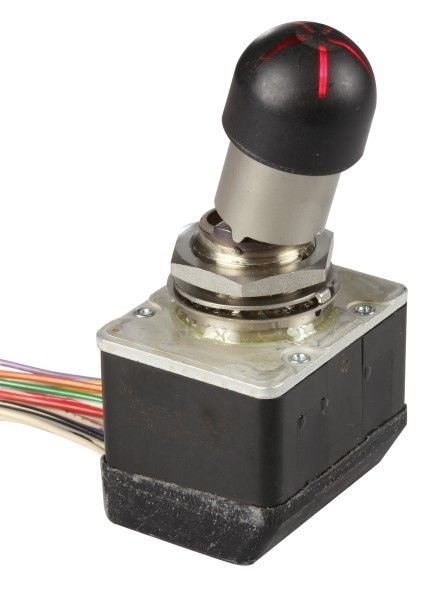
They must be lifted over the detent (if installed correctly) in each direction.
Subjects
Fuel (All)
Fuel Cutoff Switches
Fuel Cutoff Switches (detent)
RUN/CUTOFF
Links are to this post in the relevant subject page so that this post can be seen in context.
Reply to this quoting this original post. You need to be logged in. Not available on closed threads.
February 02, 2026, 16:10:00 GMT
permalink Post: 12031160
https://avherald.com/h?article=5342238e&opt=0
...
The foundation stated when asked why the aircraft departed nonetheless: "The issue is, there is no guidance." ... unbelievable
Perhaps more pertinently, given the manner of AI171's tragic end and what has been established about events in it's final moments (and indeed what remains unknown), for experienced aviation professionals to have noted this alleged defect and decided to accept it and depart regardless is jaw dropping. Unless, of course, the reality was not as described above.
Subjects
RUN/CUTOFF
Links are to this post in the relevant subject page so that this post can be seen in context.
Reply to this quoting this original post. You need to be logged in. Not available on closed threads.
February 03, 2026, 14:02:00 GMT
permalink Post: 12031615
https://www.pib.gov.in/PressReleaseP...6®=3&lang=1
.
Subjects
DGCA
Fuel (All)
Fuel Cutoff
Fuel Cutoff Switches
Parameters
RUN/CUTOFF
Links are to this post in the relevant subject page so that this post can be seen in context.
Reply to this quoting this original post. You need to be logged in. Not available on closed threads.
February 03, 2026, 14:25:00 GMT
permalink Post: 12031636
Though this discussion being about the RUN/CUTOFF switch(s) of a 787 being accused of improper operation, does this really relate to the Air India 171 crash? The reported information has already stated that both switches were selected from RUN to CUTOFF within a second, and then back to RUN, with a pilot remark about that action. It is a statistical infinity that on 171 both switches would fail into the cutoff position by themselves within a second, and there not be a pilot remark about that in the CVR, when there was a remark "Why did you do that?" associated with the switches.
I have moved a lot of switches and other controls in my flying career. In each case, I made that action with the intent that doing so would cause the desired action of a system. Moving the control itself was a means to an end. So, in moving the control, I determined that the ultimate objective was achieved. If there was a "feel" or locking system associated with the motion of the switch/control, then I would assess that too - was it working as expected? Like a flap or landing gear selector, I don't just push it toward the other direction, and hope that it pops into the desired position, I actually move the control the whole way, and confirm by feel/sight/locking device, that it is where I intend it to be, and will stay. Let's not forget that very basic expectation of piloting! Yes, there is the phrase "throw the switch", but that is for Igor. We pilots will move the switch the whole way, and assure that it got where it was going and is going to stay!
Both of these topics relate to the switch(es) in the 787, but I think that the similarity ends there.
Subjects
CVR
Fuel (All)
Fuel Cutoff Switches
RUN/CUTOFF
Links are to this post in the relevant subject page so that this post can be seen in context.
Reply to this quoting this original post. You need to be logged in. Not available on closed threads.
February 03, 2026, 14:35:00 GMT
permalink Post: 12031642
1) let the crew provide a testimony of what exactly they experienced with the switch(es); why the decided to fly it out; and every other question experts would see fit.
2) let the authorities measure and publish how much vertical force is needed (without pulling out the head of the switch) to turn the switch from ON to CUTOFF.
Subjects
RUN/CUTOFF
Links are to this post in the relevant subject page so that this post can be seen in context.
Reply to this quoting this original post. You need to be logged in. Not available on closed threads.
February 03, 2026, 14:42:00 GMT
permalink Post: 12031649
Subjects
RUN/CUTOFF
Links are to this post in the relevant subject page so that this post can be seen in context.
Reply to this quoting this original post. You need to be logged in. Not available on closed threads.