January 31, 2025, 20:43:00 GMT
permalink Post: 11818517
It is genuinely odd how they flew directly into this thing which must literally have been lighting up the interior of their cockpit. Also, why were they above the 200ft route ceiling?
(Still from the video referenced above by ORAC.)
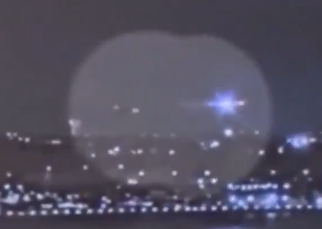
Helo on the left
I have ZERO doubt that either crew had a slightest idea of what was about to happen. I can fill 30 minutes explaining my next 10 seconds but suffice to say, a complete surprise. “WTF was that” will be the short version.
Subjects
CRJ
Findings
Separation (ALL)
Visual Separation
Links are to this post in the relevant subject page so that this post can be seen in context.
Reply to this quoting this original post. You need to be logged in. Not available on closed threads.
February 02, 2025, 11:38:00 GMT
permalink Post: 11819710
I accept the point regarding the likely economic impact. However I think its worth making the point that in the context of that '16 years without a fatality' record. there have been a number of potentially serious near-misses on the ground (JBU at BOS, AAL/DAL at JFK, SWA/FDX at AUS, etc etc) that are indicative of a system operating beyond its capacity and implementing procedures that are deemed to be of an acceptable risk profile in order to stretch that capacity. It was fortunate that those previous incidents were narrowly avoided. Wednesday night was where that luck, sadly, ran out.
Despite what's said almost universally by politicians and aviation authorities worldwide, the answers are driven and determined by politics, not the laws of physics and probabilities. "Safety is always our highest priority" is a meaningless but comforting sop for the public.
Ponder this question: If the POB the CRJ were senior politicians and important bureaucrats instead of the actual POB killed in this tragedy, would the investigation be carried out any differently, and its outcomes be any different, than if the POB were us nobodies?
I earnestly (perhaps naively) hope that the NTSB has and continues to have the corporate competence and the corporate integrity to investigate the circumstances of this tragedy, comprehensively, and to make frank and fearless findings and recommendations based on the objective facts and objective risks.
Subjects
ATC
CRJ
Close Calls
Findings
NTSB
Links are to this post in the relevant subject page so that this post can be seen in context.
Reply to this quoting this original post. You need to be logged in. Not available on closed threads.
February 02, 2025, 11:55:00 GMT
permalink Post: 11819724
Regrettably, I suspect we will see the NTSB take the same approach to the question of visual separation at night. It can't so much as mention the resulting risks without putting the FAA (and as you rightly infer, politicians) in the position of having to admit that safety is not always king. On the evidence of Austin, they won't do that.
Last edited by Easy Street; 2nd February 2025 at 13:05 .
Subjects
FAA
Findings
NTSB
Separation (ALL)
Visual Separation
Links are to this post in the relevant subject page so that this post can be seen in context.
Reply to this quoting this original post. You need to be logged in. Not available on closed threads.
February 22, 2025, 08:02:00 GMT
permalink Post: 11833475
"… and yet that is precisely how ICAO stipulates that accident investigation should work. The consequent focus on such things as ‘proximate cause’ and the inherent unwillingness to deal with underlying aetiology work against holistic approaches and generate exactly the outcomes you warn against. "
In part yes, I agree.
However, as you might know, ICAO does not 'stipulate', it provides recommendations and standards of practice (SARPS), e.g. Annex 13, on which nations can base their investigation and reporting.
As such it is the interpretation of by individual nations and their investigators which direct investigation, findings, and recommendations.
Some nations interpret SARPS better than others.
There is an interesting example (amongst many others) of wider investigation and reporting in the Fukushima accident report: Pprune Safety Forum Fukushima Nuclear Accident Investigation
Reforming the regulators
The Commission has concluded that the safety … cannot be assured unless the regulators go through an essential transformation process. The entire organization needs to be transformed, not as a formality but in a substantial way. … regulators need to shed the insular attitude of ignoring international safety standards and transform themselves into a globally trusted entity .
P.S. Re the investigation above, also noting 'Cosmetic Solutions'; if the findings from this DCA investigation warrant it, would the NTSB conclude 'This was a manmade accident, made in the USA'
.ii
Last edited by PEI_3721; 22nd February 2025 at 08:56 . Reason: PS
Subjects
DCA
Findings
ICAO
NTSB
Links are to this post in the relevant subject page so that this post can be seen in context.
Reply to this quoting this original post. You need to be logged in. Not available on closed threads.
February 22, 2025, 09:00:00 GMT
permalink Post: 11833498
"… and yet that is precisely how ICAO stipulates that accident investigation should work. The consequent focus on such things as ‘proximate cause’ and the inherent unwillingness to deal with underlying aetiology work against holistic approaches and generate exactly the outcomes you warn against. "
In part yes, I agree.
However, as you might know, ICAO does not 'stipulate', it provides recommendations and standards of practice (SARPS), e.g. Annex 13, on which nations can base their investigation and reporting.
As such it is the interpretation of by individual nations and their investigators which direct investigation, findings, and recommendations.
Some nations interpret SARPS better than others.
There is an interesting example (amongst many others) of wider investigation and reporting in the Fukushima accident report: Pprune Safety Forum Fukushima Nuclear Accident Investigation
Reforming the regulators
The Commission has concluded that the safety … cannot be assured unless the regulators go through an essential transformation process. The entire organization needs to be transformed, not as a formality but in a substantial way. … regulators need to shed the insular attitude of ignoring international safety standards and transform themselves into a globally trusted entity .
P.S. Re the investigation above, also noting 'Cosmetic Solutions'; if the findings from this DCA investigation warrant it, would the NTSB conclude 'This was a manmade accident, made in the USA'
.ii
Regarding Fukushima, the problem lies not with regulators, but with regulation and its evil twin, compliance. And on your last line, I might add, 'by politics'. The process of sharing draft reports with interested parties is harmful enough to the investigative process, as we have seen with crystal clarity over the Clutha case for example, but is even more damaging in its influence to the jobbing investigator sitting at a word processor, thinking not only of that process, but all the petty politics which are exercised by managers in SIAs. Sometimes the investigator feels charged with writing a benign account of a series of improbable, unfortunate, and unforeseeable coincidences, which aligned with previously unknown holes in otherwise-solid cheese, despite being fully aware that there is much more to it than that.
Subjects
DCA
Findings
ICAO
NTSB
Links are to this post in the relevant subject page so that this post can be seen in context.
Reply to this quoting this original post. You need to be logged in. Not available on closed threads.
March 11, 2025, 20:08:00 GMT
permalink Post: 11845606
Existing separation distances between helicopter traffic operating on Route 4 and aircraft landing on runway 33 are insufficient and pose an intolerable risk to aviation safety by increasing the chances of a midair collision.
When Route 4 operations are prohibited as recommended in Safety Recommendation A-25-1, it is critical for public safety helicopter operations to have an alternate route for operating in and around Washington, DC, without increasing controller workload.
To the Federal Aviation Administration:
Prohibit operations on helicopter Route 4 between Hains Point and the Wilson Bridge when runways 15 and 33 are being used for departures and arrivals, respectively, at Ronald Reagan Washington National Airport. (A-25-1) (Urgent)
Designate an alternative helicopter route that can be used to facilitate travel between Hains Point and the Wilson Bridge when that segment of Route 4 is closed. (A-25-2) (Urgent)
Subjects
ATC
Findings
KDCA
Route 4
Separation (ALL)
Links are to this post in the relevant subject page so that this post can be seen in context.
Reply to this quoting this original post. You need to be logged in. Not available on closed threads.
March 23, 2025, 18:20:00 GMT
permalink Post: 11852858

My closing thoughts. It seems ATC were simply trying to run a routing system, the layout of which was handed to them, to the best of their ability. As moosepileit said at Post #1176, "These charted routes are Pre 9/11/01. ATC workload and growth of route, ahem, users, too. How do you boil a frog? Just like this. One degree at a time. This is the B-17/P63 crash - dumb orchestration, no one spoke up." . The ATCO involved seems to be a victim of this - a process of "normalisation" over time and pushing rules to, or beyond, their sensible limits - something I said a few Posts back. Similarly, the helo crew were as much victims - again, possibly a process of "normalisation" over time meant they were a bit too happy to say that they had an a/c in sight which they genuinely thought was 5342 but wasn't - "normalised complacency" if such a term exists - I guess it does now!
My own concerns relate more to the "human factors" involved (as per my Safety Engineering experience) and why someone, somewhere, didn't call "Time-out, Folks! We seem to be having a lot of near-misses here! Time to revisit the Safety Case!" - if there was ever one in the first place....... Interestingly, I've already mentioned the Airport Management team in this context - but how come the airlines, where some of their pilots are calling DCA, what was it, "the most dangerous airport in the USA" (it's somewhere back in this Thread!), didn't call a halt? They also have a responsibility to conduct safe operations. OK, they have less exposure to the rate of TCAS warnings at DCA but someone, somewhere would review all TCAS incidents involving their aircraft, where it was and, importantly, why it occurred........
To close - I was involved in one "incident" (actually, it was a complete "non-incident" as you will see!) when crossing the overhead of Luton at 3000ft S - N one day. A jet on the runway went tech so the next aircraft on approach, after some discussion between ATC, the stranded aircraft on the r/w and the aircraft on approach, had only one option - to go around as the runway was blocked ...... certainly for a while. Standard missed approach for LTN is (simplified) "climb to 3000ft" - exactly where I was.
 But
The reason I'd been given that crossing clearance was the ATCO had clearly
pre-planned
for the eventuality of me being overhead at 3000ft
and
a possible go-around to 3000ft. His instruction was quite straight forward, immediate and totally relaxed. "Airline XYZ, go around - stop climb at 2000ft - traffic crossing in my overhead at 3000ft.". Even so, I did pay very close personal attention to the go-around a/c, checking it actually leveled off at 2000ft ...... to see that it all went according to the "Plan"! Oh, in case you wondered, the big difference between my LTN and LCY crossings was that I couldn't get high enough at LCY for ATC to safely slot just this sort of go-around in underneath me! At LCY, the London TMA limited me to 2500 ft max (well, 2400ft with 100ft to allow for height-keeping errors on my part!).
But
The reason I'd been given that crossing clearance was the ATCO had clearly
pre-planned
for the eventuality of me being overhead at 3000ft
and
a possible go-around to 3000ft. His instruction was quite straight forward, immediate and totally relaxed. "Airline XYZ, go around - stop climb at 2000ft - traffic crossing in my overhead at 3000ft.". Even so, I did pay very close personal attention to the go-around a/c, checking it actually leveled off at 2000ft ...... to see that it all went according to the "Plan"! Oh, in case you wondered, the big difference between my LTN and LCY crossings was that I couldn't get high enough at LCY for ATC to safely slot just this sort of go-around in underneath me! At LCY, the London TMA limited me to 2500 ft max (well, 2400ft with 100ft to allow for height-keeping errors on my part!).
But at LTN, I did have a great view of a 737 climbing towards me, leveling off and then passing safely below! If only the outcome on that fateful night at DCA had been the same for 5342 and PAT25.........

Last edited by Hot 'n' High; 23rd March 2025 at 19:07 .
Subjects
ATC
ATCO
DCA
Findings
Normalization of Deviance
PAT25
TCAS (All)
Links are to this post in the relevant subject page so that this post can be seen in context.
Reply to this quoting this original post. You need to be logged in. Not available on closed threads.
March 24, 2025, 18:47:00 GMT
permalink Post: 11853466
I guess, where I come from is that, too many times, the crews have been blamed and yet the system (stretching flight duty hours, poor rostering, management pressure, skipped maintenance etc, etc) has played a huge part in an accident ..... but those who ran the "system" that allowed this to happen never get "done" - it's easier just to blame the crew. The Mull of Kintyre Chinook Crash is a great example - there was a huge thread in the Mil forum on that.
In that case, the BOI reached the conclusion that no-one knew what had happened especially given the known technical issues with the aircraft. However, two RAF Air Marshalls, Wratten and Day, overturned the BOI findings and placed the blame entirely on the 2 pilots. This was because the aircraft, the Chinook Mk 3, had received an illegal Release to Service (RTS) by the RAF - the aircraft should have been limited to ground running only - not even flying - as the whole fleet was subject to a number of unresolved technical issues. Instead, an illegal RTS was issued against Engineering advice from Boscombe Down and an aircraft that should never have seen daylight under it's wheels unless it were on jacks or lifted by crane, killed 25 VIP passengers and 4 crew on 2nd June 1994.
A guy called David Hill wrote a book entitled "The Inconvenient Truth" which exposed the Air Marshalls and the broken system they presided over which was prepared to ride rough-shod over safety - well worth a read if you have not seen it! The e-book is available via the "Big River" store! I personally saw a similar case of the RAF blatantly breaking it's own rules in 2019 which I took to straight to the Engineering Director of the company I was Contracting for at the time. Being an ex-Mil Engineer, I immediately saw what they were doing was illegal. He simply couldn't believe what I showed him!!!! I could cite other cases - the Shoreham Airshow Hunter crash in 2015.
If you don't address the root causes of an accident, then they remain and, given time, some other luckless aircrew stumble into the exact same situation - and yet more people die!
Sorry to have a rant but.......... well, you know me!!!!! That's why there seems a bias not to blame aircrew - far too many times aircrew have been used as convenient scapegoats for the real villains!
Cheers, H 'n' H
Subjects
Findings
Links are to this post in the relevant subject page so that this post can be seen in context.
Reply to this quoting this original post. You need to be logged in. Not available on closed threads.
March 24, 2025, 20:37:00 GMT
permalink Post: 11853531
About bias against blaming pilots..... thanks for the background in the pertinent post you wrote. I'll get the book.
Being given a view into the inside story of an investigation and its findings is quite interesting, and it is good to know this part of the background of what leads many posters (and elsewhere) to avoid assigning responsibility to aviators, and even to apply - if this phrase may be imputed here - a higher burden of proof.
But the bias I was acknowledging is from a different source. There are, in the legal profession, plenty of blogs (and forums also I would imagine) with streams of comments. And other aviation sites of course too. Although some of my very earliest posts (thankfully, under somewhat of a different callsign) had too many cringeworthy aspects . . . or maybe a few were almost entirely cringe-provoking, I haven't been kicked out yet. So insofar as having a bias against assigning responsibility to aviators, whatever its source and lineage, whatever its causal roots and heritage, and whatever analytic gymnastics it might require for sorting out other actors and their potential roles in accidents, I have understood the existence of an unwritten rule on this forum. And to me, it makes sense and is not arbitrary. As an old lawyer joke has it: An attorney sees a parrot in a pet shop window, and early for court, strolls into the shop, and proceeds to make what he thinks are bird-sounding noises like "Polly want a cracker?" To which the bird responds, "I can talk. I can talk. Can you fly? Can you fly?'"
Subjects
Findings
Links are to this post in the relevant subject page so that this post can be seen in context.
Reply to this quoting this original post. You need to be logged in. Not available on closed threads.
August 05, 2025, 00:21:00 GMT
permalink Post: 11933392
And that is they key , that must come first in my view, first the new structure then the road map to your "new" airspace infrastructure and governance , with new guys and fresh ideas, and yes, some can be copied on what Europe is trying to do .
Good news that the chair will not be empty but I am not sure an airline guy is the best choice for the job , I do not know the guy but as an airline Capt he might be OPS orientated so he will, just like Sully did , become extremely frustrated on discovering how ICAO works. It is by consensus , the best ideas can be rejected by a few States and then discussions and negotiations must start again , even obvious solutions will; take years to be implemented , not weeks. In ICAO the USA has the same voice as a small State with no airline.
A diplomat with civilian airline background fits better the post. A Military's background is of absolute zero use in ICAO.
But, that having been said, the Board's investigation appears primed to result in recommendations, supported by factual findings and analysis, for arguably significant changes in certain basic aspects of the ATM architecture. I'm relying here on the fact that the Board issued, very soon after January 29, an emergency directive to FAA with regard to the design of the DCA airspace and specifically the use of the helicopter routes. While I would not wish to assert familiarity with the actual world of ATC, the tenor and content of the Board's actions to date as well as of the three days of hearings strongly suggest that the Board will make recommendations for significant change in at least certain areas. Among these are the structure of airspace in which helicopters (civil, law enforcement, and military) interact with commerical traffic - it should be noted that a review of these airspace structures was ordered after the accident. Also, the way in which military aviation is conducted in Class B airspace especially adjacent to airports (of a certain size, presumably) appears likely to be covered by recommendations. None of this is to say that the new ATC system cannot be undertaken unless and until the Board report is issued (again, "necessary" was imprecise) but to the degree that recommendations for particular substantial reconfigurations of the NAS design are coming, the architects of the new ATC system certainly will not want to have to backtrack and redo their work.
On the drive to bring "FAA 2.0" into being, I would not associate myself with any claim that the United States ATM should "copy" European activities. I think the Memorandum of Cooperation between the SESAR authorities on one hand, and the FAA on the other, is the correct framework. And under that framework, "harmonization" appears to be the principal objective. It happens to be the case that although three formal joint reports on the status of harmonization have been completed and published over the past couple of decades, the most recent one was published several years ago. It is not as if nothing much has changed or advanced in the intervening years, but no further report is anywhere to be found.
When one takes into account the many and varied data-gathering and reporting functions of EUROCONTROL, the activities of the FABs, the ATM Master Plan, and informed expert groups such as the Wise Persons Group, at least from the cheap seats from which I see these it appears clear that European ATM is advancing quickly into the future. Whereas, in the United States, despite good people in certain technical roles in agencies and supporting organizations, the sorry state of the overall system speaks for itself. So to learn from our European allies and partners (and I do continue to view those States as allies and partners despite the view being out of vague in certain ignoramus precincts here) is not just wise, but necessary. But not to copy, rather to learn and adapt what will work best on this side of the transatlantic air-bridge.
On ICAO and the nomination of Mr. Anderson - and I do not know the gent either. Perhaps frustration with ICAO's immutable process of seeking consensus is what drove Sullenberger from Montreal, but I have my doubts. An experienced and by-then famous airline captain would be expected to have enough sophistication to realize, in advance, the unsurprising fact that ICAO is part of the UN. It should not have been any surprise, and that is without wondering whether the lucrative guest-speaker circuit was also a major factor.
I don't agree (respectfully) that each and every Member State, even small States lacking an airline, have equal voice. In Assembly votes, yes, they do. But not in the Council, given its three levels of membership and the process by which States gain membership on Council. And, though I am not an ATC professional (as you know), my understanding is that in the Air Navigation Commission, there are States with the experience and credibility to understand evolving state-of-the-art, even though they may disagree on how to proceed with it. And not every Member State has that level of experience and credibility. It's impolitic perhaps to say this out loud but that does not negate its validity or truth.
As for Mr. Anderson, the profile he has up on LinkedIn indicates that he has had quite significant labor relations experience. And governement relations responsibilities for the pilots' labor organization as well. His military career was, it appears, where he learned to aviate, and is not the approach the White House expects him to apply at ICAO. (In my view, sovereignty of every Member State's airspace is so fundamental, not only as reality of international flying but also under the Chicago Convention that a military career actually is fabulously relevant background for ICAO Permenent Rep, but reasonable minds can differ.) The labor relations experience could well turn out to be just what the doctor ordered for dealing with - as you say - the sometimes infintesimal pace of ICAO efforts to actually do something.
Of course, with ALPA having promptly denounced the nomination, because Mr. Anderson split from the labor organization over raising the age limit, perhaps the Senate confirmation process will not be accelerated before the Assembly convenes in third week of September. Whether the U.S. will be represented by a proper Permanent Representative, even one without Senate confirmation as Ambassador, is just not clear on the scope yet.
[...apologies for thread drift, but right now the NTSB DCA midair investigation is "the only game in town" in U.S. aviation policy - town as in Washington that is, not Montreal, QC, CA. ]
Subjects
ATC
DCA
FAA
Findings
ICAO
NTSB
Links are to this post in the relevant subject page so that this post can be seen in context.
Reply to this quoting this original post. You need to be logged in. Not available on closed threads.
October 16, 2025, 04:57:00 GMT
permalink Post: 11970724
___________
Rotor Operations Transparency and Oversight Reform (ROTOR) Act
Upgrading In-Flight Safety Technology and Fixing Helicopter Operations to Eliminate Risk
[Sponsors] Senators Ted Cruz (R-TX), Jerry Moran (R-KS), Marsha Blackburn (R-TN), Ted Budd (R-NC), Shelley Moore Capito (R-WV), Roger Marshall (R-KS), Eric Schmitt (R-MO), Tim Sheehy (R-MT), Todd Young (R-IN)
The Problem : The midair collision between American Airlines Flight 5342 and an Army Black Hawk helicopter on January 29th was preventable. For decades, the airspace around the Ronald Reagan Washington National Airport (DCA) operated without an accident, but with thousands of close calls that should have resulted in preventive action. The Black Hawk was likely operating in congested airspace without transmitting Automatic Dependent Surveillance Broadcast (ADS-B) Out\x97a satellite beacon technology that can transmit location, altitude, and velocity to air traffic control and other nearby aircraft faster than radar or other transponders. The airspace is only as safe as its least equipped aircraft, which is why military aircraft must not play by different rules.
The Solution: The ROTOR Act
The ROTOR Act improves aviation safety, addresses FAA knowledge and oversight of ADS-B, and directs the Army Inspector General (OIG) to reevaluate its aviation safety practices. The bill requires:
1. All aircraft operators to equip with ADS-B In technology and transmit such information. ADS-B In is a technology for aircraft to receive location signals from other nearby aircraft and ground technology, improving safety in the sky and on runways.
2. Closes Federal Aviation Administration (FAA) loophole that permitted the Army Black Hawk to fly without broadcasting ADS-B Out. The ROTOR Act allows the FAA to only grant exceptions for \x93sensitive government missions,\x94 not training flights.
3. Requires the FAA to review helicopter routes near airports. The FAA would comprehensively evaluate the airspace at congested airports\x97where helicopters and airplanes are flying near each other\x97nationwide.
4. Directs the Army OIG to initiate a safety coordination audit. The Army Inspector General has declined to voluntarily review the Army\x92s aviation safety practices. The Inspector General would conduct an independent review of the Army's approach to safety.
5. Initiates FAA study on dynamic restricted area for helicopters near airports. The FAA would review whether audio and visual signals could be deployed to reduce airspace confusion and avoid traffic conflicts.
6. Repeals a Fiscal Year 2019 NDAA provision that exempted the Department of Defense from enacted ADS-B transmission requirements.
Why This Matters: The tragic midair collision earlier this year exposed serious and systemic weaknesses in how civilian and military aircraft share and operate in congested airspace. While the National Transportation Safety Board (NTSB) investigation continues, initial findings show glaring failures in oversight and coordination that must be addressed now, not later. The ROTOR Act was drafted in direct response to the operational shortcomings that led to the midair collision. Deconflicting congested airspace and establishing better communication standards between civilian and military aircraftis not optional\x97it is essential. The ROTOR Act does exactly that, ensuring American skies remain the safest in the world.
Subjects
ADSB (All)
ADSB In
ADSB Out
Blackhawk (H-60)
Close Calls
DCA
FAA
Findings
NDAA
NTSB
Radar
Links are to this post in the relevant subject page so that this post can be seen in context.
Reply to this quoting this original post. You need to be logged in. Not available on closed threads.
October 16, 2025, 16:07:00 GMT
permalink Post: 11971014
Every pax jet is separated by SIDs and STARs, with either lateral and/or vertical separation. That is what is required here with the choppers. Playing TCAS dodgem-cars below 1000ft when you're trying to land is not the way to go.
Point 3 is the only one that makes any real sense. The rest sound good only to the great-unwashed.
"Directs the Army OIG to initiate a safety coordination audit. The Army Inspector General has declined to voluntarily review the Army's aviation safety practices. The Inspector General would conduct an independent review of the Army's approach to safety."
Why does this not make real sense?
The NTSB will very likely (undoubtedly, I think) include, in its report, quite extensive findings about the Army's operations. It was at least very unusual, if not unprecedented, for the NTSB to issue urgent recommendations to FAA in the immediate aftermath of January 29 with regard to use of the helicopter routes. On these facts, why is it not sensible to require the Army to undergo an IG review?
Although without a service record, I do generally understand the idea that the Army's task and purpose is lethality, at least in the meaning of that term before the assemblage at Quantico earlier this fall. Surely operating in domestic airspace doesn't make safety irrelevant "becasue lethality", does it?
One other aspect of this tragic and from many perspectives senseless midair collision is that very dedicated professional people in the aviation field are going to have their respective actions and failures to act in the events of January 29 scrutinized in the most harshly critical light in a courtroom. Bluntly, their performance will be trashed - the Army pilots, one or more controllers, and as discussed recently on this thread, the airline aviators too. On these facts, and hoping that reasonable minds may differ, I think the IG review isn't just a sensible idea, it's a necessity. It is something owed to those people, who are not going to speak up in their defense, or in their eternal regrets, from the great beyond. The least the United States can do is to find out what to do better. I'll work for the IG project, gratis, .... if they'd take me.
Subjects
ADSB (All)
ADSB In
ATC
FAA
Findings
NTSB
Separation (ALL)
TCAS (All)
Vertical Separation
Links are to this post in the relevant subject page so that this post can be seen in context.
Reply to this quoting this original post. You need to be logged in. Not available on closed threads.
October 18, 2025, 10:26:00 GMT
permalink Post: 11972004
Here, safety cover-ups (the Mull of Kintyre Chinook fiasco being an immediate example that springs to my mind) seemed more aimed at protecting the reputations of individuals rather than fending off litigation - hence the findings of the RAF's own Board of Inquiry being overturned by Senior Officers to protect those even more Senior Officers above them.
Maybe we live in a simpler legal world here in the UK so your comments are, as ever, quite illuminating to this Brit and highlight things from a different angle which is much appreciated. Whatever the reasons for such obscurification, I do often find myself thinking that the world we live in is not quite as "civilised" and "honest" as we try and make out.
And on that rather depressing observation I'll revert to "lurk mode"!
Subjects
Findings
Links are to this post in the relevant subject page so that this post can be seen in context.
Reply to this quoting this original post. You need to be logged in. Not available on closed threads.
October 19, 2025, 21:05:00 GMT
permalink Post: 11972680
I continue to doubt the discretionary exception will be important to this case. In my view the helicopter crew was clearly negligent (in ways that are not covered by the discretionary exception) and that is all that is needed to make the government liable. There is no need (and it would probably be inadvisable) for the plaintiffs to bring in anything that might be covered by the discretionary exception.
If I were the government I would be trying to settle these cases. I expect there are plenty of plaintiffs (and even some plaintiff's lawyers) who would rather have a certain $x now instead of an uncertain $3x in 5 years.
Without an assessment of potential liability and damages, no defense counsel I have ever known would recommend settlement negotiations to start. What you say about some plaintiffs and their counsel potentially wanting to buy certainty of recovery in exchange for waiving possibly larger recovery later on certainly can happen in litigation. However in this case, the attorneys who filed the Complaint are, to state it (or to try to state it) neutrally, about the biggest guns in the business of litigating claims on behalf of air crash victimns' families. Sure, they might take the earlier, lower dollar route, and/or recommend such a choice to clients, but their reputations - and track records - suggest this will be the least likely course, and only much futher down the timeline. On the other hand, I have no role in the case and do not know whether the two firms (one in NYC the other Chicago) actually represent all the passengers on the American Eagle flight. (And do the estates and survivors of the deceased airline pilots have representation? Or the estates and survivors of the decesased soldiers? I don't know - and not getting into why they might have representation in this case or in general. Or whether an organization on behalf of ATCOs, in the U.S., or more globally, might seek to intervene in light of the facts being asserted against one or more controllers.)
Further, the government attorneys as well as the airline attorneys on the defense would be (imo) pretty far outside practice norms to recommend settlement negotiations without joining issue on anything yet. Perhaps one or more defendants will not file their (respective) Answer to the Complaint before broaching settlement, but doubtful this will happen (insurers' counsel lurking off-stage probably would insist upon an Answer being filed). And, the defense applying sovereign immunity through the discretionary function exception to the FTCA waiver is most likely an "affirmative defense" which, under the Federal Rules of Civil Procedure, probably must be included in a defendant's Answer to the Complaint. Even if your continued doubts about its applicability prove correct, it strikes me as quite inconsistent with the current Department of Justice approach to things to skip the pleading stage and jump to settlement. Especially when the opposing attorneys are among the biggest guns in this part of the trial bar, and especially with the political overtones of the litigation looming (as in, funding by Congress of the new ATC system, and legislation which may be lurching ahead of NTSB findings, as in recent posts about 'the ROTOR Act').
As to the discretionary function exception on the merits:
On the current state of the public record, it is pretty straightforward to say that the helicopter crew deviated from the applicable duty of care (i.e., negligence) - as noted, though, I can't imagine the Army component of the Defendant-USA just declining to contest liability at this stage. It must be noted that plenty of acts and/or failures to act by the FAA component of the Defendant-USA also appear to have departed substantially from the applicable duty of care. Maybe it's too cyncial to have this view, but I think FAA is more deeply entrenched in trying to prevent a litigated result that it had mismanaged the DCA airspace - more deeply entrenched than the Army because, as the airline company attorney reportedly said, the helicopter flew into the airliner, pretty simple. I cannot quite verbalize how the FAA would try to shift major responsibility to the Army and off itself, but the discretionary judgments FAA might argue drove its methods and processes for operating the DCA airspace could be the way FAA tries to do so. Of course, ultimately that still leaves Defendant-USA fully liable - just a politically different outcome.
But recall that the defense of sovereign immunity through the discretiionary function exception to the FTCA waiver is an Affirmative Defense. The defendant can rasie it even when the plaintiff has not sought to plead anything which would, by itself, invoke the issue. And in federal court (unless things have drastically changed since I last stepped up to the lectern in a courtroom with the Big Eagle on the wall behind the bench) the standard for pleading is "notice pleading" not "fact pleading". The Complaint just has to give sufficient notice of what the claims are about and what they're based on, and not all the facts necessary to state a particular claim under the specific substantive law. (Certain State courts still follow "fact pleading" though....been a minute.)
I think the point you were making is that nothing the Complaint has alleged factually, and nothing else about the accident that is in the public record at this time, suggests that a defense based on the discretionary function exception would work, or in fact would be worth trying. My view is that the government will take a very close look at trying to assert it. For example, the way the Army operated the proficiency flights in general and in DCA airspace in partiucular, including but not limited to use of NVGs, draws upon (it would be argued) policy judgments about the critical importance of "continuity of government" operations, and even the more routine VIP transport. Will that be enough to overcome the assertedly "clear negiigence" of the helicopter crew in their visual scan for visual separation, and altitude adherence (and possibly other related operational factors)? Maybe not, but I have no clear idea what process the Army went through to devise the rules by which those proficiency flights are conducted, evaluated, and so on. (And which a proper Army Inspector General inquiry and review would delineate, and with clarity.)
And for the FAA, how many times on this forum have posters pointed out that FAA's operating principle has been to move traffic in volume, and not to focus on what FAA eviderntly considers minor details of proper ATC methods and procedures? Sloppy discretion, maybe, but Congress recently expanded the slots at DCA (iirc) and so in a sense the United States did indeed exercise discretion.
I have posted several times that I do not believe the defense should be successful here. But what some non-pilot SLF and attorney writes (hoping not to overstay my guest-on-the-forum status) here might be many levels of altitude below what will actually happen in the litigation and in the courtroom.
Subjects
ATC
Accountability/Liability
DCA
FAA
Findings
NTSB
Night Vision Goggles (NVG)
Separation (ALL)
Visual Separation
Links are to this post in the relevant subject page so that this post can be seen in context.
Reply to this quoting this original post. You need to be logged in. Not available on closed threads.
January 27, 2026, 21:12:00 GMT
permalink Post: 12028223
There will follow a raft of Safety Recommendations (I haven't been keeping count of how many have been referred to), though it's not clear whether they will be explicitly listed during the hearing.
Subjects
Findings
NTSB Chair Jennifer Homendy
Probable Cause
Safety Recommendations
Links are to this post in the relevant subject page so that this post can be seen in context.
Reply to this quoting this original post. You need to be logged in. Not available on closed threads.
January 27, 2026, 22:35:00 GMT
permalink Post: 12028253
It responds to them, with either acceptance or rejection, and in the latter case provides its reasons for doing so. It may also suggest alternative means of compliance with the Board's wishes, and in some cases this leads to quite a bit of to-and-froing between the two organisations until a final position is reached.
The hearing is about to start on the Probable Cause statements, having had a prolonged debate on proposed amendments to several of the Findings (which are now all agreed).
Subjects
FAA
Findings
NTSB
Probable Cause
Safety Recommendations
Links are to this post in the relevant subject page so that this post can be seen in context.
Reply to this quoting this original post. You need to be logged in. Not available on closed threads.
January 27, 2026, 23:38:00 GMT
permalink Post: 12028289
Additionally this would\x92ve been sapping the IP/PM\x92s capacity to an extent no doubt as he had to monitor her deviations
wasn\x92t this a currency flight for her and she\x92s already blown a segment of it? Clearly her recency/skill level is at least a factor?
ditto they don\x92t mention the limitations of VFR separation under night vision
But all of those deficiencies arguably added up to the stated Probable Cause: "the lack of effective pilot applied visual separation by the helicopter crew, which resulted in a mid-air collision"
Subjects
Blackhawk (H-60)
Findings
Probable Cause
Separation (ALL)
VFR
Visual Separation
Links are to this post in the relevant subject page so that this post can be seen in context.
Reply to this quoting this original post. You need to be logged in. Not available on closed threads.
January 28, 2026, 03:09:00 GMT
permalink Post: 12028338
The PC statement should be read in its entirety, and at the conscious risk of ripe cliche, context matters. The Board did not assign the probable cause to the intersecting flight routes as such. For one thing, Chair Homendy repeatedly since the early days of the Board investigation has hammered upon the fact that the vertical separation was as little as 75 feet without any procedural separation (such as the helos holding at Haines Point). And also since the start of the investigation, time and again the complexity of the DCA airspace, and the (in my strident opinion) very messed up operation of DCA with regard to - as ATC staff testified - just "making it work", have been emphasized. Plus the refusal of FAA ATO to act upon the input from the helicopter working group several years ago, plus FAA's declining to note "hot spots" on charts. And the staffing issues, and lack of fidelity to SMS on the part of FAA and to some extent the Army as well. And there were, quite obviously, many findings of fact which are necessarily part of the context for reading . . . and understanding, the PC determination.
A person need not be an aeronautical engineer, airspace architect, or civilian or military aviator to understand from the get-go that intersecting flight paths might be found across the NAS. I'll stand to be corrected but I do not think - having watched the entirety of the hearing today - that the criticism of the Probable Cause finding is a valid, fair or accurate assessment of the Board's work in this investigation.
WillowRun 6-3
Subjects
ATC
DCA
FAA
Findings
Helicopter Working Group
Hot Spots
NTSB
NTSB Chair Jennifer Homendy
Probable Cause
Separation (ALL)
Vertical Separation
Links are to this post in the relevant subject page so that this post can be seen in context.
Reply to this quoting this original post. You need to be logged in. Not available on closed threads.
January 28, 2026, 03:16:00 GMT
permalink Post: 12028339
The PC statement should be read in its entirety, and at the conscious risk of ripe cliche, context matters. The Board did not assign the probable cause to the intersecting flight routes as such. For one thing, Chair Homendy repeatedly since the early days of the Board investigation has hammered upon the fact that the vertical separation was as little as 75 feet without any procedural separation (such as the helos holding at Haines Point). And also since the start of the investigation, time and again the complexity of the DCA airspace, and the (in my strident opinion) very messed up operation of DCA with regard to - as ATC staff testified - just "making it work", have been emphasized. Plus the refusal of FAA ATO to act upon the input from the helicopter working group several years ago, plus FAA's declining to note "hot spots" on charts. And the staffing issues, and lack of fidelity to SMS on the part of FAA and to some extent the Army as well. And there were, quite obviously, many findings of fact which are necessarily part of the context for reading . . . and understanding, the PC determination.
A person need not be an aeronautical engineer, airspace architect, or civilian or military aviator to understand from the get-go that intersecting flight paths might be found across the NAS. I'll stand to be corrected but I do not think - having watched the entirety of the hearing today - that the criticism of the Probable Cause finding is a valid, fair or accurate assessment of the Board's work in this investigation.
WillowRun 6-3
Subjects
ATC
DCA
FAA
Findings
Helicopter Working Group
Hot Spots
NTSB
NTSB Chair Jennifer Homendy
Probable Cause
Separation (ALL)
Vertical Separation
Links are to this post in the relevant subject page so that this post can be seen in context.
Reply to this quoting this original post. You need to be logged in. Not available on closed threads.
January 29, 2026, 12:41:00 GMT
permalink Post: 12029104
You can find it here: https://paulross.github.io/pprune-th...DCA/index.html
All 1,829 posts are organised into 68 subjects.
Changes:
- Added link to NTSB findings, probable cause and final recommendations.
- Added subjects: 'Accountability/Liability', 'Findings', 'NTSB Docket', 'Barometric Altimeter', 'Route Altitude', 'Hot Spots', 'Final Report', 'Probable Cause', 'Safety Recommendations', 'Helicopter Working Group'.
The project is here: https://github.com/paulross/pprune-threads .
Issues can be raised here: https://github.com/paulross/pprune-threads/issues or PM me with ideas.
Subjects
Altimeter (All)
Barometric Altimeter
Final Report
Findings
Helicopter Working Group
Hot Spots
NTSB
NTSB Docket
Probable Cause
Route Altitude
Safety Recommendations
Links are to this post in the relevant subject page so that this post can be seen in context.
Reply to this quoting this original post. You need to be logged in. Not available on closed threads.